Keith's Panamanian Travel Ramble

The wanderings of Andrea and Keith around Panama

Posts from the ‘Uncategorized’ category

Getting Started Preparing Temporary Accommodations

The weather here for the last few days has been extremely wet. Multiple jungle downpours interspersed with sunny periods are often the order of the day. It has been wet enough to cause us to consider how we will handle the humidity in our new house.

This part of Panama suffers from extreme humidity at times during the wet season. Our neighbours report that humidity levels can reach the mid 90% range. Without some strategy and technology to help manage these spikes, we will end up with a house full of water, mould and mildew. We have friends who only live part-time here and they expect to have to wipe everything down on their arrival. Counters and floors are actually wet.

The obvious solution is air conditioning, because it dehumidifies as it cools but cooling is not necessary here so it seems a bit overkill. It is possible to avoid the problems of humidity if the situation and the house are properly managed. Ventilation is part of the solution but you can only ventilate when the humidity is at lower levels. You cannot just leave windows open to ventilate the house without filling it with highly humid air. This is a guarantee of mould and mildew problems. It is possible to beat the problem. We were in a house recently, which was closed up and was unoccupied for six plus months. There was not a hint of stale air, mould, or mildew.

Did you know that humid air is heavier than dry air? Well, it is! If you want the science behind this claim, check out http://whyfiles.org/2010/the-weather-guys-heavy-air/.

Dehumidifiers here are common. In addition, this is one of the few places in Panama where you will find fireplaces, which are used to remove humidity from the air more than provide heat. Our plan is to install a propane fireplace on the main level as well as use a dehumidifier. It would seem because the humid air is heavier than the dry air, we should be placing it on the lower level. We are still investigating options, including a whole house dehumidifier. It works like a central furnace (which we know so well from home). They simply put a pipe opening in the floor of each room and pipe it to the central unit that removes the humidity and dumps the associated water outside. If anyone out there has any experience with this problem, please let us know. We would love to talk to you.

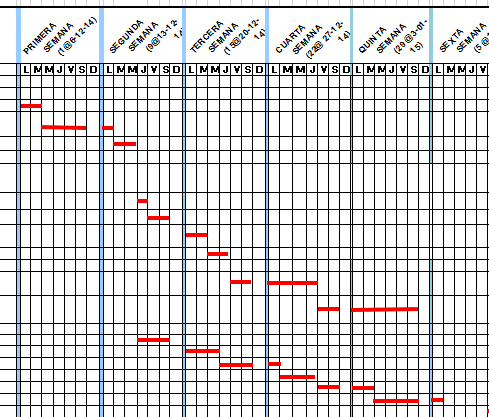
Here in Panama, normal work hours are from 7:00 AM to 3:00 PM Monday to Friday and 7:00 AM to Noon on Saturday. We had to get a little creative here because the trip up from the city takes an hour or an hour and a half, depending on the departure location. As they are paid for travel time, this means we would lose up to three hours of work each day per person and Saturday would be pretty much a write off.This is the end of our first partial week of site preparation.
Gantt Chart

Our workers have agreed to a modified workweek. They will work from 7:00 AM to 4:00 PM daily and get Saturday and Sunday off. They will also live on site from Monday through Friday and go home on Friday night for the weekends. This gives us a full workweek.

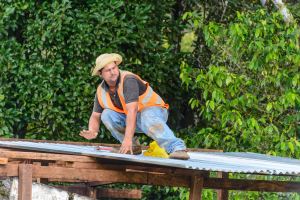
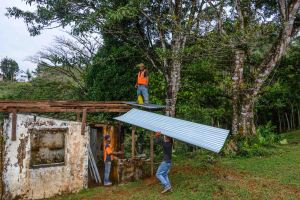
In order to accomplish this, we had to provide them accommodation on site. Sounds expensive, but it was only a couple of days to prepare the old house on the lot. A few two by fours and several sheets of chicken coop roof was all that was required. This gives them a dry space to sleep and spend their evenings. There is also a full washroom and an onsite supervisor who will be responsible to keep everyone on the property as the park does not let them to leave the property unsupervised.  We have completed the preparation of temporary living accommodations for the workers.
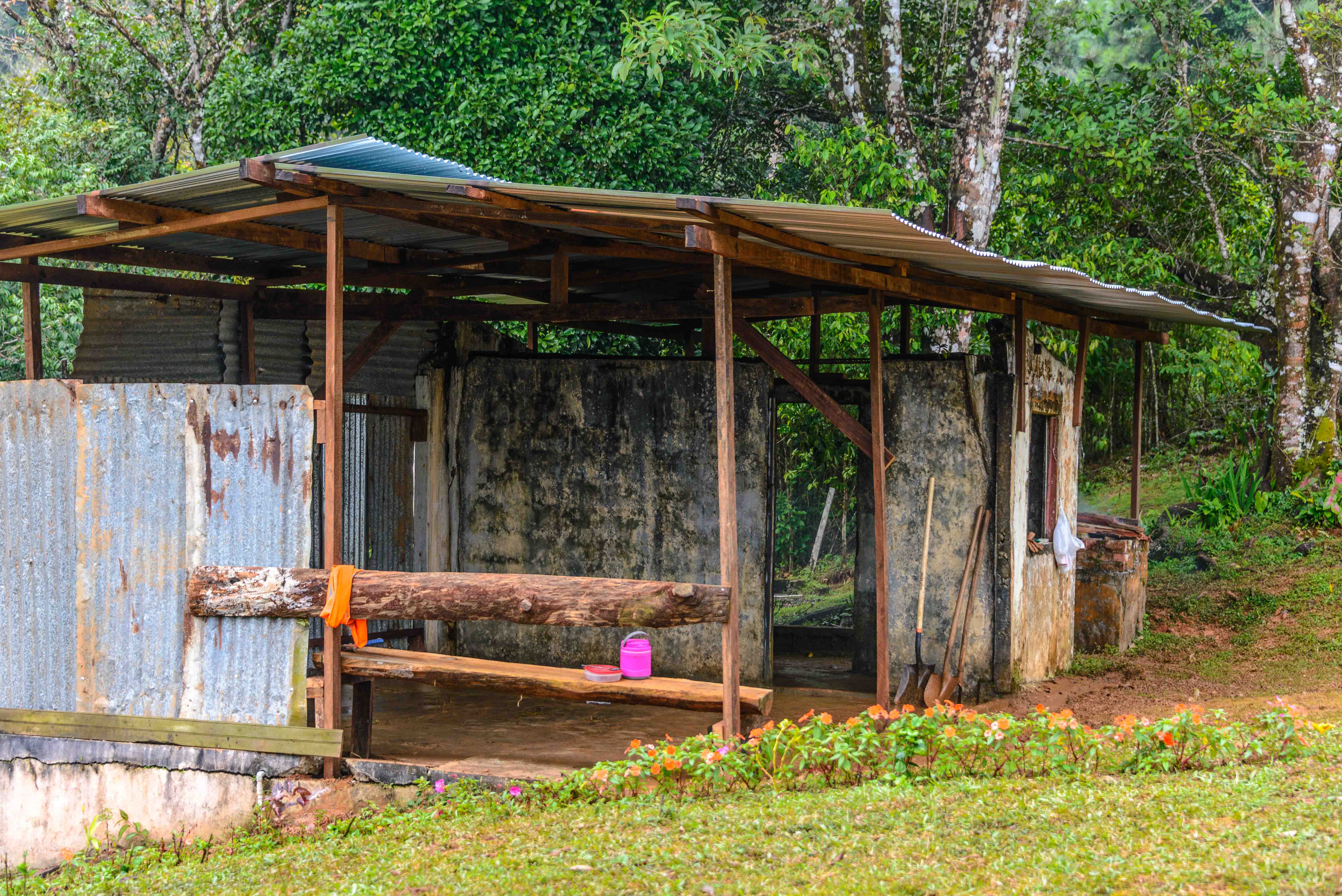
2014-JKH-Panama-D610-LR-1832

Completed Temporary Accomodations

The two by fours were of interest. They are the cheapest studs and are the straightest most knot free wood you can imagine. They are quite dark in color and I am told they are “junk wood” because they break easily when you are working with them. The name of the wood is unpronounceable.
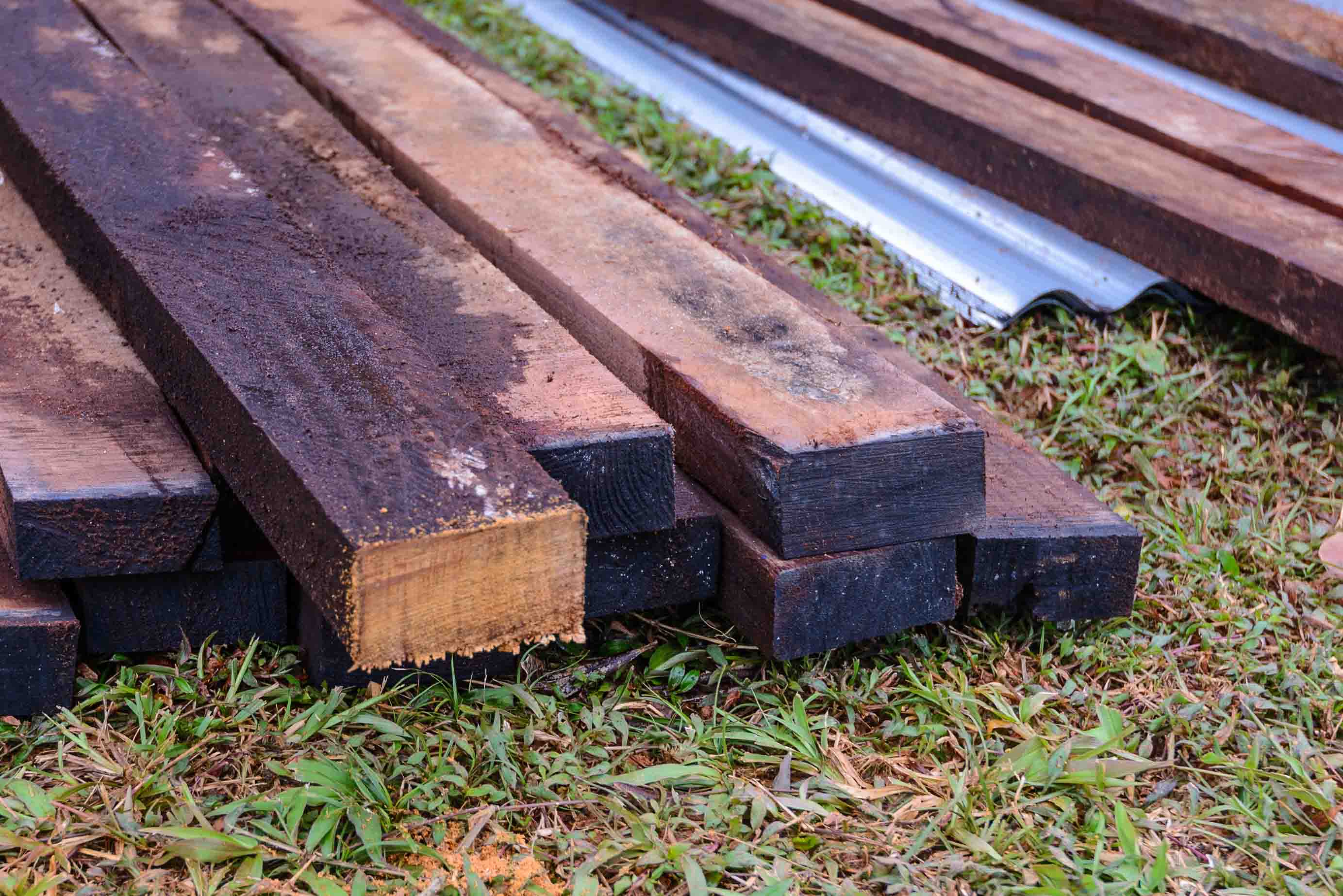
2014-JKH-Panama-D610-LR-1784

Mystery Wood

2014-JKH-Panama-D610-LR-1800

The Electrical team and the Plumber (Black Girl)

A front-end loader arrives on Monday morning to begin digging out for the foundation and footings. Bye for now.
Thieving Politicians and Corrupt Banks

Just a short note to let you know that the address of this blog has changed. If you are used to entering https://jkhowie1.wordpress.com in your browser, it has changed to JKeithHowie.com. The old address will continue to work but the primary address is now JKeithHowie.com. If you receive an email notifying you of each post, there is no change.

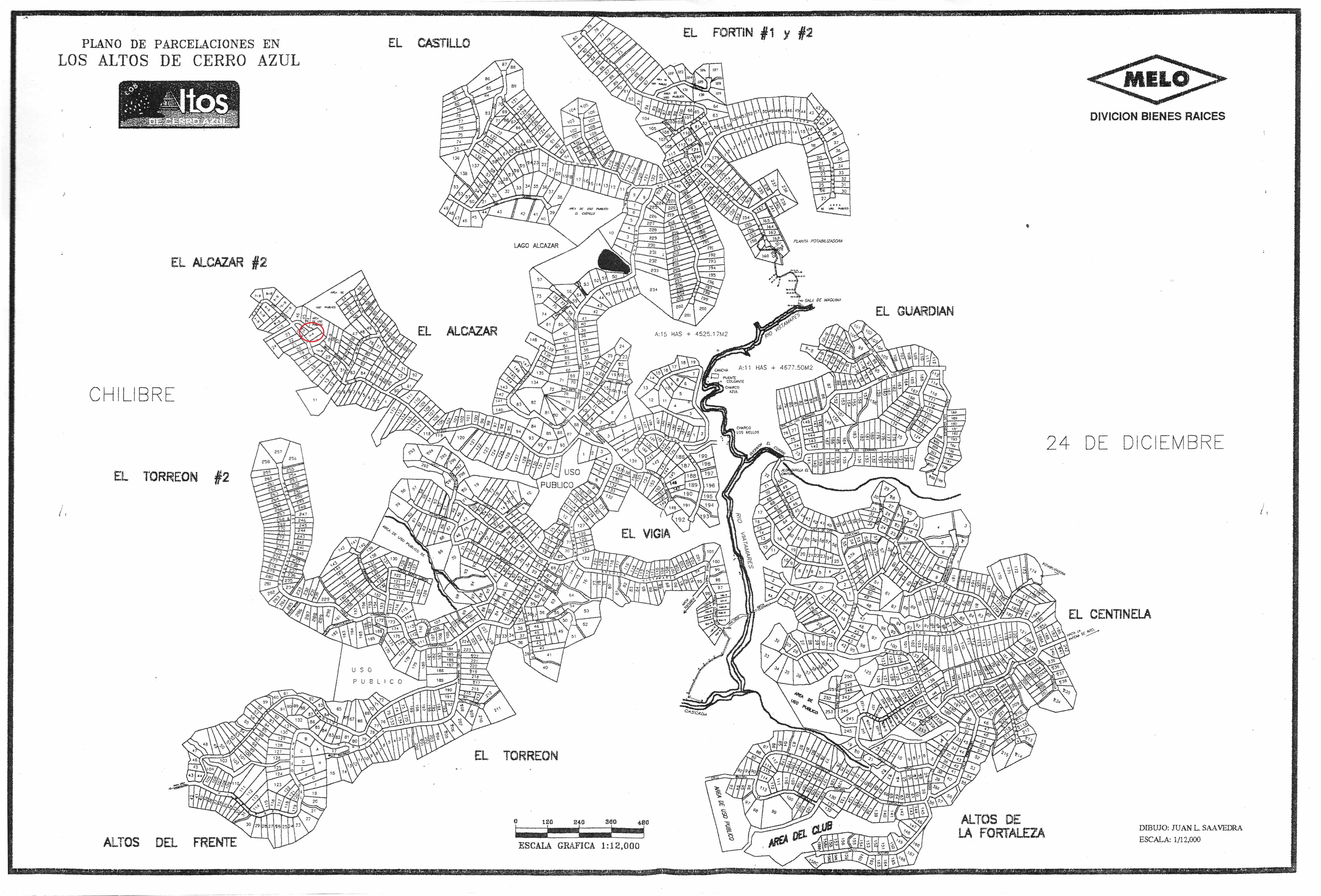
Map of Cerro Azul Development.  Zoom in to find the red circle which is our lot.

Map of Cerro Azul Development. Zoom in to find the red circle which is our lot.

As many of you know, we are here this year to begin the construction of our new home in Cerro Azul. This has been several years in the making. Our last visit to Panama in early 2014 was for research and identification of resources to get started so we would have everything ready to start as the weather permitted at the start of this dry season. (Usually December through April).

Plan of House

Plan of 1st Floor

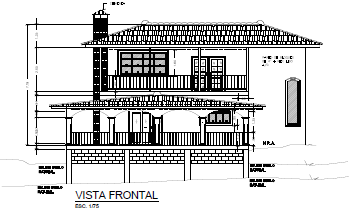
In early 2014, we found an Architect, Reynaldo Rodriguez, who had just retired from a lengthy career of creating buildings and houses on the west side of Panama City. We found him through a dear Panamanian friend who introduced us and helped us through a house description session by interpreting our English into Spanish that Reynaldo could understand. His experience was immediately obvious when he presented us with the first cut of plans for the house that we had described to him through our friend. The first rendering almost perfectly represented the house we had described to him. After a few minor changes, we sent him off to complete the approvals process, which will take several months. Here are a couple of extracts from the plans to give you an idea of what we are building.  (There will be changes)

Elevation Drawing of House

Elevation of Front

What happens here is the architect submits the plans for signature to the owners and then a review process starts that included an engineering, plumbing, and electrical. Each reviews the appropriate portions of the plans and affixes their seal of approval. Once this is completed, the building permit is issued.

Our liberally treed lot required the removal of 13 trees to allow the house construction. The process is to apply for permits from the parks department after which an inspection of the lot takes place by a parks person. If they agree with the removals, they issue a permit at a cost of $3.00 per tree. We elected to do the tree removal legally as if they catch you removing trees without a permit, the fines can be up to $10,000. Locals here often kill the trees first then remove them without permits, as you do not need permits to remove dead trees. There are other ways to make trees disappear. For a few bucks, you can hire someone with a chain saw. They typically work in the evening, when the park office is closed.

Our next issue was to get money from Canada to Panama. You are required to declare when you are bring more than $10,000 into the country so each of us stayed just under that amount. Thanks to a friend, we connected with a great currency broker at home. In addition to a much better exchange rate of Canadian to US dollars than any bank, we could find. They have a special deal for people building houses out of the country. You get two free money transfers before any charges apply and their fees are much less than others are. If anyone needs to move money internationally, we would be glad to refer you to this broker. Just email me and I will provide you the information.

Panama had an election earlier this year and surprisingly changed parties from the government of the incumbent president, who was favored to win until a large corruption scandal involving some of his ministers surfaced during the campaign. They have a process here of full financial disclosure when politicians both enter and exit government. It seems that several of the outgoing ministers had become millionaires during their stint in the government, with funds stashed in multiple bank accounts. It was such a big deal that the people elected a different party at the last minute than the one expected to be the winner.

So how did that affect us? Well, the banks were majorly embarrassed so they tightened up their investigation of money moving around and our wire transfer was caught up in it. The transfer was delayed and the recipient had to go through a bank interrogation to explain where the money was from and how it would be used, to finally sort it out. This made us very nervous as wire transfers can go astray without recourse.

Now with all that under our belts, we should begin our construction tomorrow. The preliminary work involves building a “deposito” which is a shack to store the materials for the construction. The old house on the property will have a makeshift roof and walls installed to house the materials as well as accommodations for the several workers that will live on the lot throughout the construction
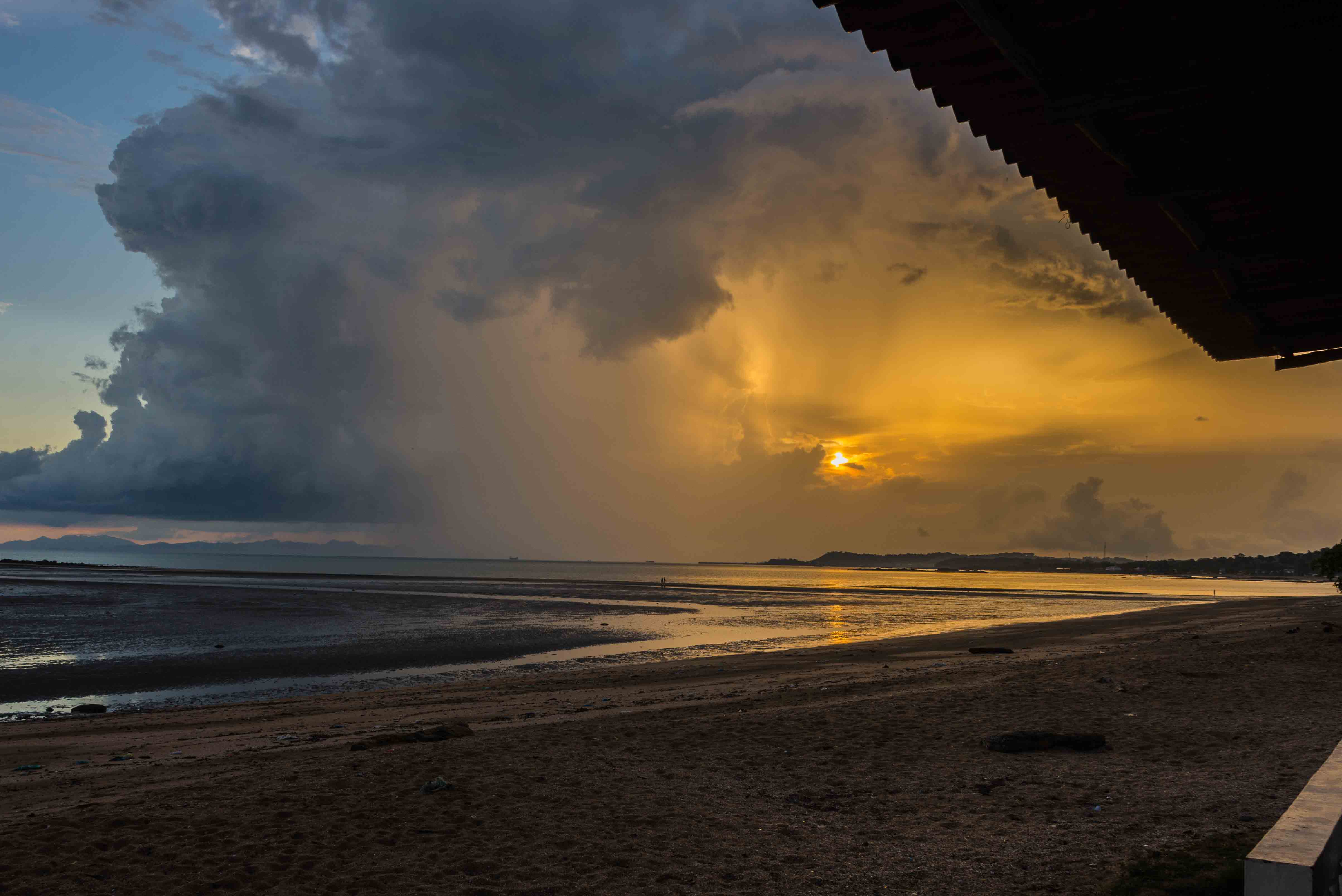
2014-JKH-Panama-D610-LR-1772.

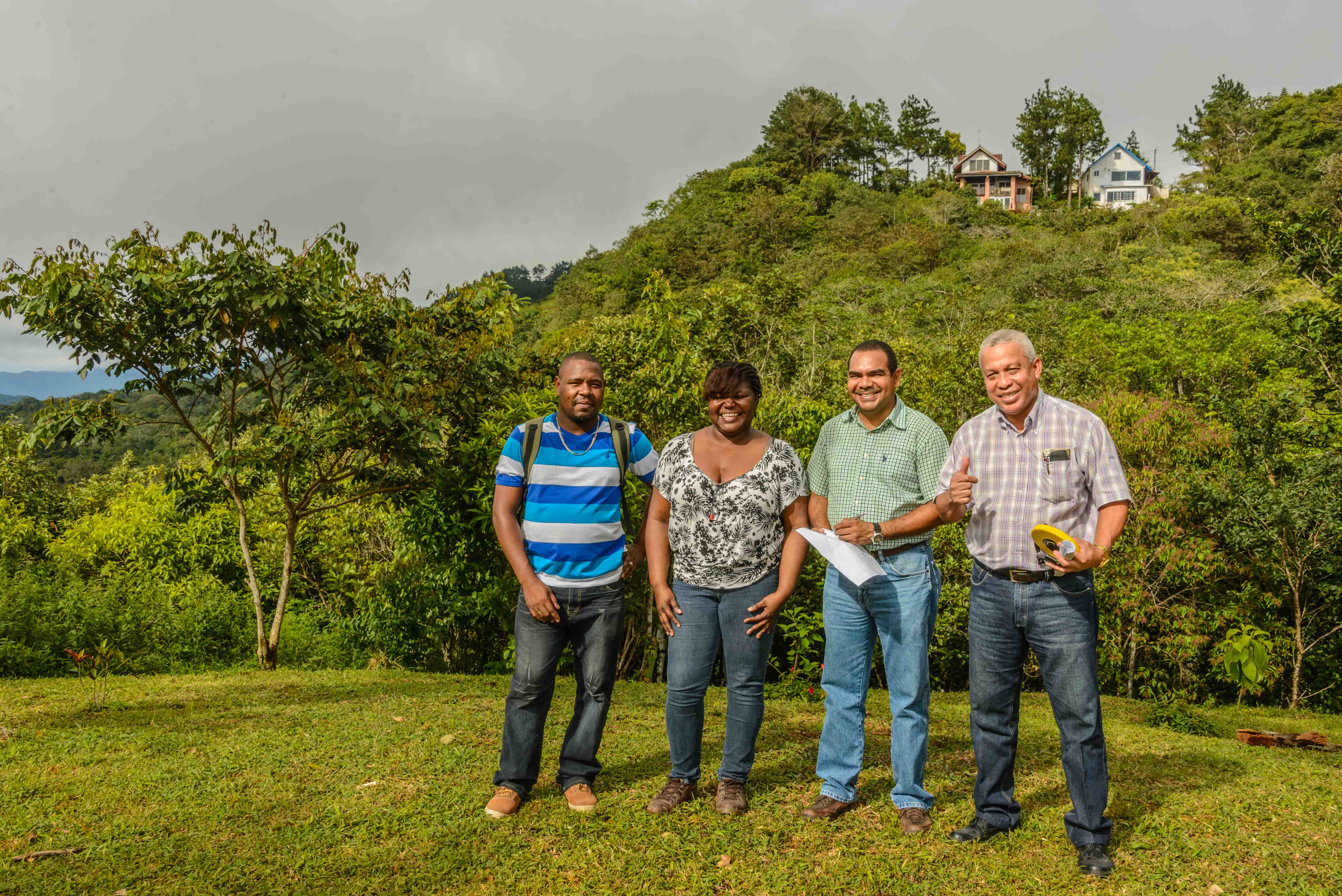
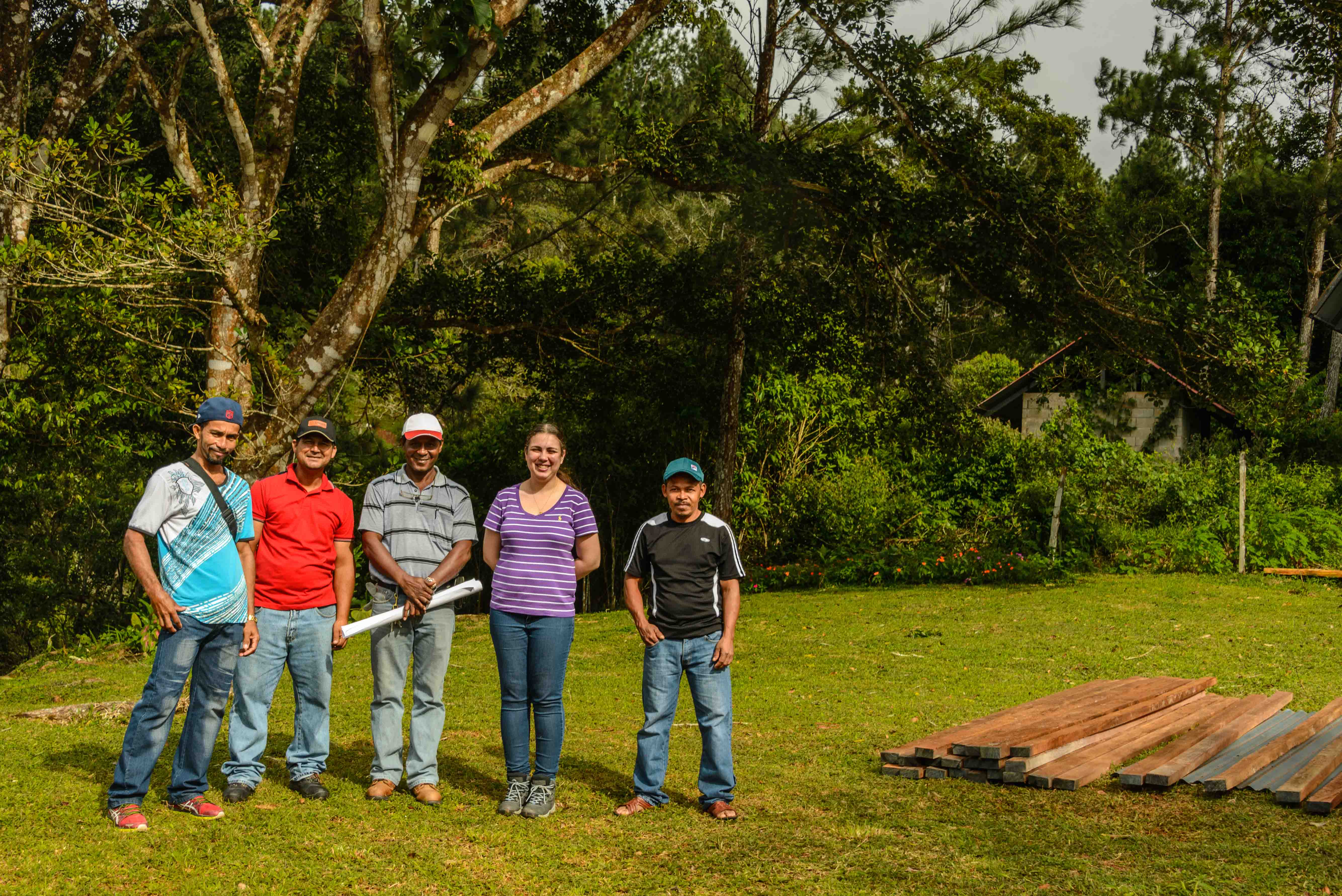
Here are a few of the people who are involved our building project. Our builder (the girl in purple) is Caterina Armengol. She is also an architect. The man to her right is the site construction supervisor. He will live on the property to make sure of security and proper behavior of the workers during off hours. To Caterina’s left is Paulino, our landscaper. He does amazing things with everything that grows as well as he has maintained our lot in our absence.

Here we go!

A Meeting Where A Dance Broke Out

We have now relocated up into the mountains behind Panama City. This is a place called Cerro Azul and it is where we have our property and will build our house. We are about 40 minutes from the Tocumen International Airport and at an elevation of about 750 meters, almost as high as Calgary.

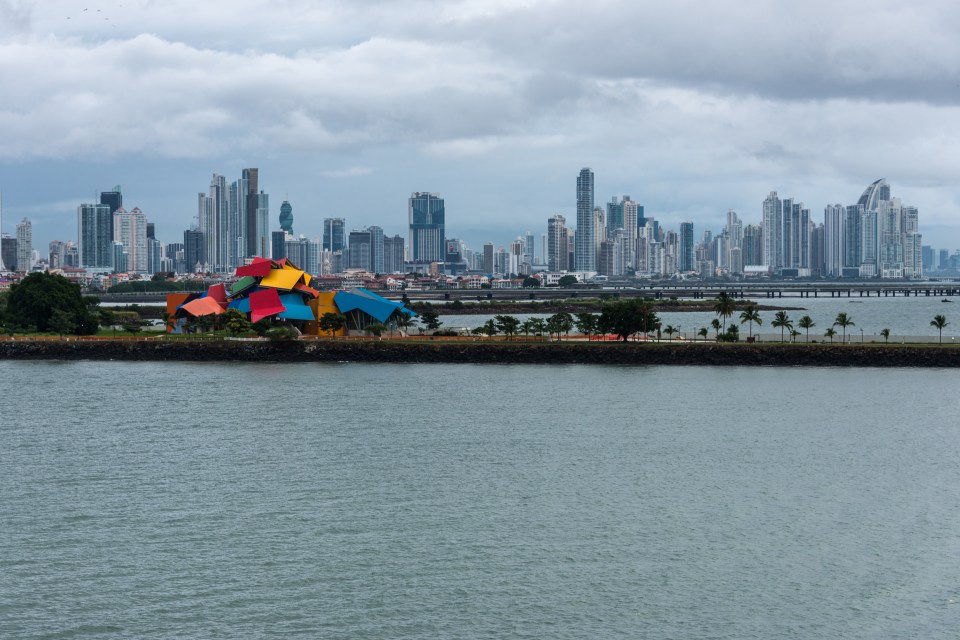
Cerro Azul is a development that is completely surrounded by a 129,000-hectare forest called the Chagres National Park. This park supplies over 40% of the water needed for the Panama Canal as well as the drinking water that is consumed in the metropolitan areas of Panama City and Colon, the two largest urban centers in the Republic, where 50% of the country’s population lives. From here, there are spectacular views of Panama City, the Canal Basin and, quite often, of both oceans at the same time.

2014-JKH-Panama

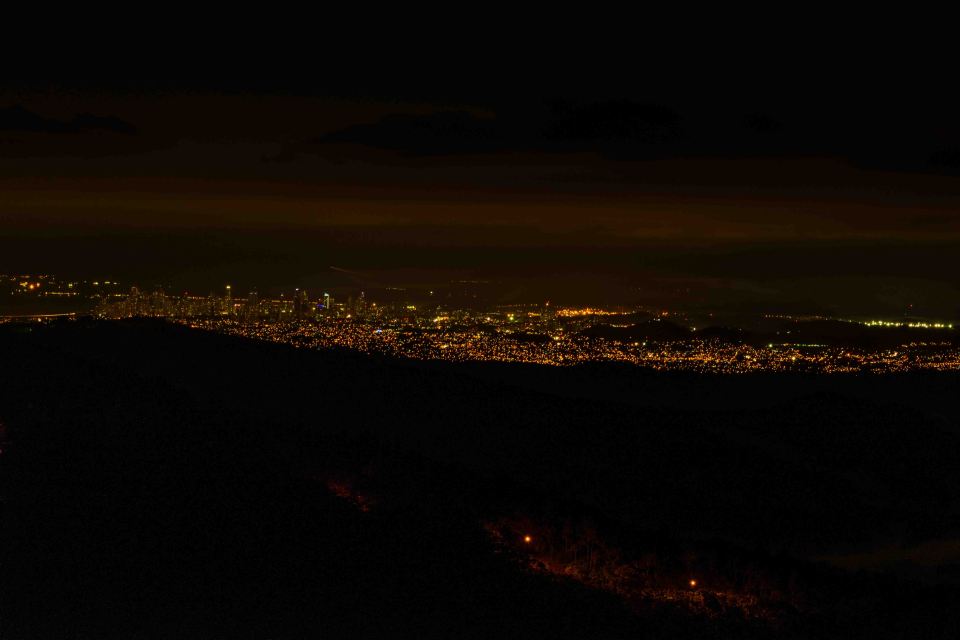
The house we have rented is on the top of the mountain and has a beautiful view of the City and Lake Alajuela as well as all the undeveloped jungle in between.

2014-JKH-Panama

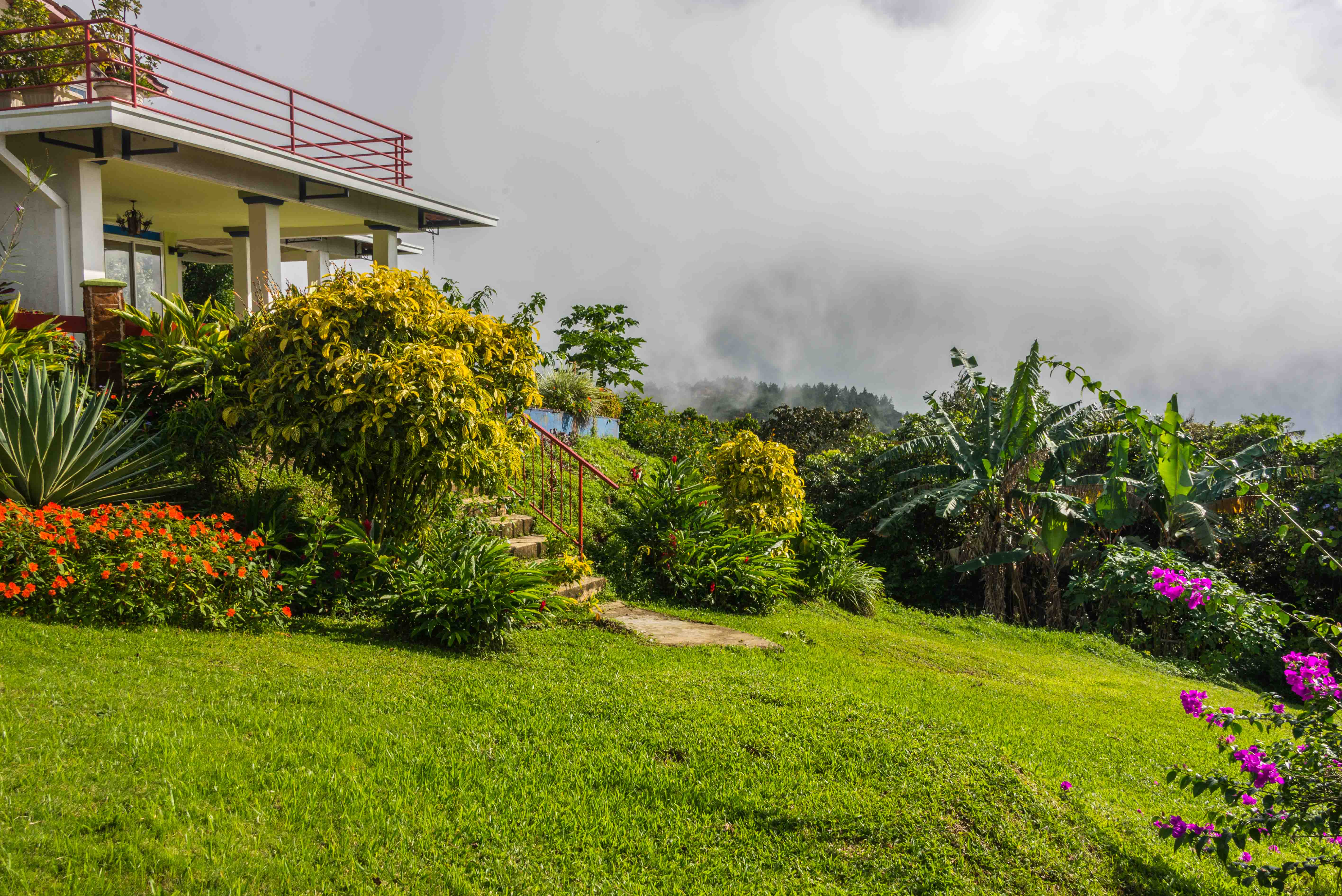
It is such a peaceful place here! I was sitting outside on the large covered deck this morning, listening to the sounds of nature.   A short-lived torrential rainstorm, typical of the rainy season we are at the height of, sets up a deafening roar as the large drops strike the jungle foliage. Silence erupts suddenly as rain stops as quickly as it had started and the constantly moving fog parts to allow the sun access to the earth and our yard.

Large bright butterflies emerge and begin their rounds of the colorful flowers blooming all over the property. A lone hummingbird approaches a blooming papaya tree and begins checking the hundreds of tiny flowers for just the right one. A lone brightly coloured Toucan arrives out of the cover of the jungle and settles briefly on a tree branch in the sunshine before continuing his journey through the jungle. A flurry of activity within the trees at the edge of the property eventually reveals a white-faced Capuchin Monkey. He peers at the house cautiously then moves on to an adjacent tree. This place is amazing!

There is a kind of neighbourhood watch organization here and they have an update meeting scheduled for today that we plan to attend. We arrive at the small restaurant in the club area of the complex to find a number of people and a bright shiny Ford police truck, which has just been assigned to the police detachment responsible for Cerro Azul. This is a very positive step forward as previously all the patrolling had to be done on foot. There are 2,800 lots here!

Now I have said before that when I do not have my camera with me, things happen that make me wish I had it with me. Today was no exception!

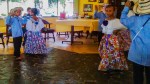
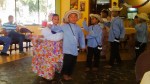
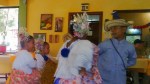
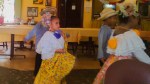
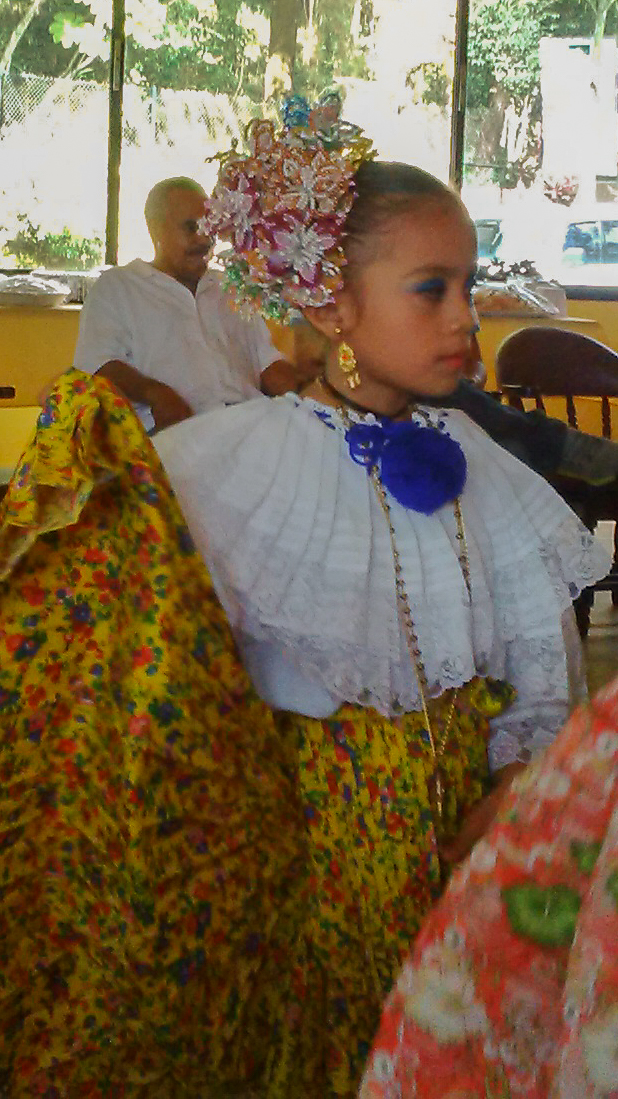
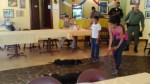
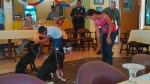
A bus full of around 20 young kids from the Catholic school at the base of the hill rolled into the parking lot and unloaded. They looked like they were all probably under grade six. Parents helped to organize them outside the clubhouse and when they entered, they were all dressed in cultural costumes, complete with jewellery and makeup. The dancing began, once the music on the boom box started and they were surprisingly very good dancers for their age.

2014-JKH-PanamaWell, there I was without my camera, but I did have my Blackberry so I shot a few images to show what was going on. Sorry about the quality. It seems there is a rather large difference between a five-megapixel Blackberry Cell Phone Camera and a 24-megapixel Full Size Sensor Nikon. Anyways, here are the pictures.

We were also shown of a group of “At Risk” kids who have been working with one of the police officers to train their pet dogs. They put on a small demonstration of very obedient dogs going through their paces. All in all it was a very interesting meeting.

You just never quite know what will happen when you go to an event here.


A Wedding at Vera Cruz

2014-JKH-Panama

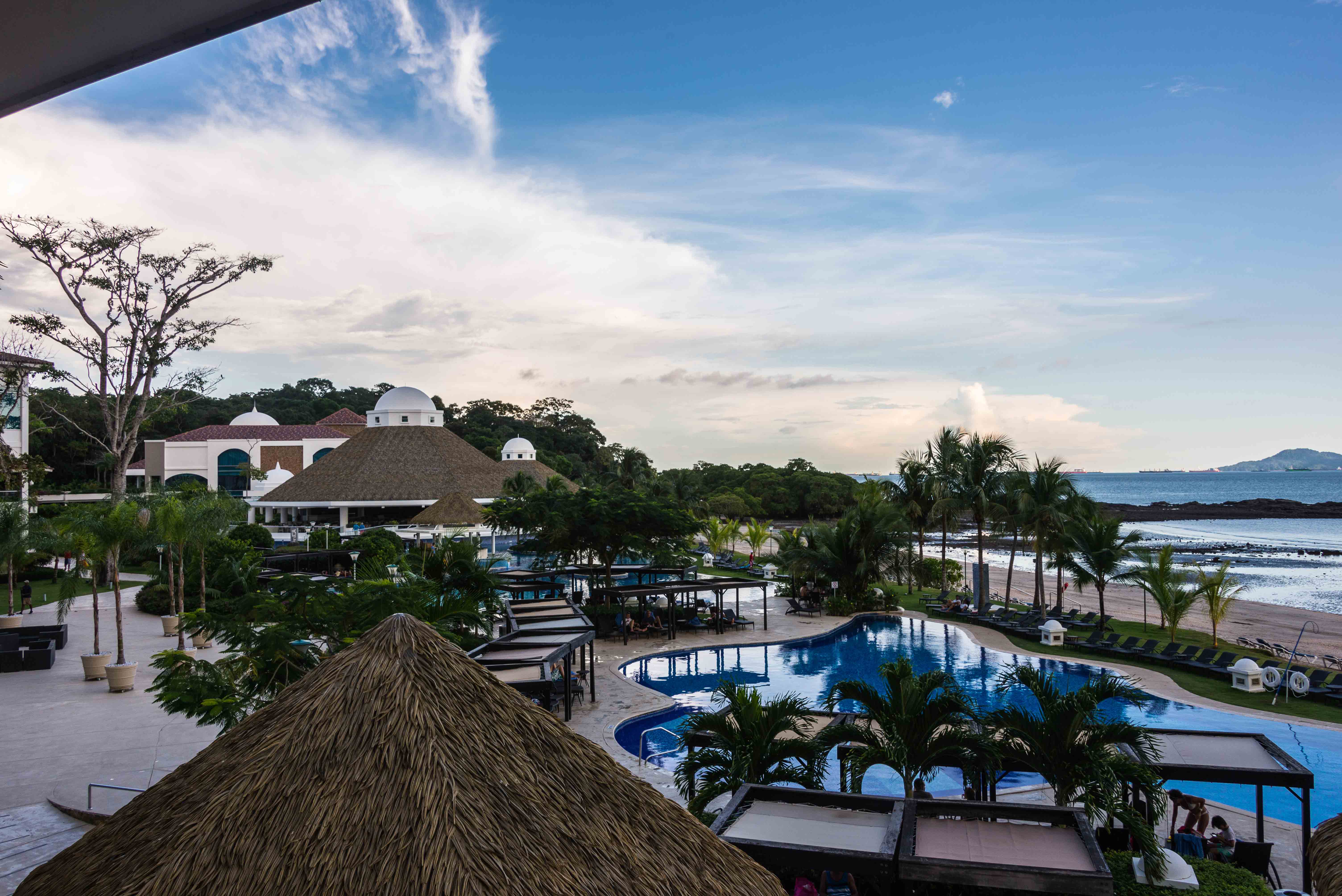
Today, we spent a lazy day around the sun-drenched pool at our hotel. The canal was not very busy except for the odd large container ship creeping into the canal. The weather was perfect with just a few large white cumulus clouds in the sky.

2014-JKH-Panama2014-JKH-Panama

2014-JKH-Panama

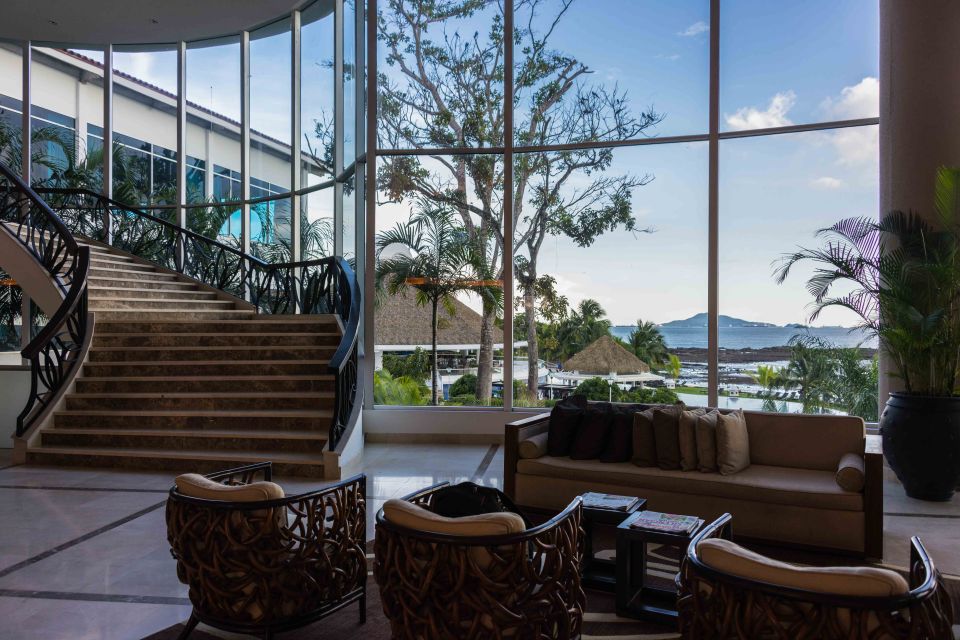
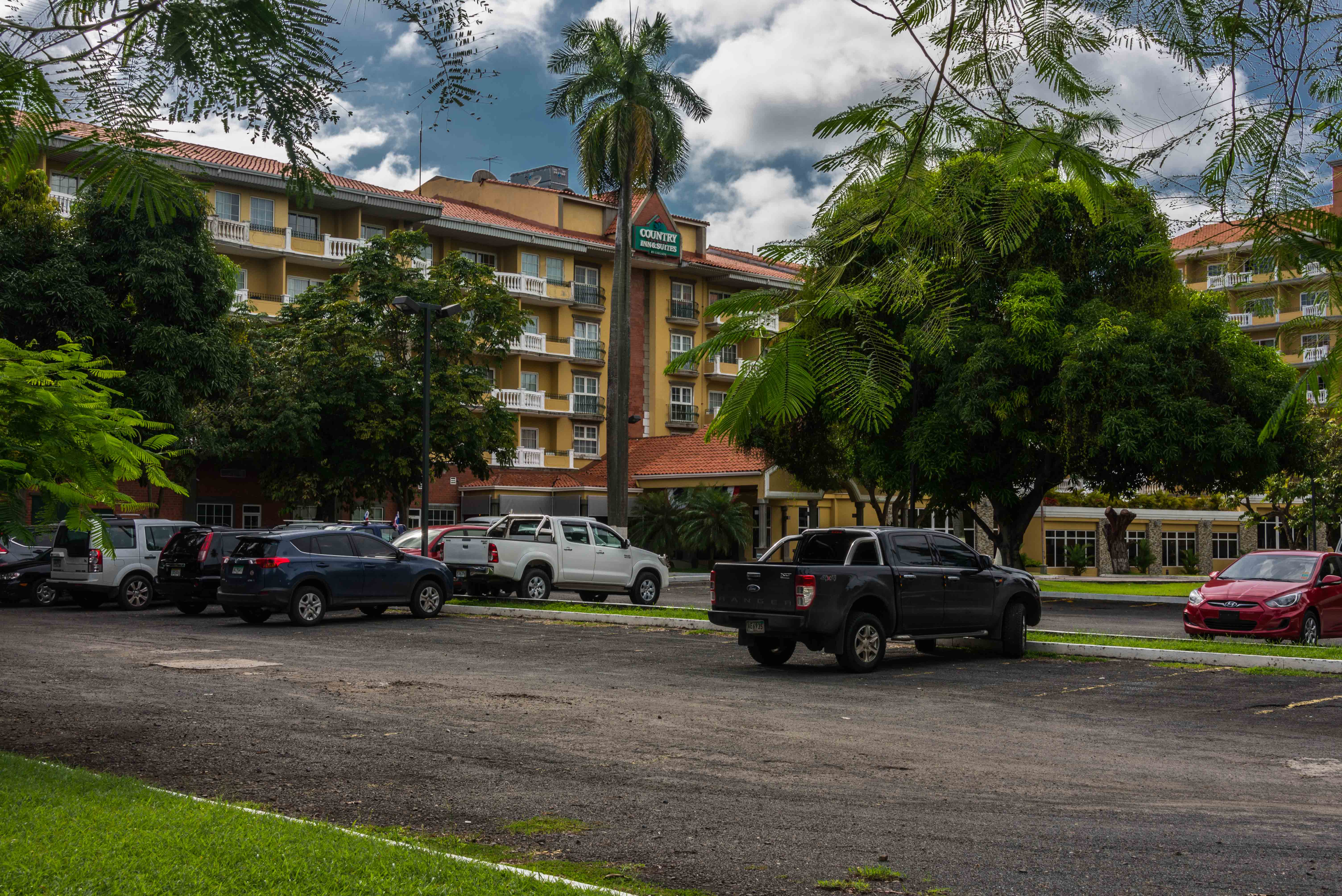
During the balance of Robert’s stay here, we are staying at the Country Inn & Suites by Carlson at Amador. Janine is staying with a friend, who lives in a more rural location, right on a lake that is visible from our property up the mountain. This is a convenient four-storey concrete hotel right on the banks of the canal in a quiet neighbourhood called Amador. It is right at the base of the Amador Causeway, which was built to protect the Pacific entrance to the canal. You can walk to the tip of the causeway where you will find a marina and a number of very nice restaurant, if you are up to a five-kilometer stroll. I am convinced we have found the best hotel location in Panama City, here, right on the banks of the canal. You can sit at one of the many tables around the pool and watch the huge ships head into or out of the canal. The Bridge of the Americas is only about a kilometer further into the canal. This is the second time I have stayed here and I continue to enjoy the service and location. Rooms are US$ 62.00 per night due to it being the off-season and that I booked it several months in advance. It comes with a large buffet breakfast that includes four hot dishes and lots of very fresh and so tasty watermelon, papaya, and pineapple, all in season here.

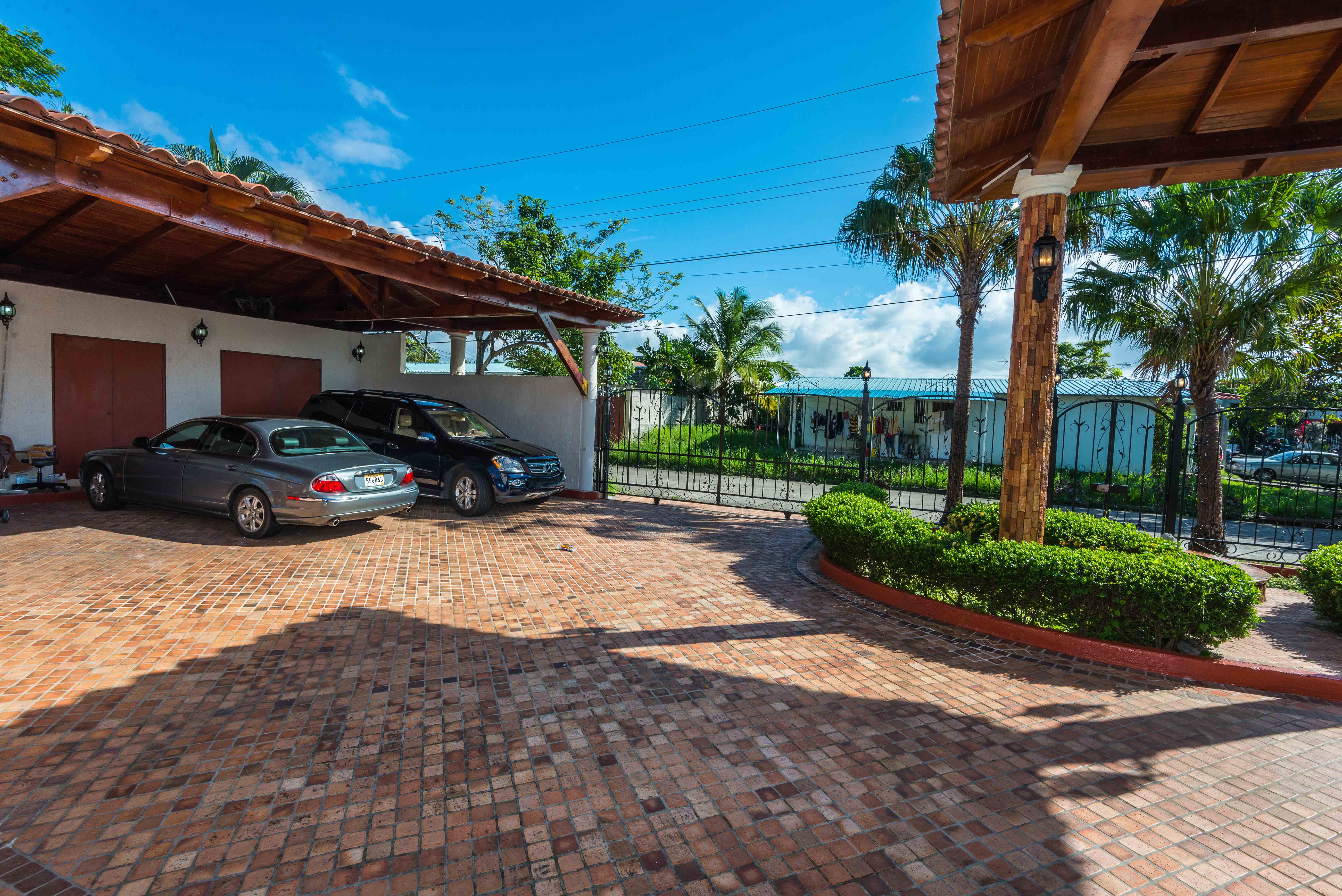
We decided we would venture over the Bridge of Americas to a small town called Vera Cruz, for dinner so we left the hotel around 4:40 in the afternoon and headed inland, over the Bridge of the Americas. We took the Vera Cruz exit, which is the first exit after leaving the bridge and proceeded along the paved shore hugging two-lane roadway, to our destination, which is about 10 kilometers up the coast.

2014-JKH-Panama

2014-JKH-Panama2014-JKH-Panama

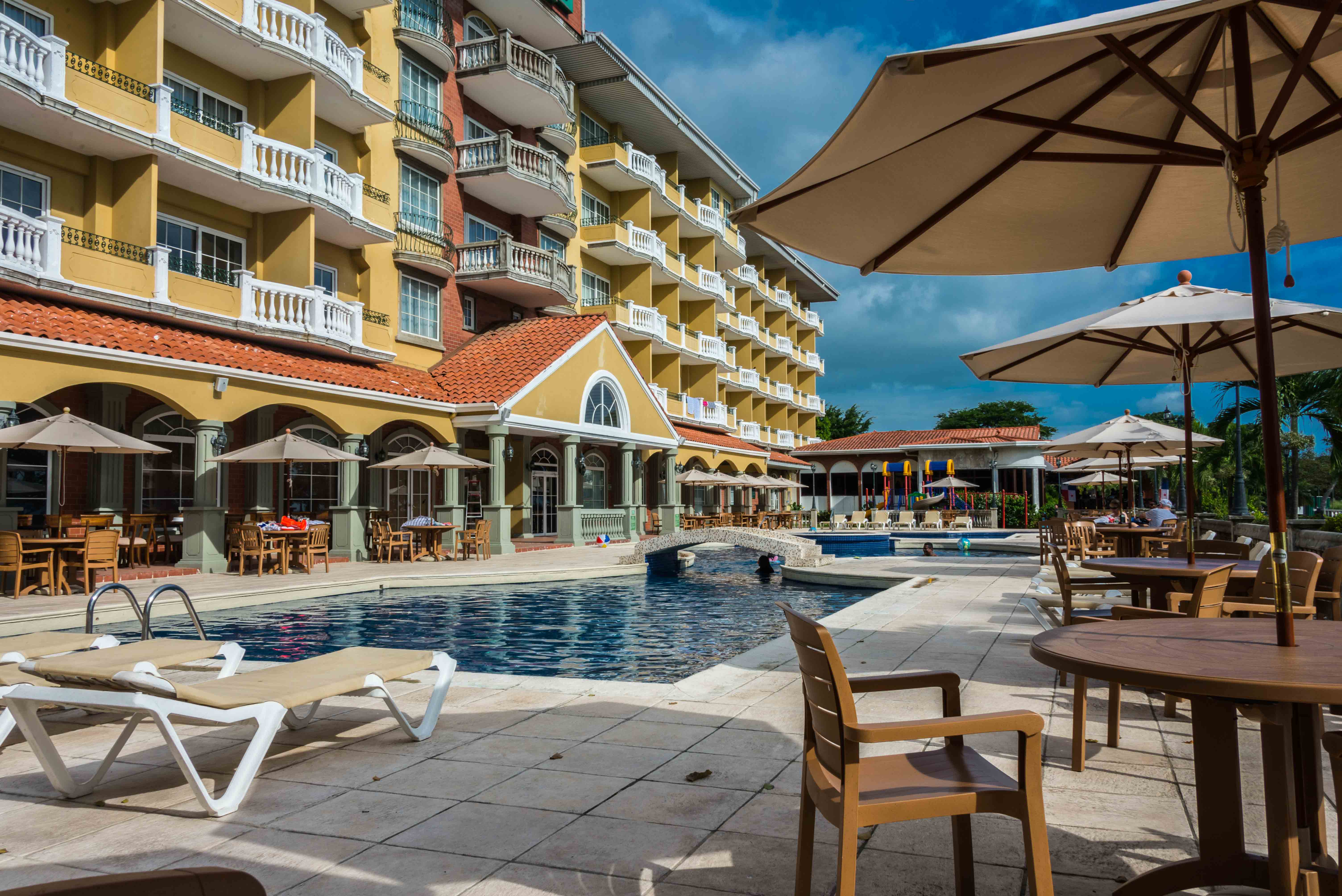
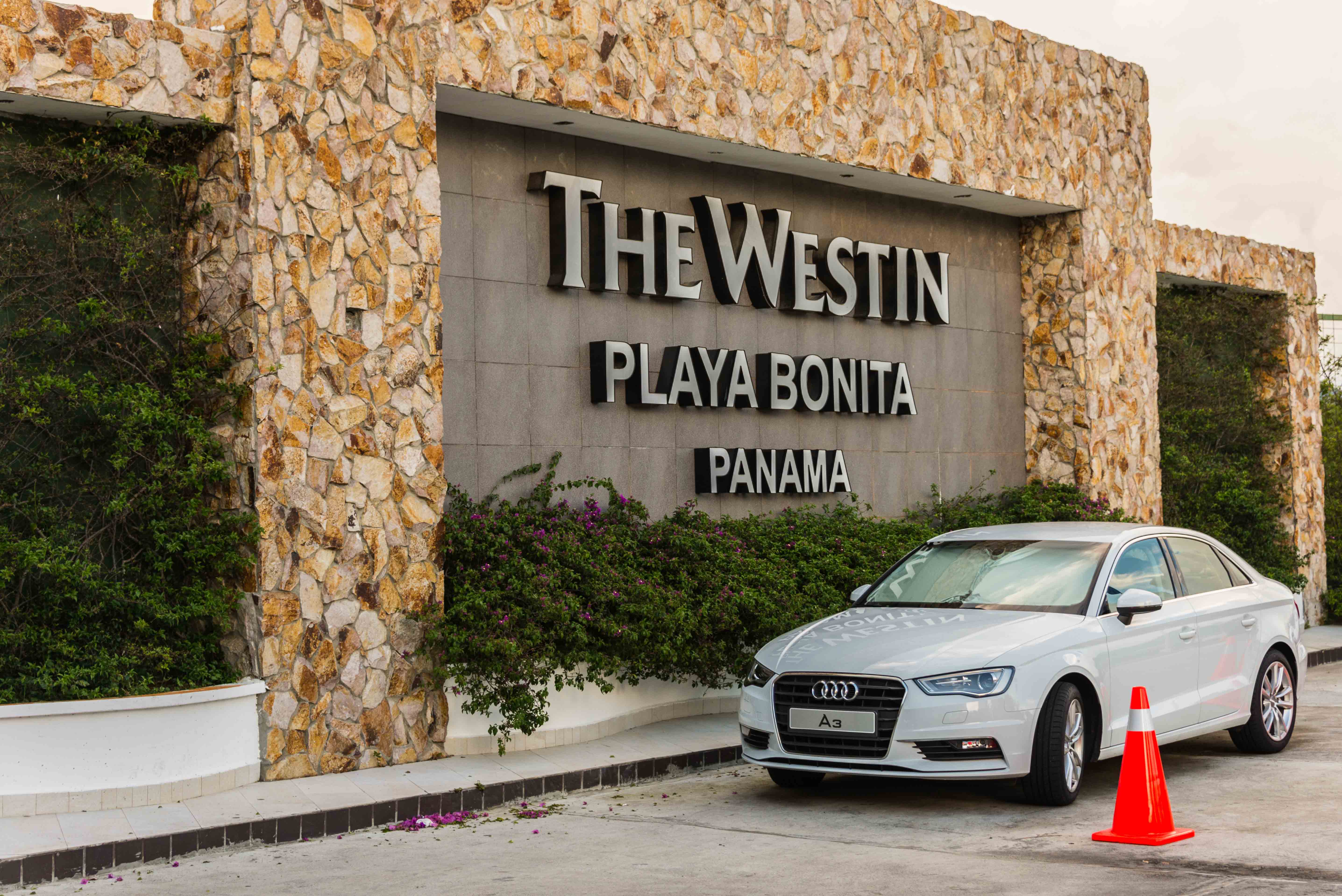
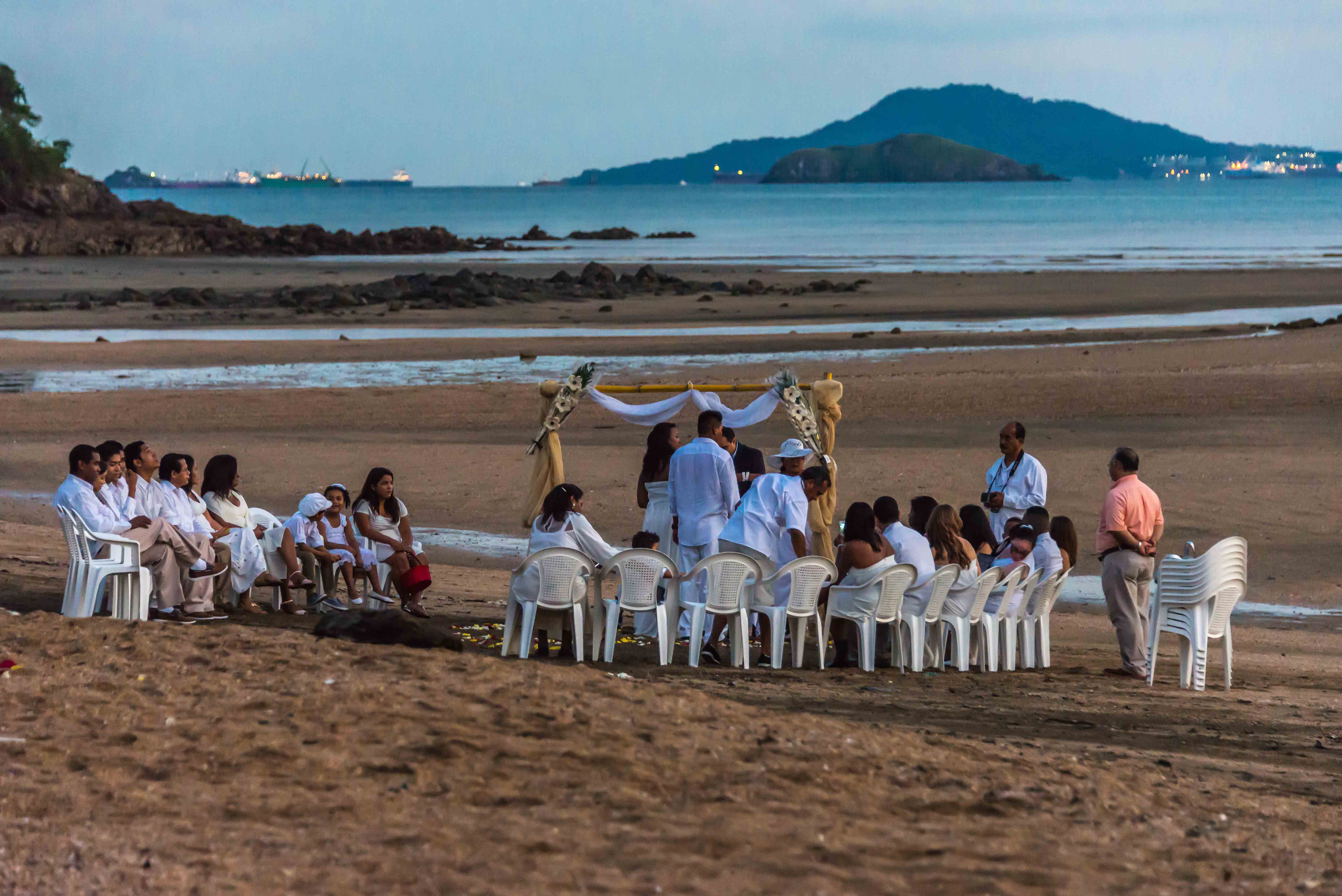
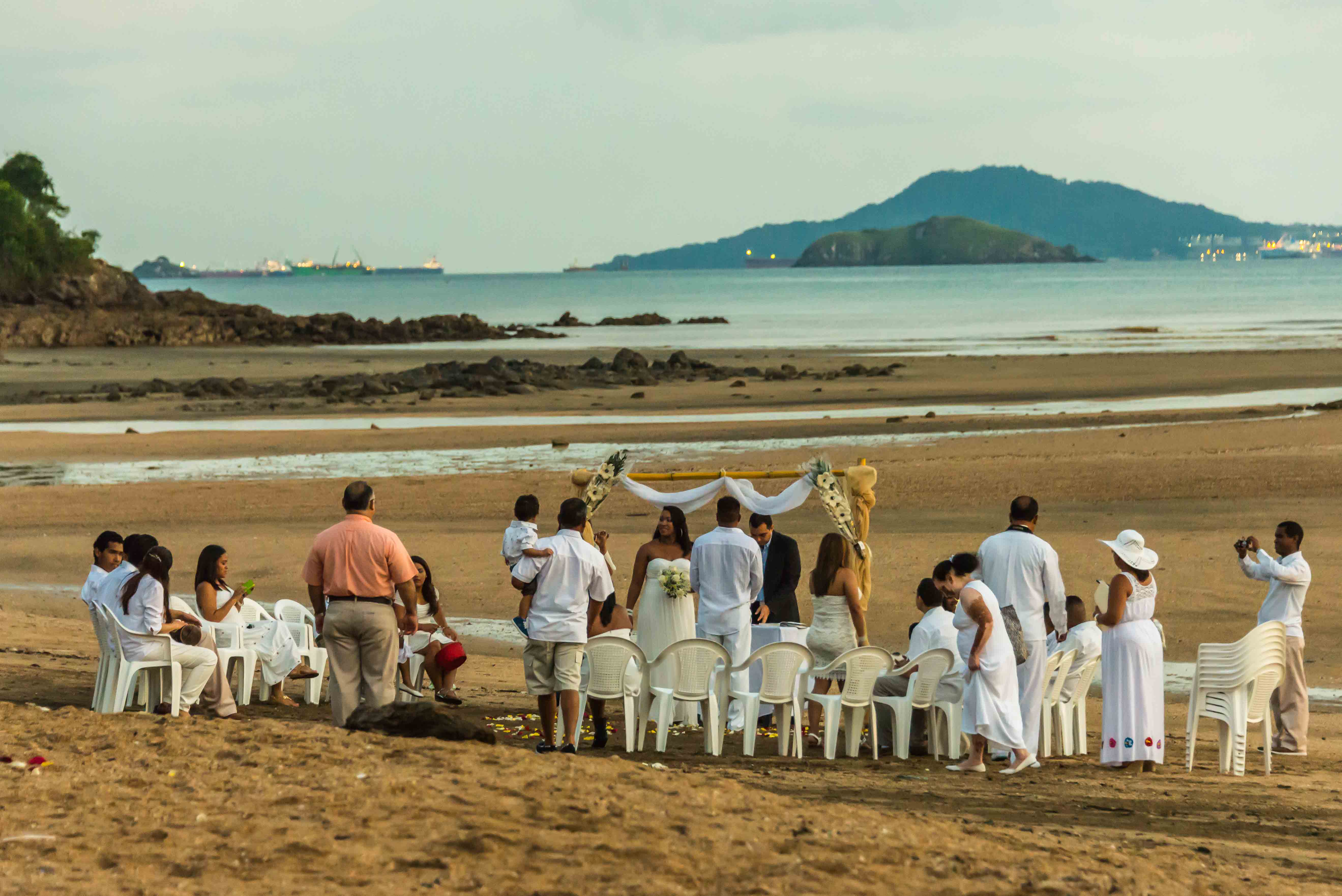
Along the way, we pass the two-year-old Westin Playa Bonita resort, which we stopped at briefly to take in the views. We continued on to our destination and selected a restaurant right on the beach, just before sunset. While there, we noticed a beach wedding being prepared for, right outside of the restaurant. Plastic chairs were set for the guests and final preparations were being made to make sure everything was just right. The ceremony began just before sunset when the wedding party and guests, all dressed in white, made their way to the ceremony. It was a perfect setting for a wedding and the sunset was spectacular.

2014-JKH-Panama2014-JKH-Panama

2014-JKH-Panama

2014-JKH-Panama

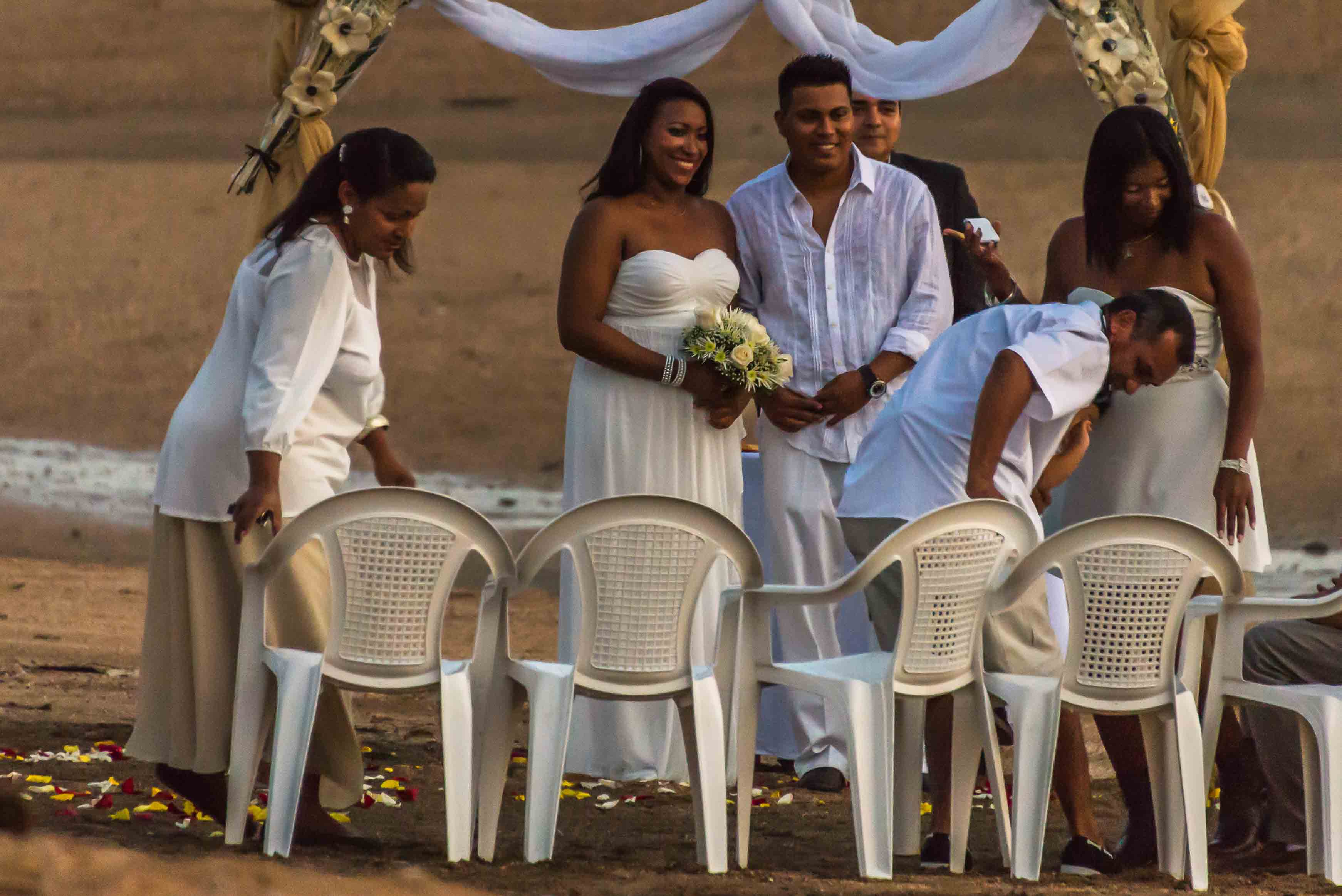
The wedding was all over in around 15 or 20 minutes and everyone returned to the restaurant where a separate area had been set up for the wedding dinner. Meanwhile, I had been clicking like crazy with my long lens. I just could not leave without getting up close and asking the bride and groom for a shot. I guess you just never know what you will run into around here.

2014-JKH-Panama

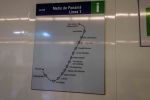
Panama City’s New Metro

2014-JKH-Panama

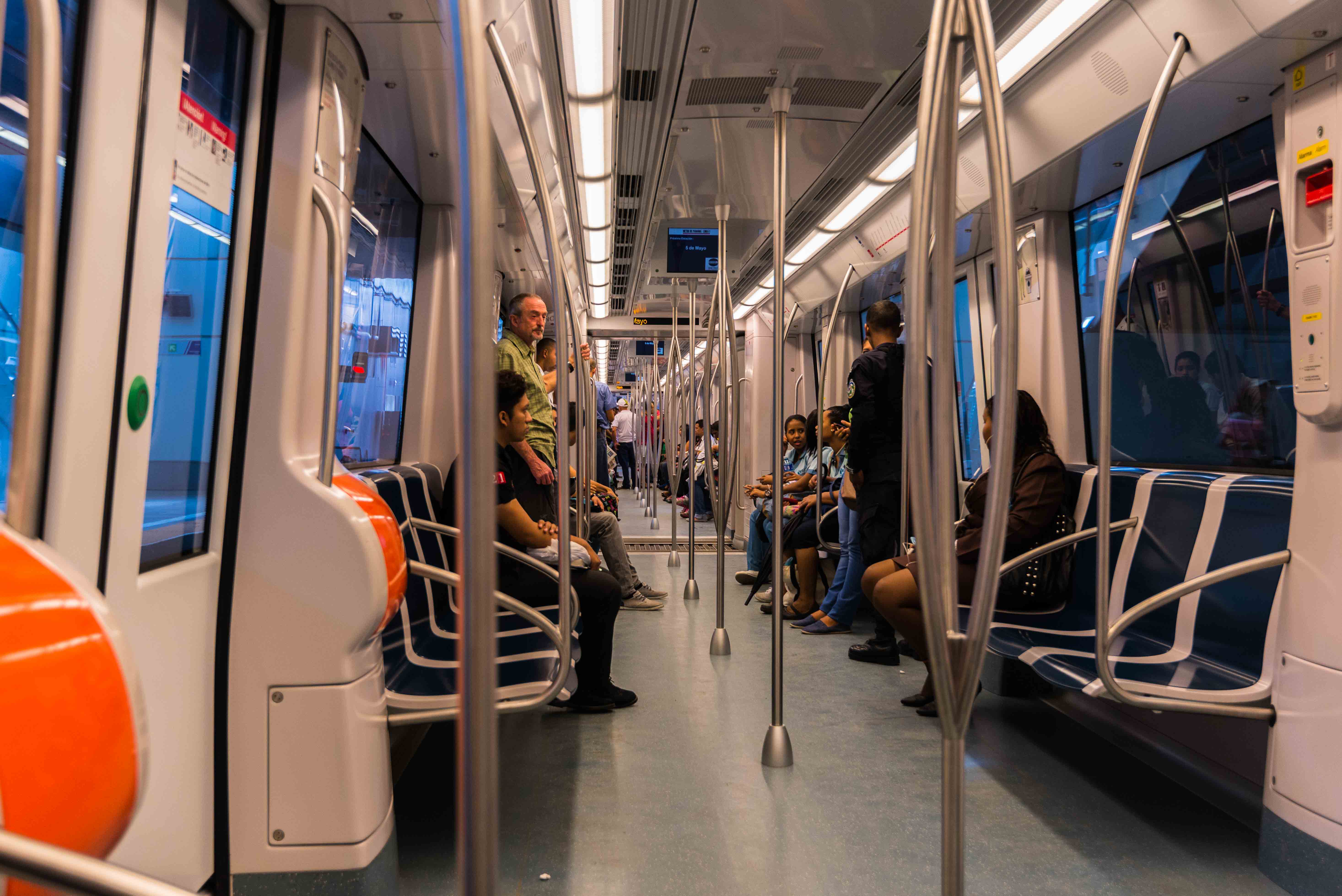
We are traveling with a transit expert, my brother. Thanks to his transit interest, we began investigating the local transit system to get around. There is a brand new subway here, which just opened in April. It is the first sub way in Central America and it is crowded much of the time. This is the first of four legs to be constructed, to aid residents in getting around without using cars.

According to our expert, the mark of a successful transit system is one that takes less time to get from A to B than it would by car. This system certainly meets those criteria, given the completely unpredictable traffic here in the city.

2014-JKH-Panama

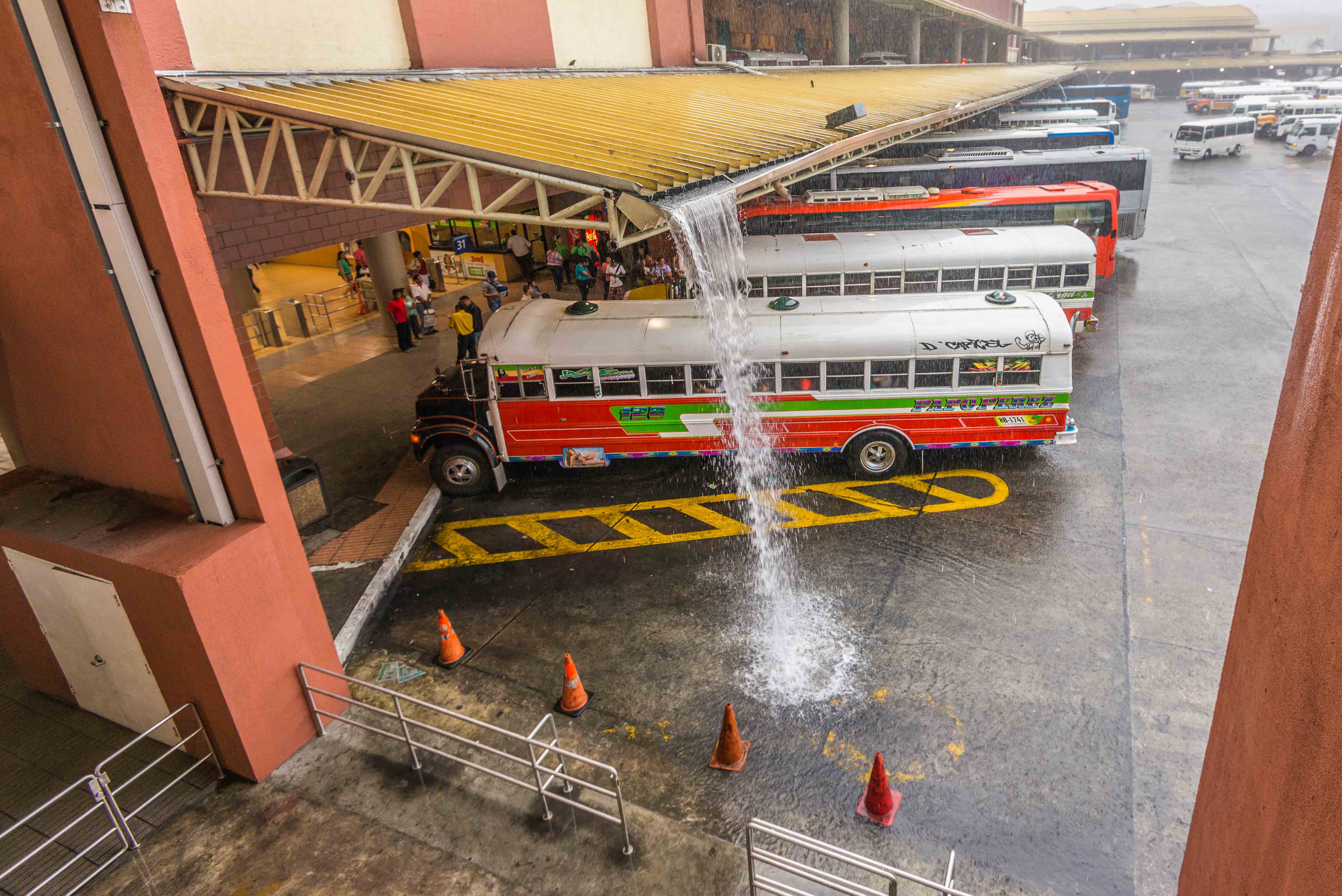
A new Metro bus system was introduced here, starting around four years ago. The old Diablo Rohos were individually owned ex Miami school busses, imported and rehabbed for use as transit buses. They were an art form as each is individually painted with the characters that the owner considered either good or bad. It is interesting to see a Roho heading down the street with Osama Bin Laden air brushed on the hood and Jesus Christ on the rear with Mickey Mouse on the side along with an image of his girlfriend. Each design is personal. These are seriously customized hot rods, with lots of chrome, lights, noise, strobes and dual six-inch tail pipes that roar like a lion. They achieved their name of Diablo Rho (Red Devil) because, as individually owned busses, they would race to the next stop to beat the other buses and capture all the fares. Traffic suffered the consequences. Sadly, standard Metro busses are replacing this art form. Currently, many of the old Rohos can be found stored in a field behind the Westin Playa Bonita, where the resort has carefully frosted the windows looking out on the storage area. Rumor has it that they are scheduled for yet another overhaul for service as school busses here in Panama.

2014-JKH-Panama

Here, you cannot use cash on public transit. You buy a card and load it with cash. Simply tap the card at the entrance and exit to the bus or subway to gain access. Fares are $0.25 for the bus and $0.35 for the train. There are no transfer privileges.

2014-JKH-Panama

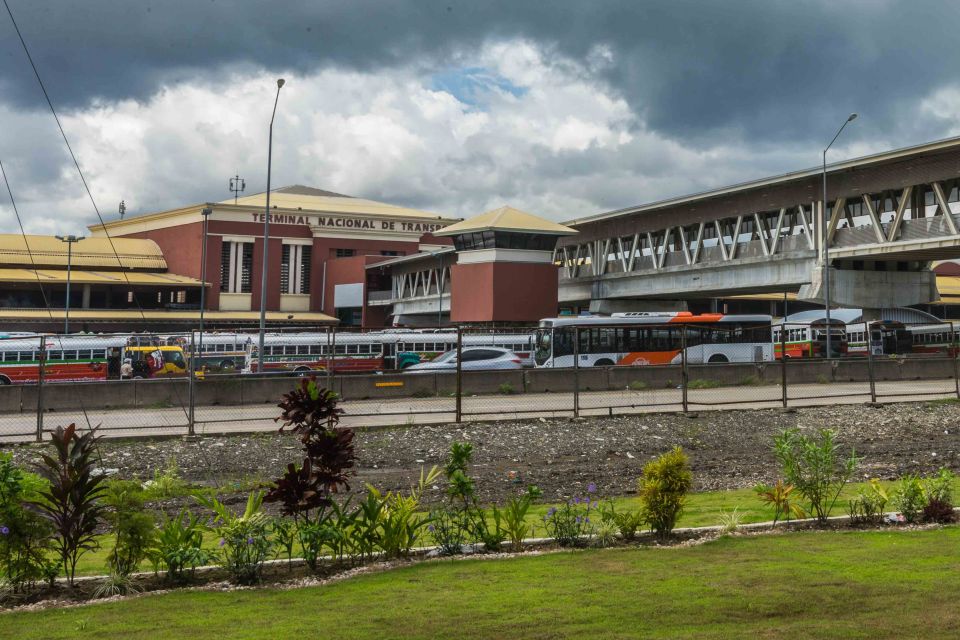
We managed to get in a couple of day trips via transit before Andrea arrived. We successfully got to the tip of the Amador Causeway, which contains a number of restaurants at the entrance to the canal and an incredible view of the downtown lights. We also managed a visit to the Miraflores canal locks, where there is a large visitor center and museum for the canal. A number of visits to Albrook Mall were also part of our schedule. Albrook is a popular mall with a large transit center, called the National Transportation Center, where the train and many busses arrive and leave. (We are in the rainy season)

2014-JKH-Panama

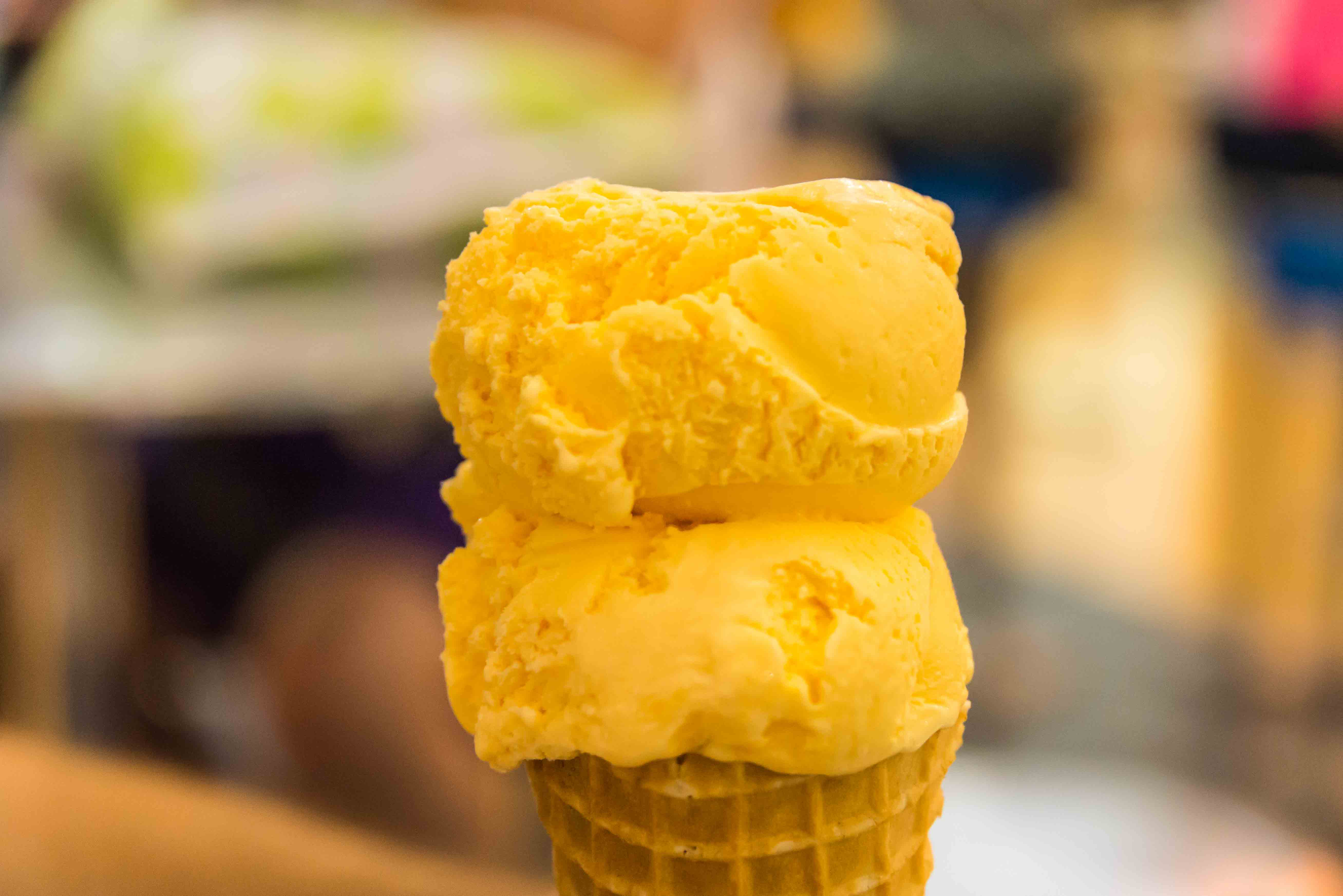
Since our arrival, there has been a large ice cream consumption increase! It seems that Janine and Robert cannot get by a place selling ice cream without sampling the stuff. I’m not sure if it is the price, $US 0.90, or the driving need to find the best ice cream in Panama. I’ll let you know if I ever figure it out.

2014-JKH-Panama


The Dumas Villa

Arriving in Panama City was a large non-event, after our perfect Copa flight from Miami!

Our flight was one of those rare flights where every little detail came together exactly as it should. Our Miami boarding was speedy and efficient and the in-flight service included a movie, hot meal, and an open bar, all without extra charges. It reminded me of what it was like to fly North American carriers, years ago. Very pleasant!

We proceeded to a uncrowded immigration area and walked directly to a smiling agent, who processed us in record time. Our luggage was already starting to arrive on the carousel. Amazing!

My brother, Robert, from Vancouver, and I are meeting our cousin, Janine, from San Diego, here. She is joining us to visit Panama and spend some time with a friend, who lives here. Andrea will join us later in the week at which time we will have a car.

2014-JKH-Panama

This trip we have decided to try out a B&B for the first week. I located a place from Trip Advisor, called Dumas Villa. It is US $240.00 per week and includes Wi-Fi and air conditioning. The location is great as It is only a couple of blocks from Metro Mall (one of the main malls in Panama City). The owner, a large Haitian woman, picked us up at the airport in her late-model Mercedes SUV, and drove us the 15 or so minutes to the Villa.

2014-JKH-Panama

2014-JKH-Panama

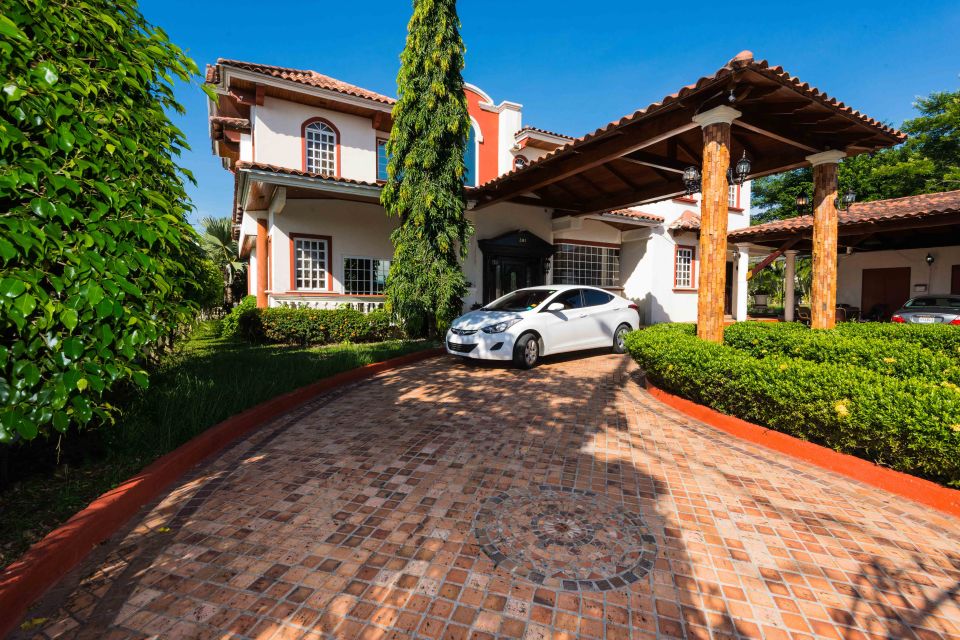
The house is spectacular, as you can see. The owner retired a couple of years ago from a lengthy career as a psychologist and opened her house to travellers. It is a beautiful and quiet home, with what I would call a kind of French colonial style.

2014-JKH-Panama2014-JKH-Panama

2014-JKH-Panama2014-JKH-Panama

Beautiful Historic Cartagena

2014-JKH-Panama

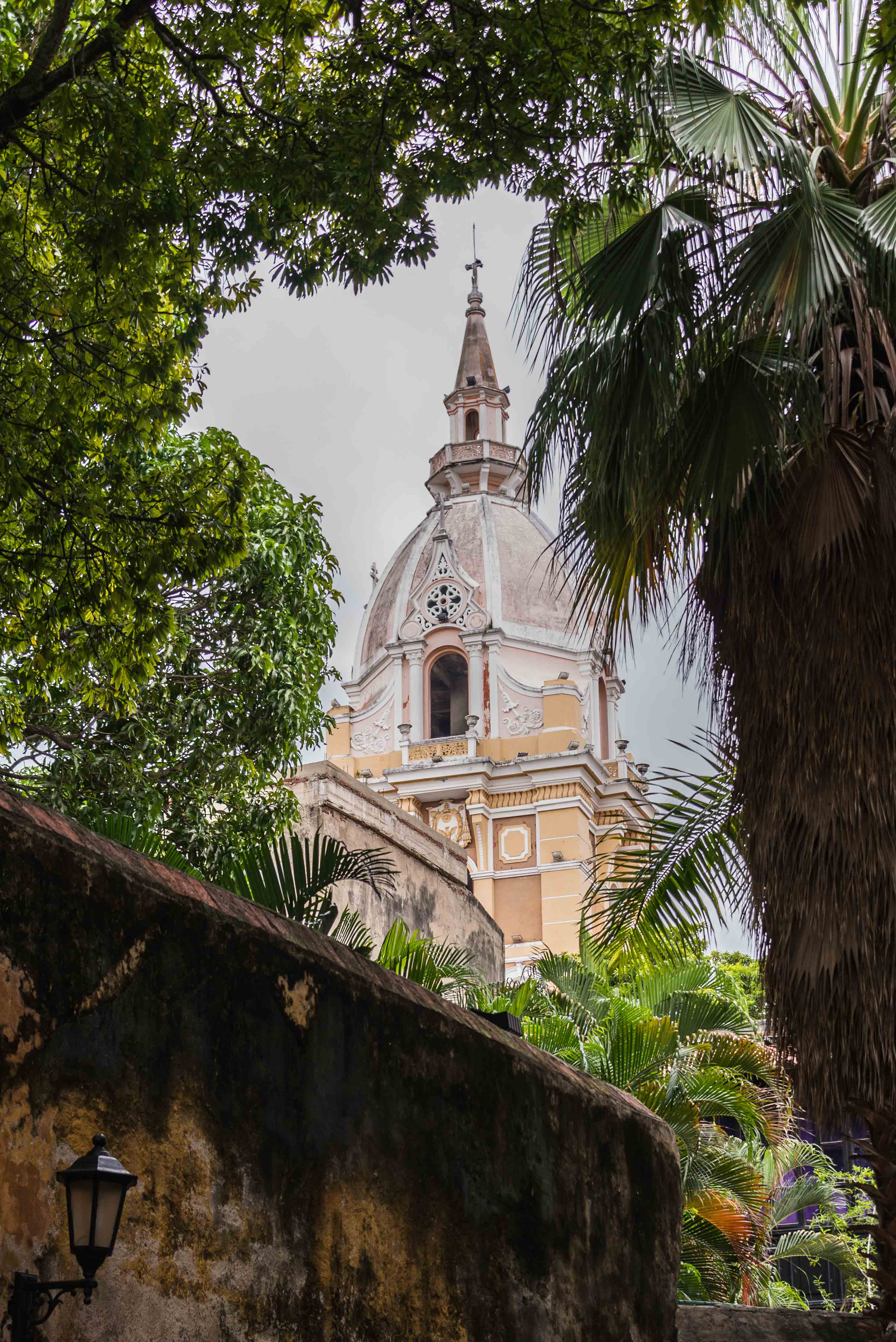
Cartagena, Columbia was our next port of call. This historical city is a world heritage site and one of the best examples of Spanish Colonial Architecture for the period. It has been on my-bucket list for a long time. Cartagena is the center of tourism for modern-day Columbia. The city has a population of almost one million and is the fifth largest city in Columbia. Named after Cartagena, Spain, it was founded in June of 1533.

2014-JKH-Panama

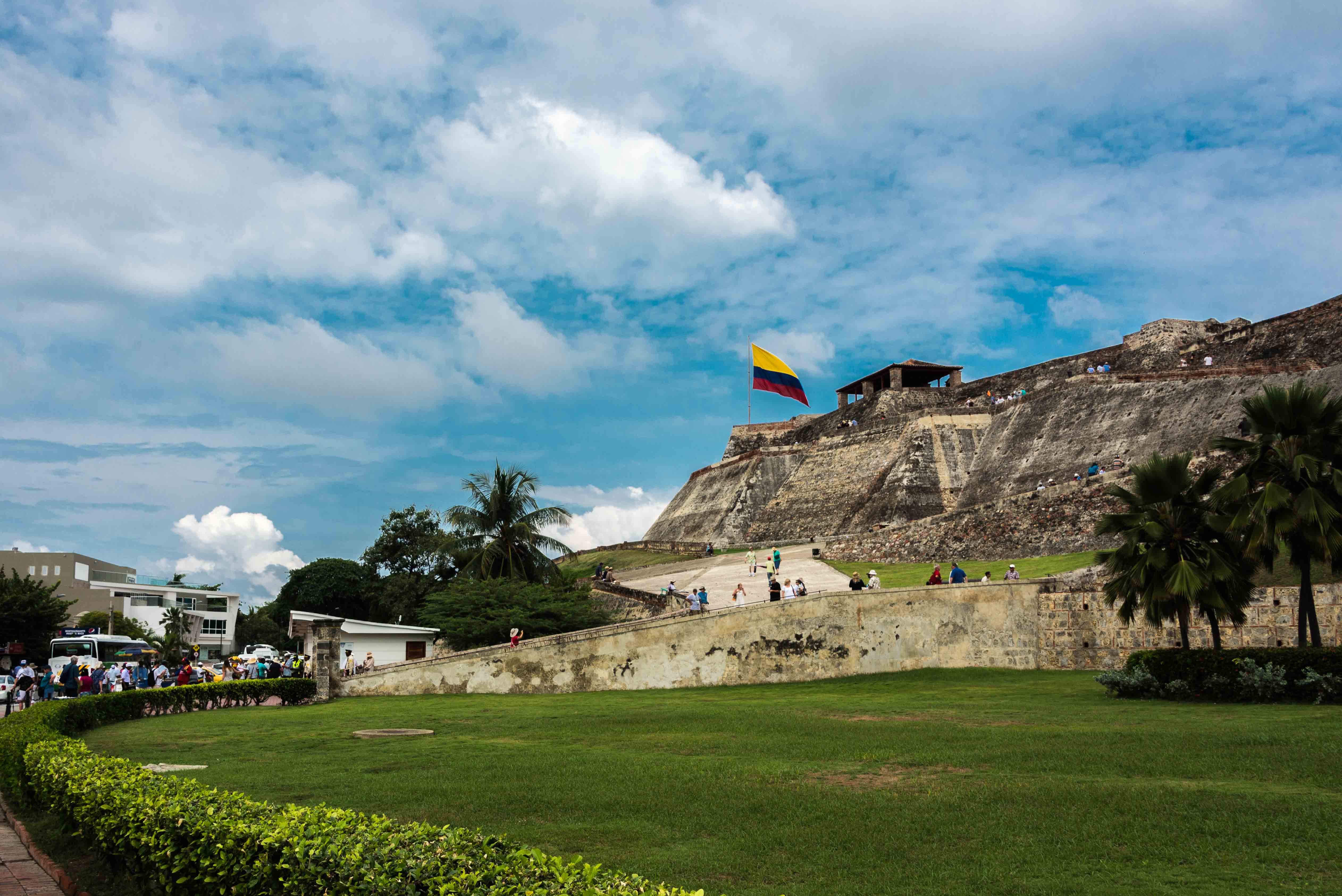
In 1586, Sir Frances Drake arrived with a powerful fleet and quickly took the Cartagena from the Spanish, destroying about one-quarter of the city in the process. After this disaster, when Spain regained control, she poured millions every year into the city for its protection which explains the fortifications still evident today.

2014-JKH-Panama

This trip will give some insight about the place to see if it is worth returning to in March, when our niece visits us in Panama.

2014-JKH-Panama

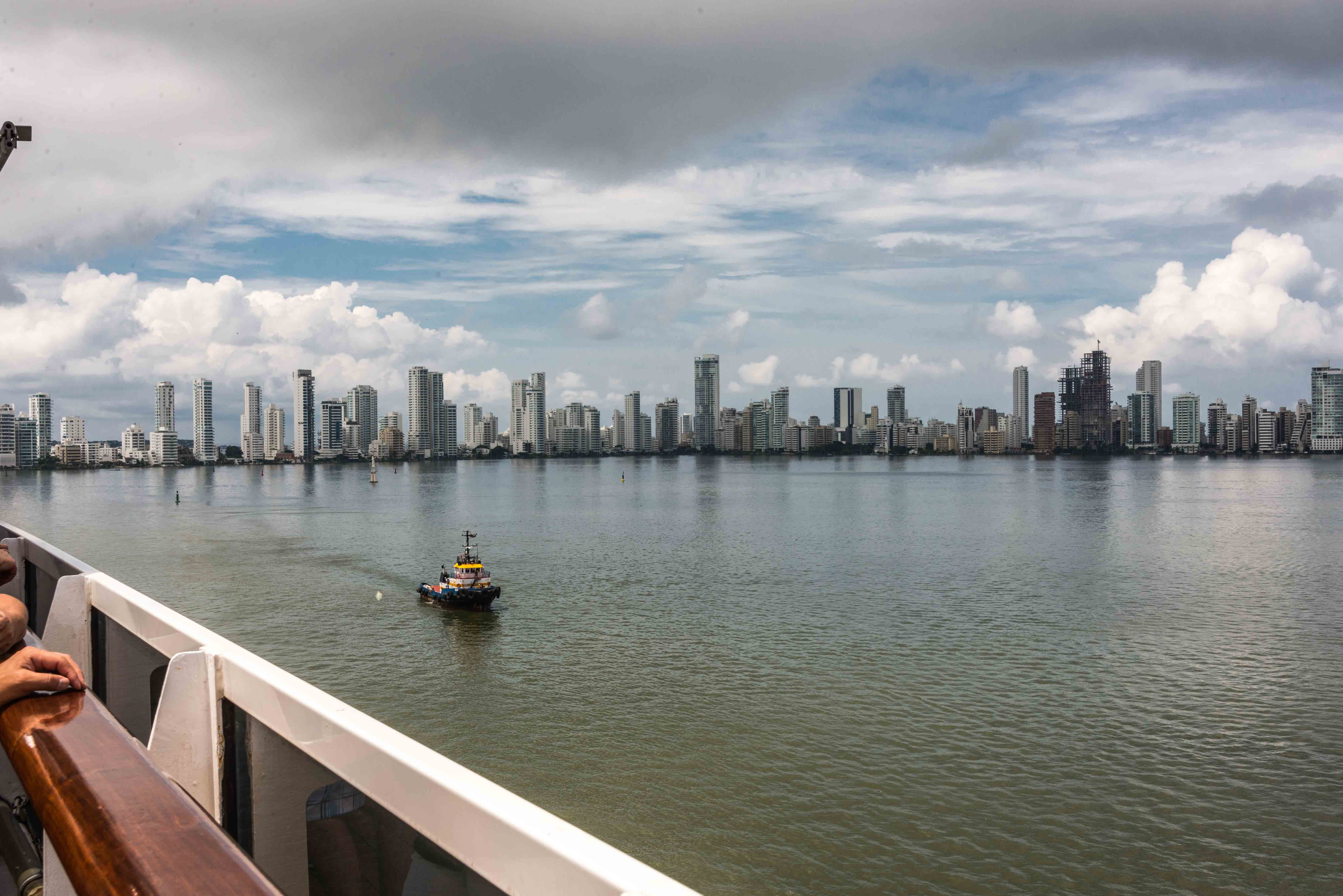
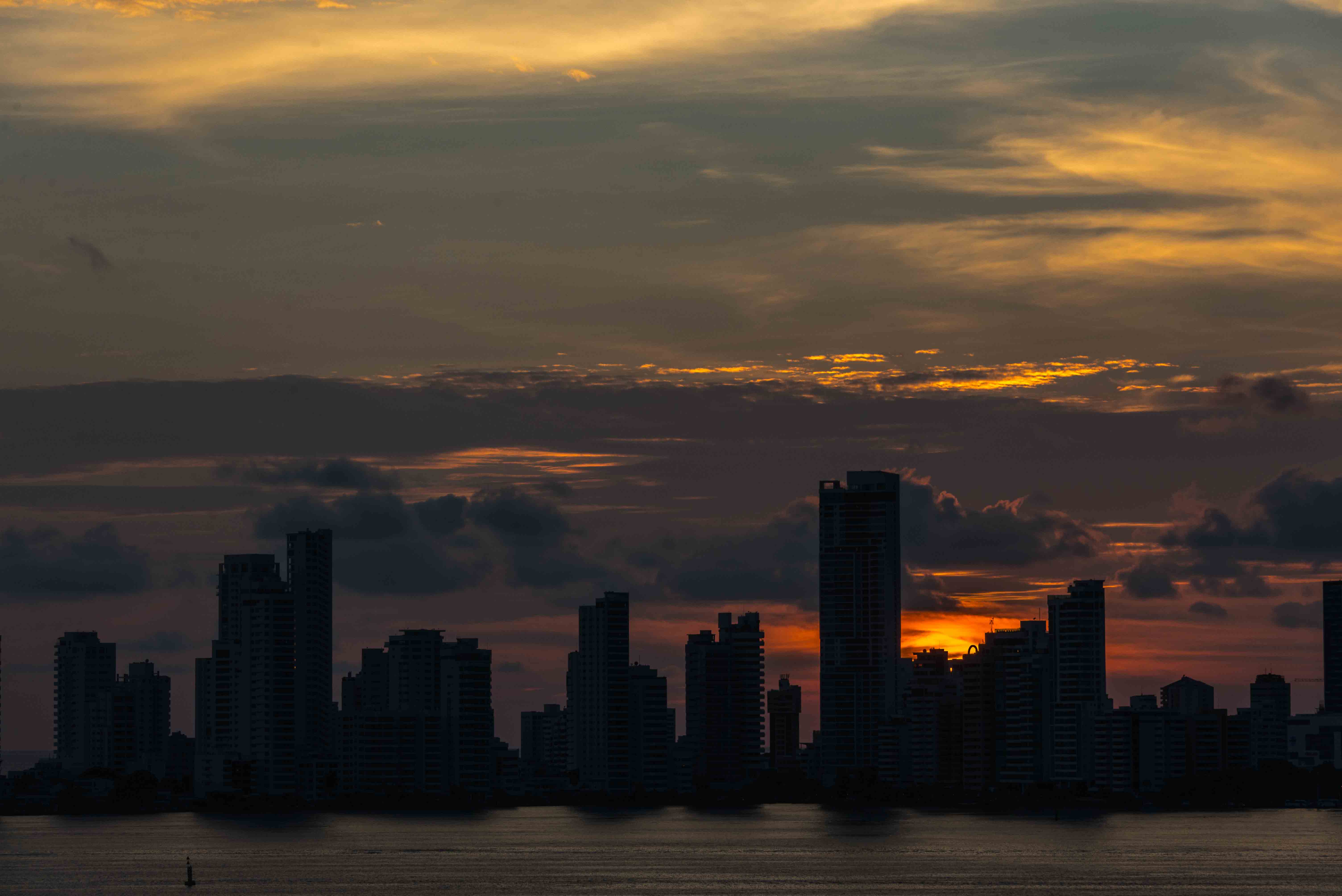
Today, our ship arrives in port at noon to a beautiful 28-degree partly cloudy day. I am glad the schedule brings us here later in the morning as it is a spectacular entrance that must be seen to be appreciated. Sneaking into such a beautiful port before sunrise would should be illegal.

2014-JKH-Panama

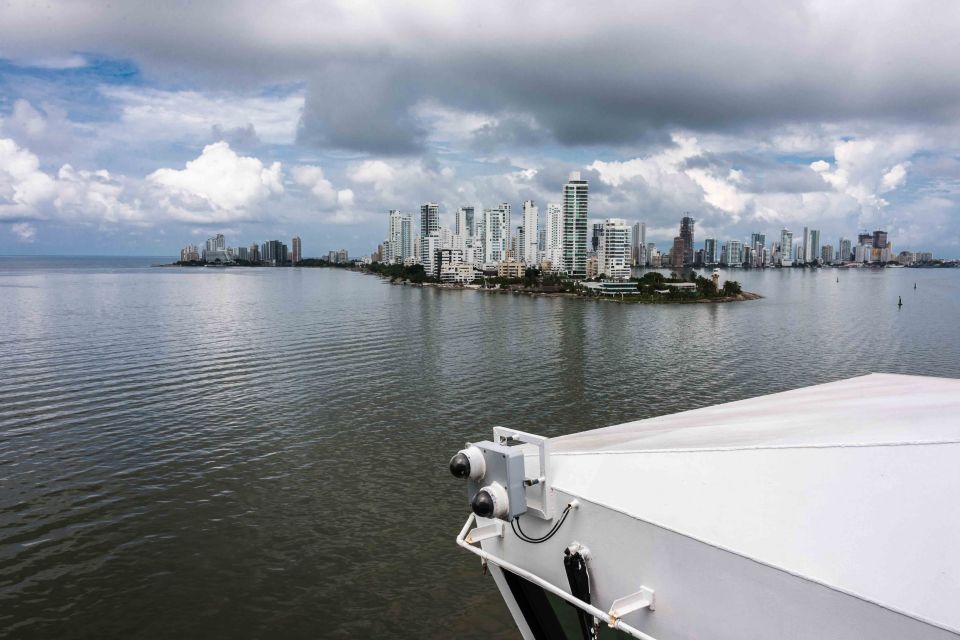
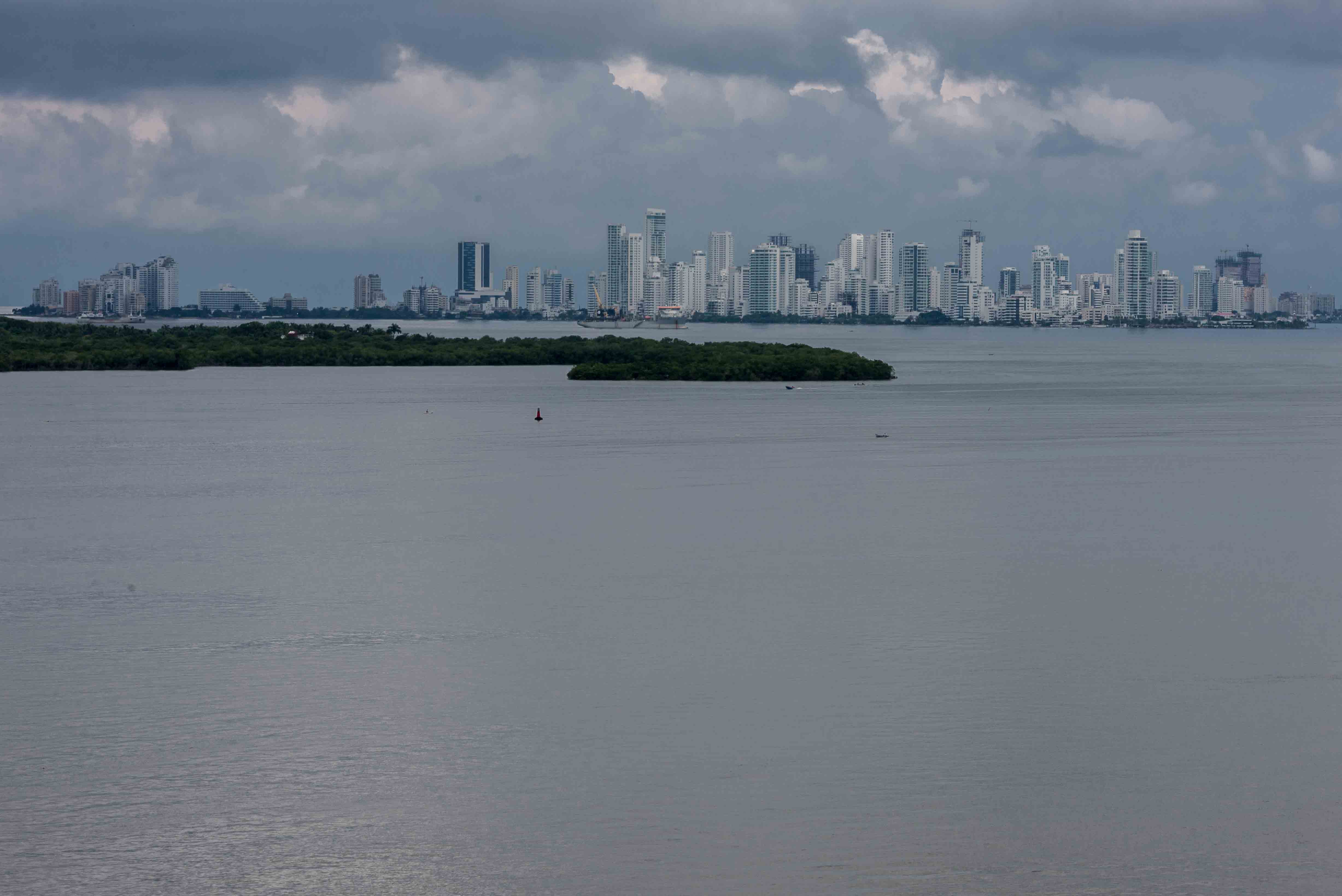
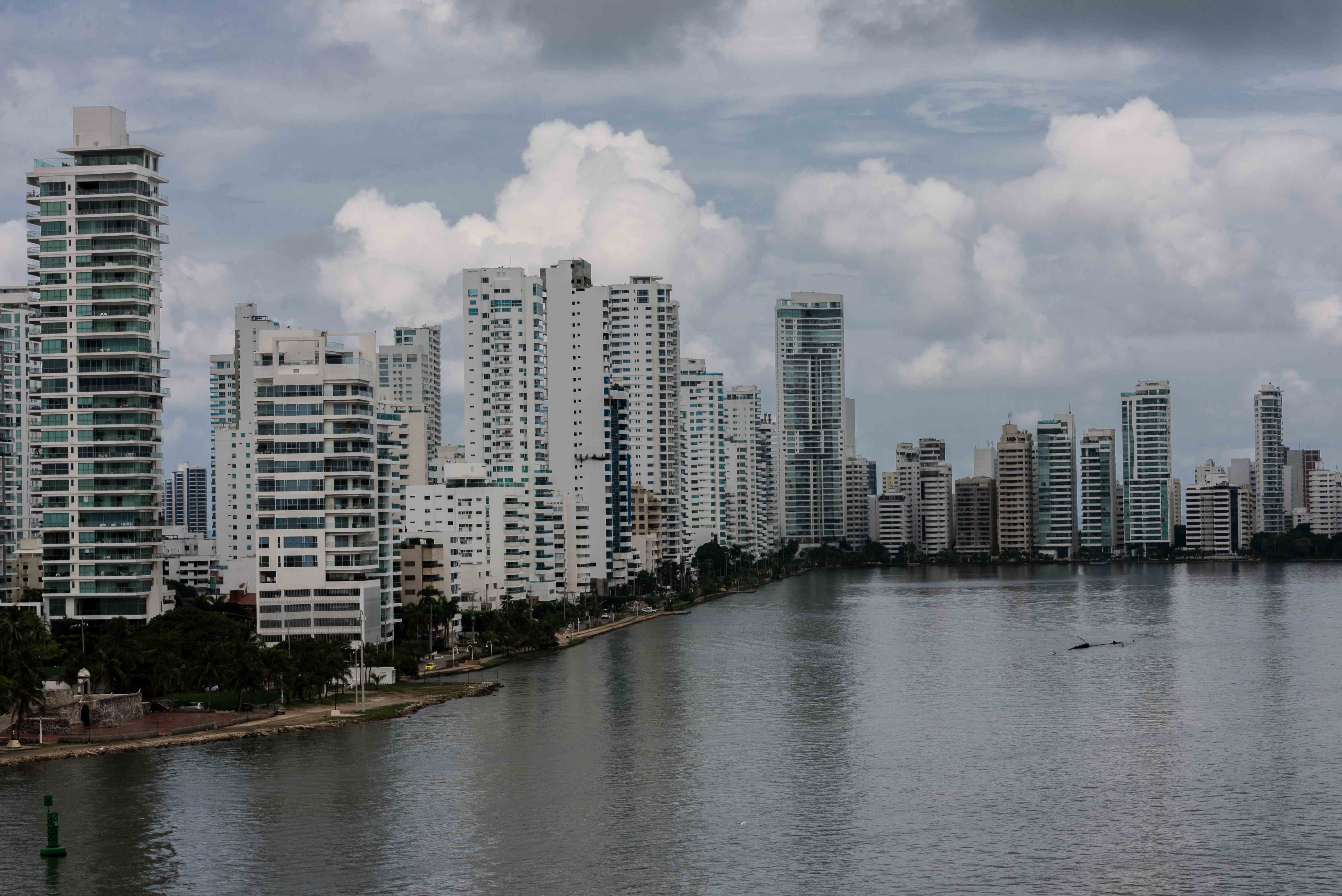
As we arrive, we find by a modern city of high rises all around the bay. The history of this place remains hidden to you until you leave the harbor area and seek out the old section of town.

2014-JKH-Panama

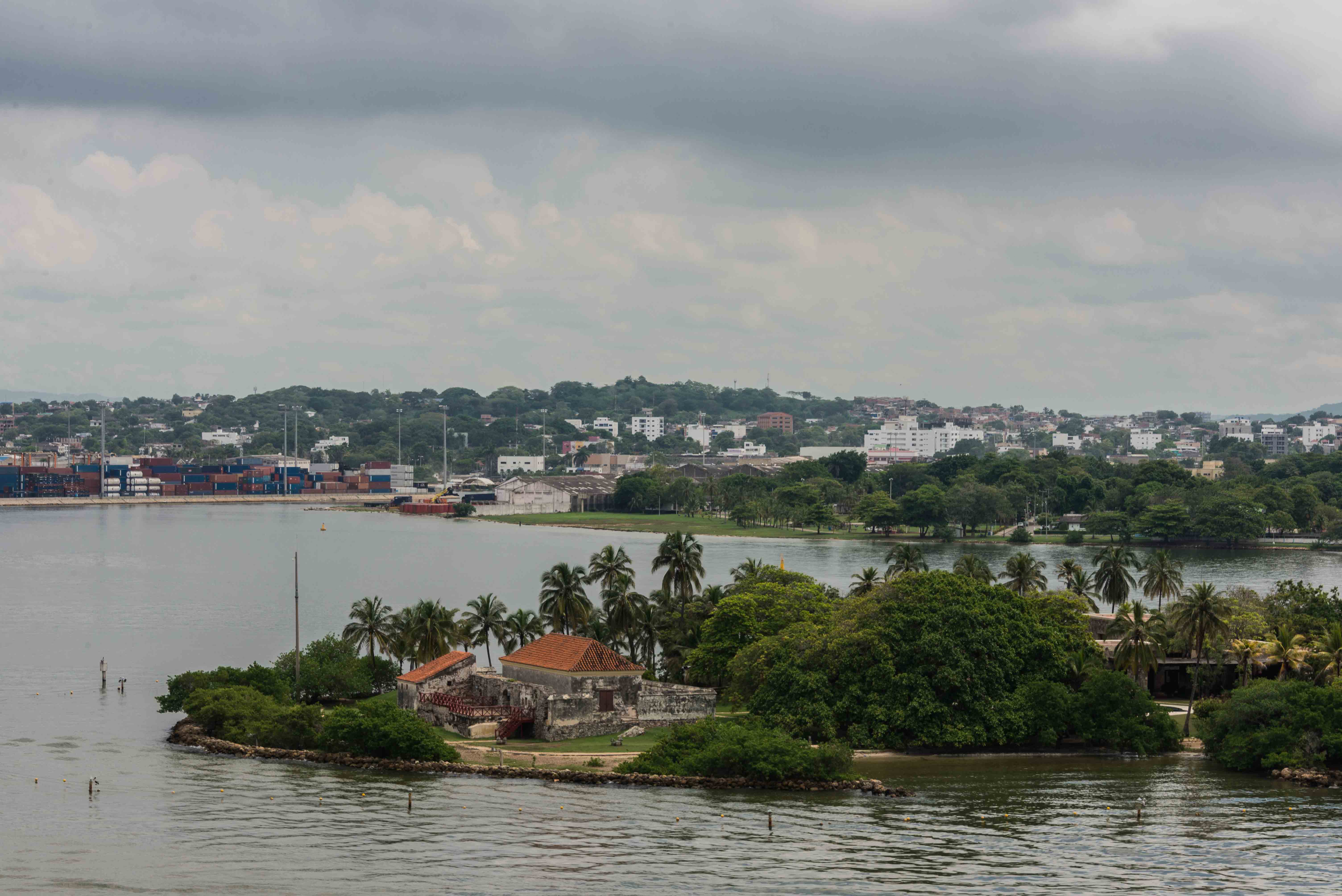
Cartagena contains intact mid-15th century Spanish Colonial fortifications. The walled city it a great example of the way a city needed to look when it was necessary to have fortifications to protect the occupants from pirates, plunder, and other countries who took a liking to your place.

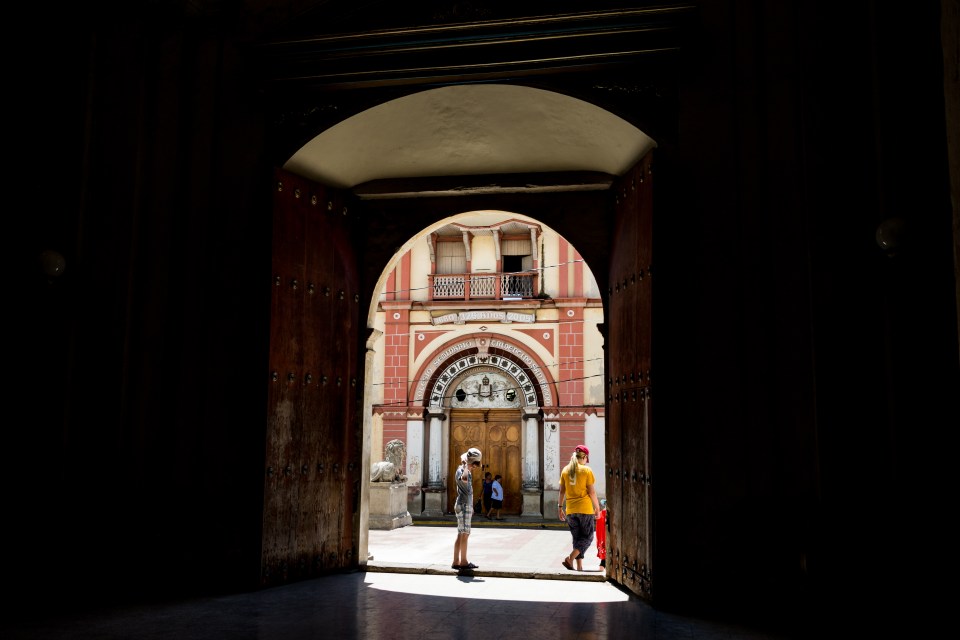
Wandering the streets is fascinating. They are narrow with walls built right out to the edge of the sidewalk. Second floor balconies on the front of many of the buildings sport bright colorful plants spilling over the edge of the balcony to give a beautiful display of color to the street below. The walls of the houses define the outside edge of the home and tend to follow the property line. Rooms typically line the inside of the exterior walls. Interior courtyards contain a garden. There are huge double doors on the front of the houses, large enough for a horse and carriage to pass through to the interior of the house. Remember it goes back to 1533!
2014-JKH-Panama

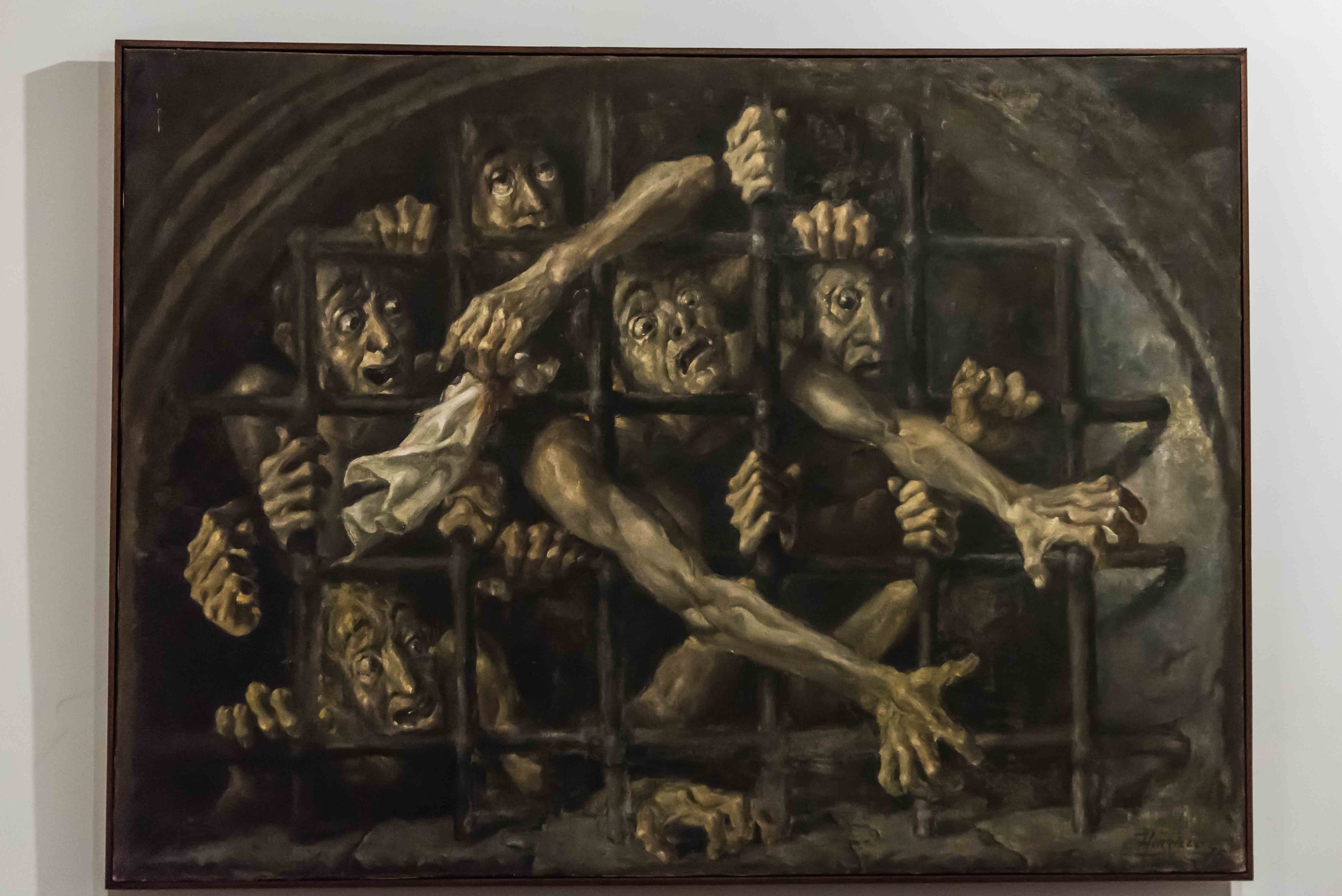
We visited the Palace of the Inquisition where the not so very pleasant history of how the Catholic Church forced money from local residents using torture for over 200 years, was explained. When the practice was eventually abolished, the residents of Cartagena promptly burned the place to the ground.

2014-JKH-Panama

Cartagena is a wonderful combination of new and old, with lots of colorful restaurants, coffee houses, hotels, and fascinating things to see. It is a place to wander and absorb history. Do not be rushed!

I must return to this place without the other 1,799 passengers, so I can absorb more and learn about life here in days long ago.

There is an interesting cruise ship terminal in Cartagena. There is a nice boardwalk through native vegetation, which has a large number of birdcages. A closer look reveals that many of the cage doors are open and the birds are using the canopy in the immediate area. They are people friendly and are fed centrally, where they ignore the people. McCaws, Parrots, Monkeys, Deer, rabbits, and other native birds and animals conduct a noisy existence in the immediate area. If you close your eyes, you will swear you are in the middle of a very noisy jungle. It is a wonderfully appropriate and unique approach to cruise terminals. If you are in Cartagena, make a point to have a look at this place.

2014-JKH-Panama


2014-JKH-Panama


Our Panama Canal Transit


2014-JKH-Canal


2014-JKH-Canal


2014-JKH-Canal2014-JKH-Canal2014-JKH-Canal

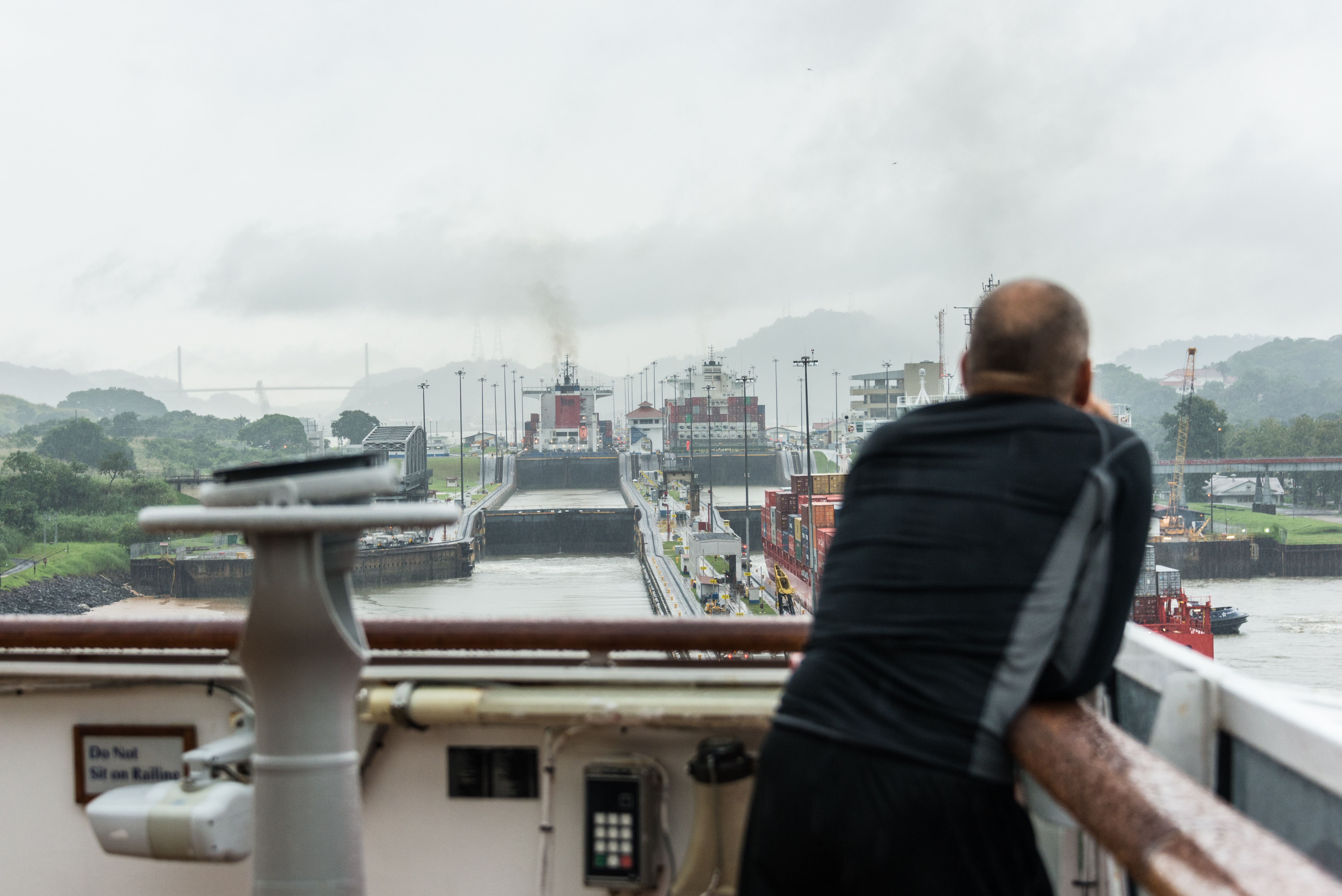
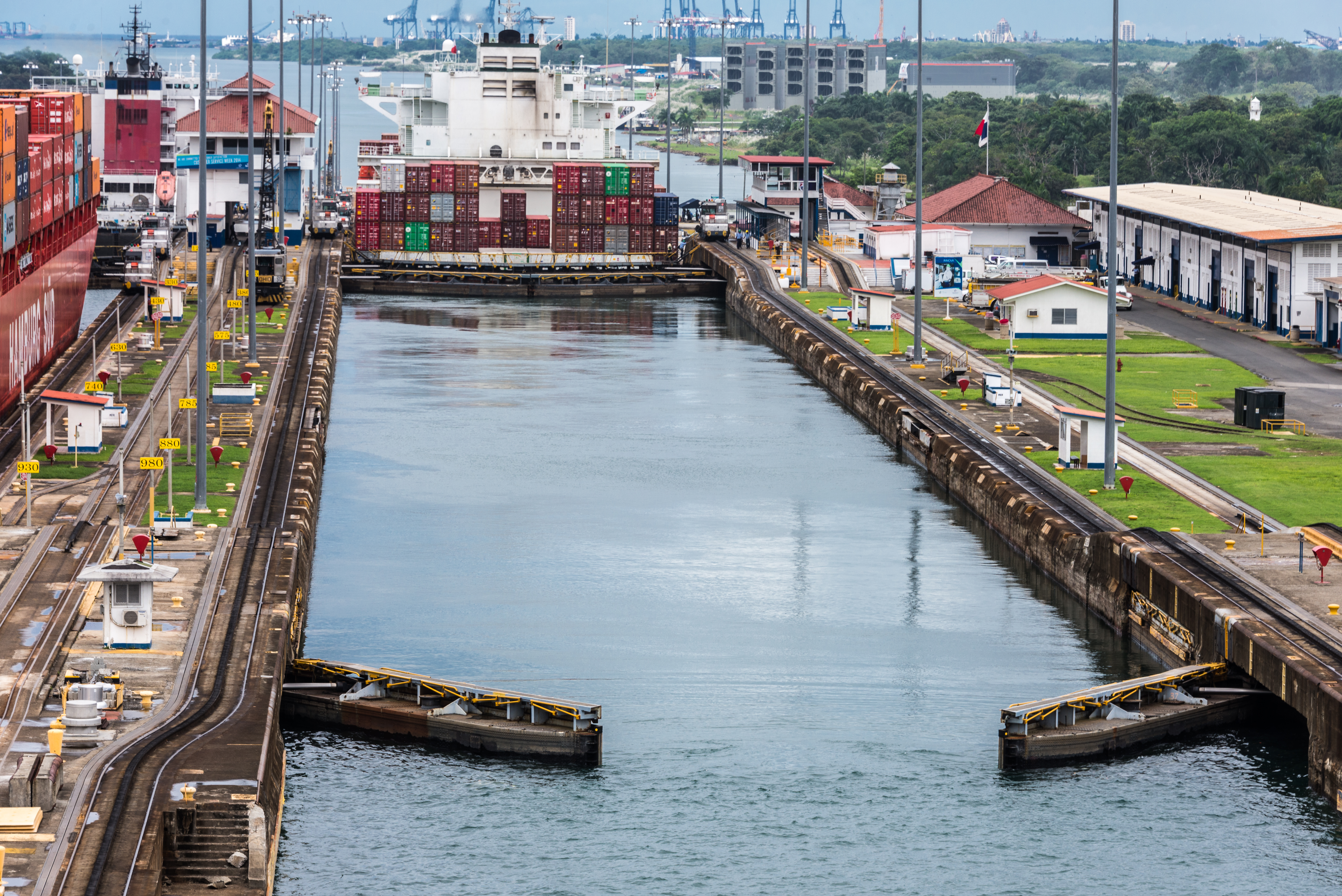
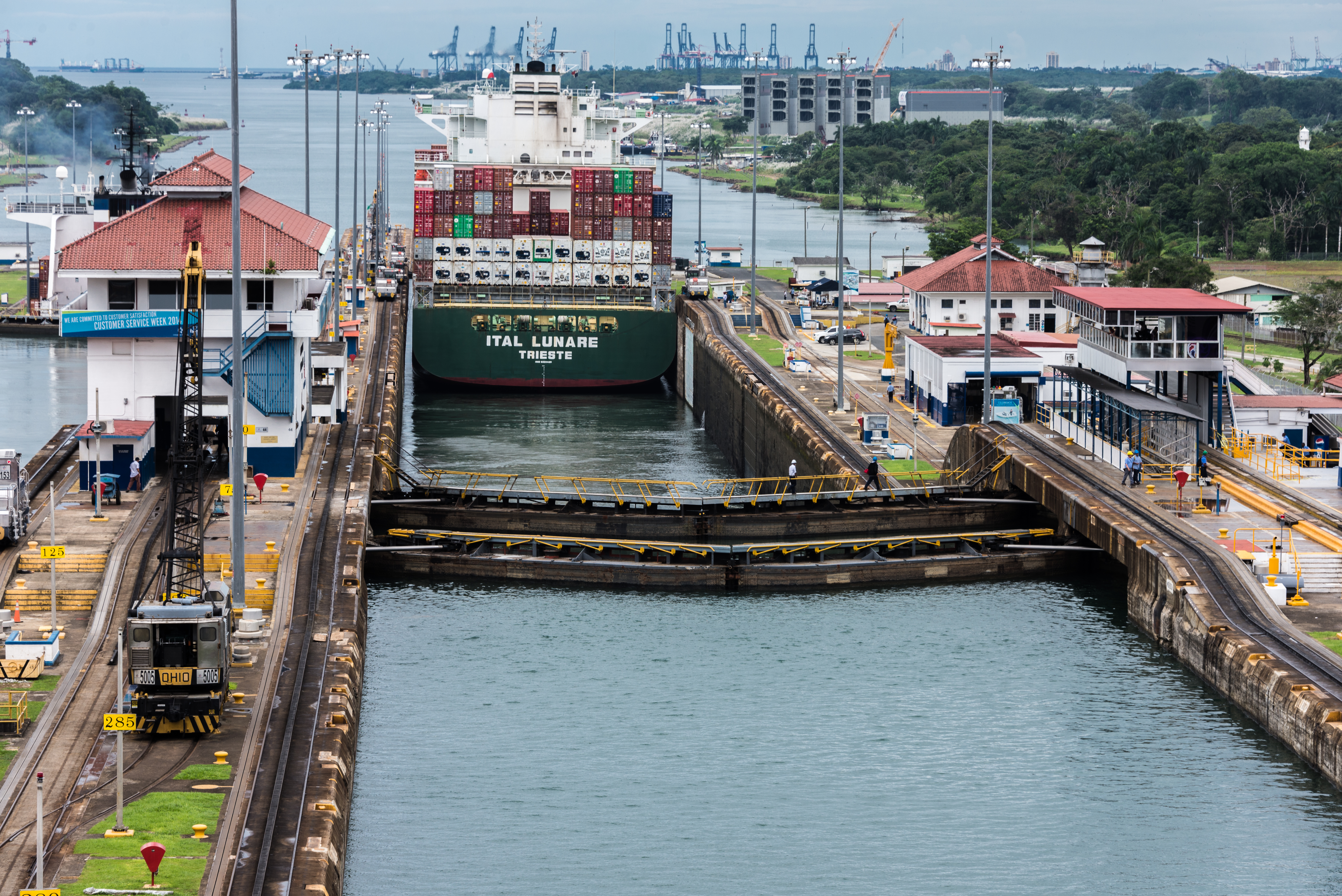
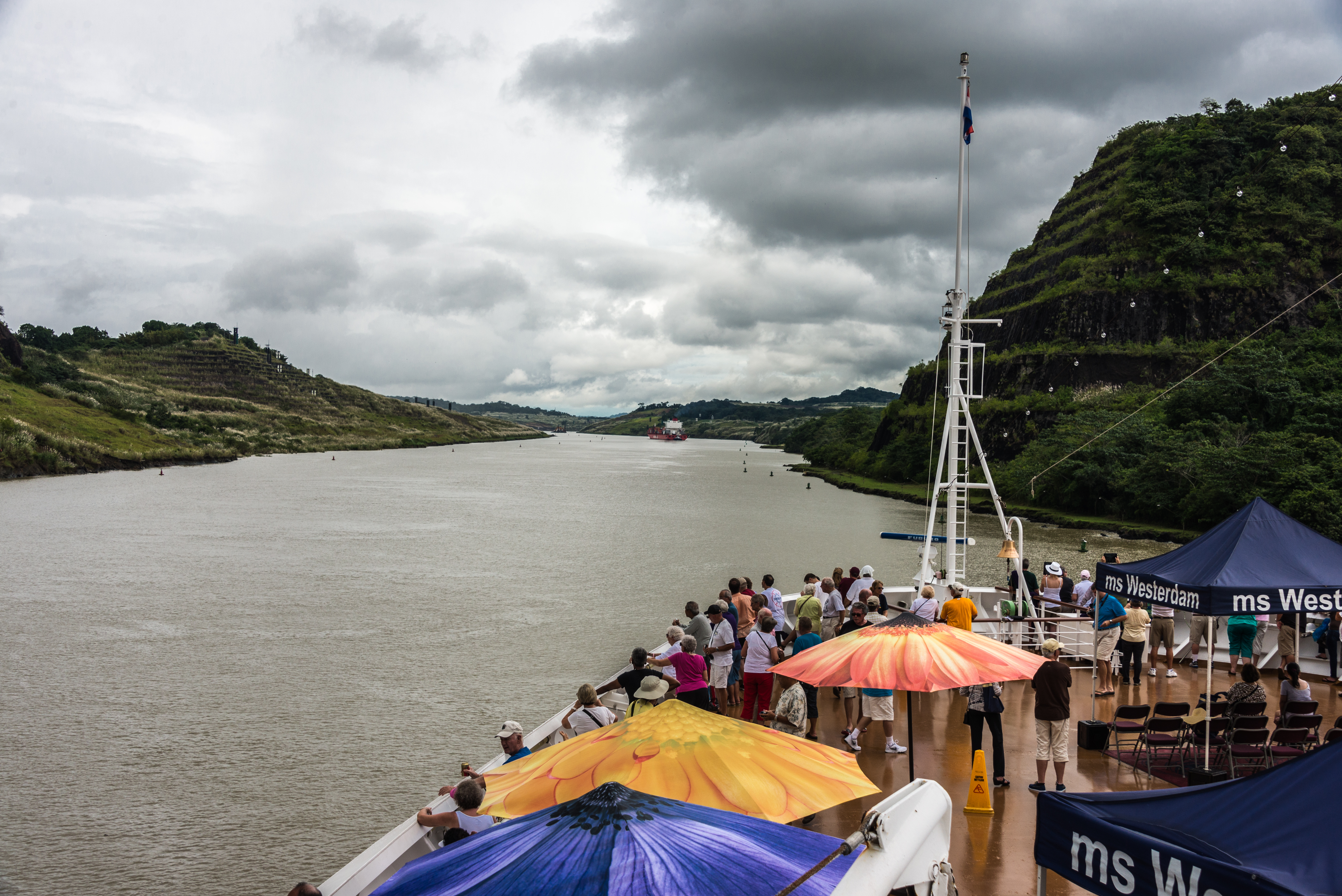
Today we transit the Panama Canal! The canal is an amazing feat of persistence, determination and engineering and it is 100 years old this year. I do not know of too many things that are being fully used today, just as they were built, 100 years ago, but that is the case with the Panama Canal lock system.

Most people think of the canal as running east and west but it actually runs North West from the Pacific to the Atlantic oceans.

2014-JKH-Canal

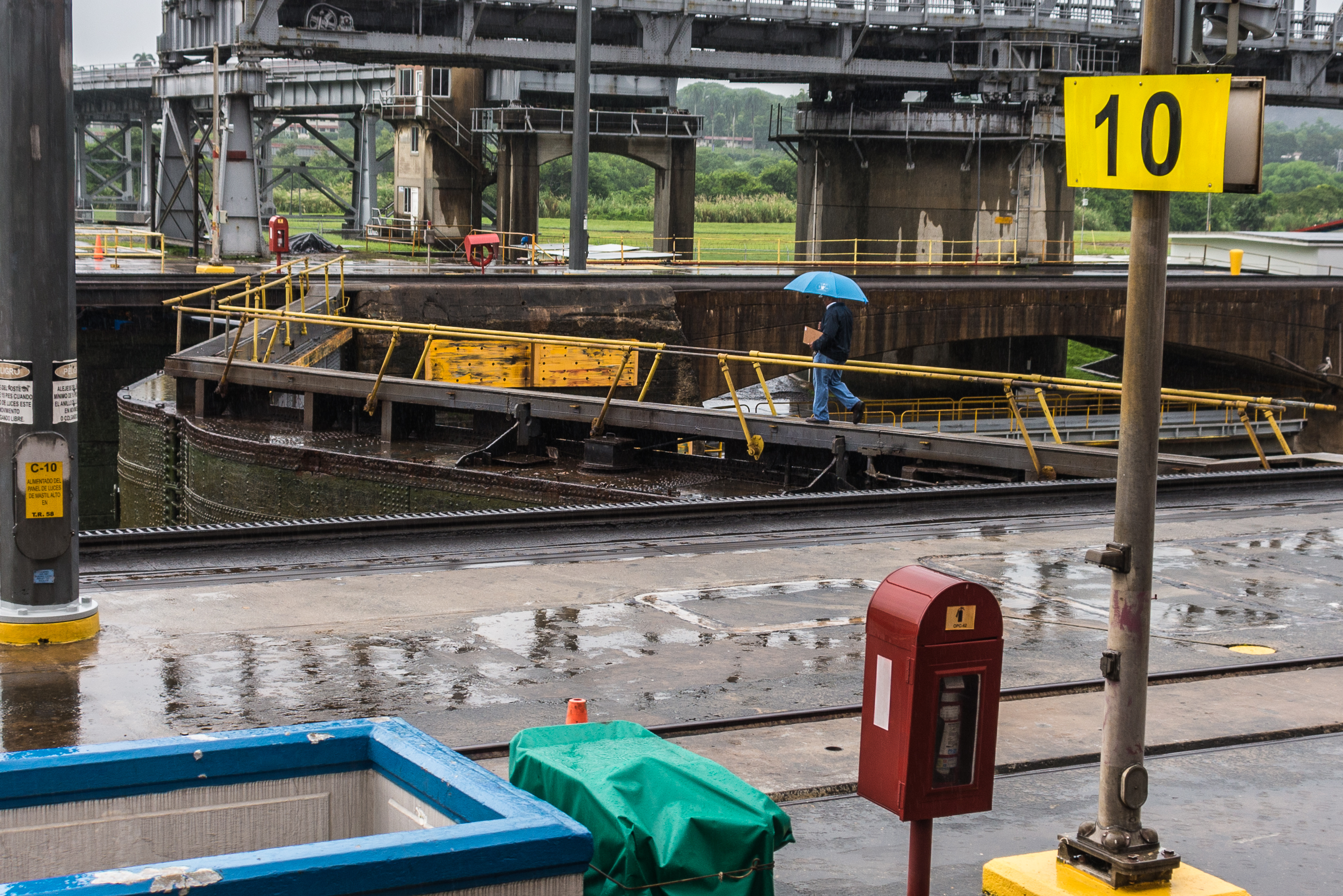
When you transit the canal, you enter locks off either ocean and are lifted up about 26 meters to an artificial lake created out of the Chagres River, called Lake Gatun. You cross Lake Gatun and are lowered through another set of locks, back to sea level. Simple, right? Well, it sounds that way but when you consider some of the thing that have to be done to make this happen it boggles the mind.

Without Gatun Lake’s fresh water, the Panama Canal would not be possible. An average rainy season (from May to November) will result in around 330 cm (130 inches) of rain.

2014-JKH-Canal

2014-JKH-Canal

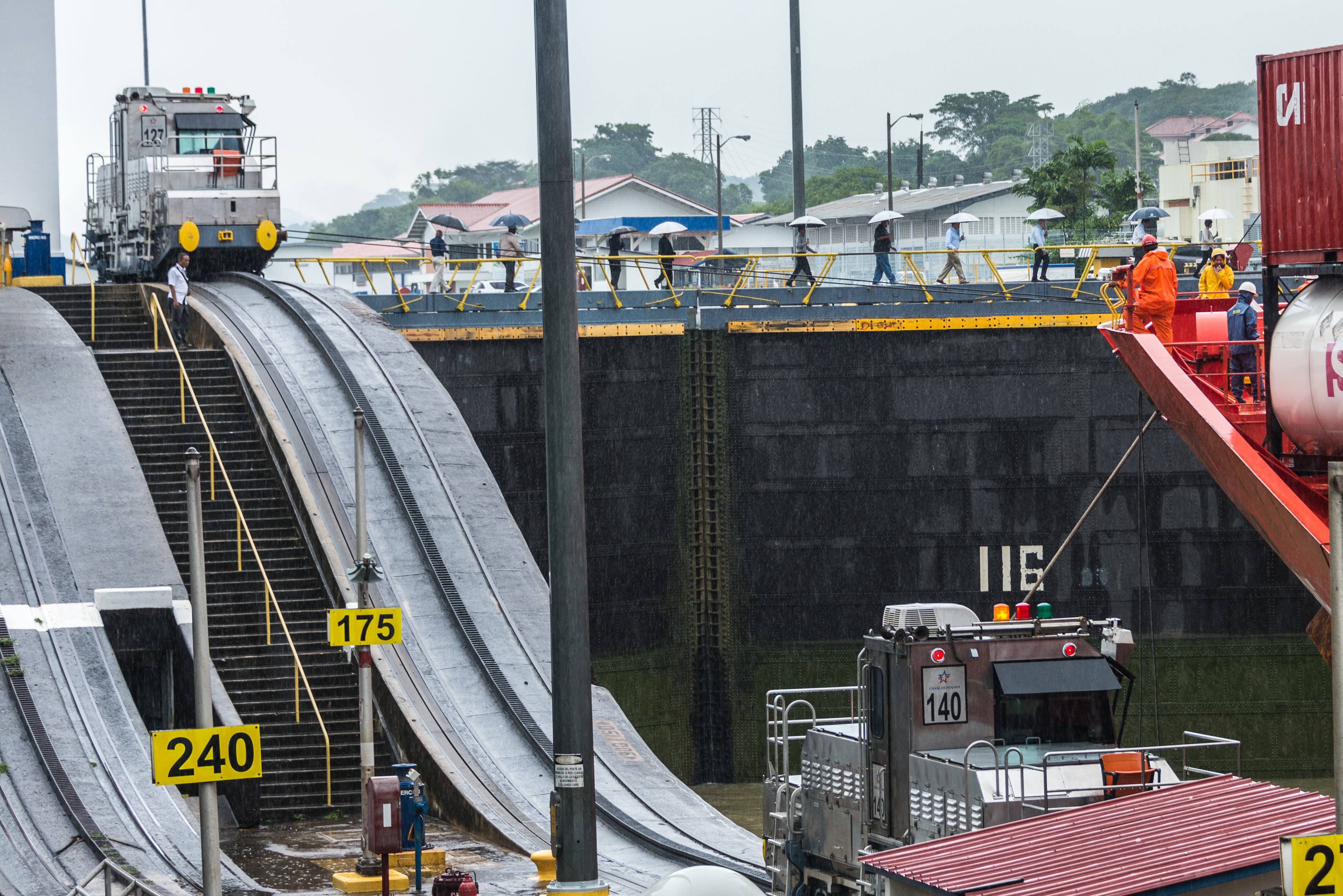
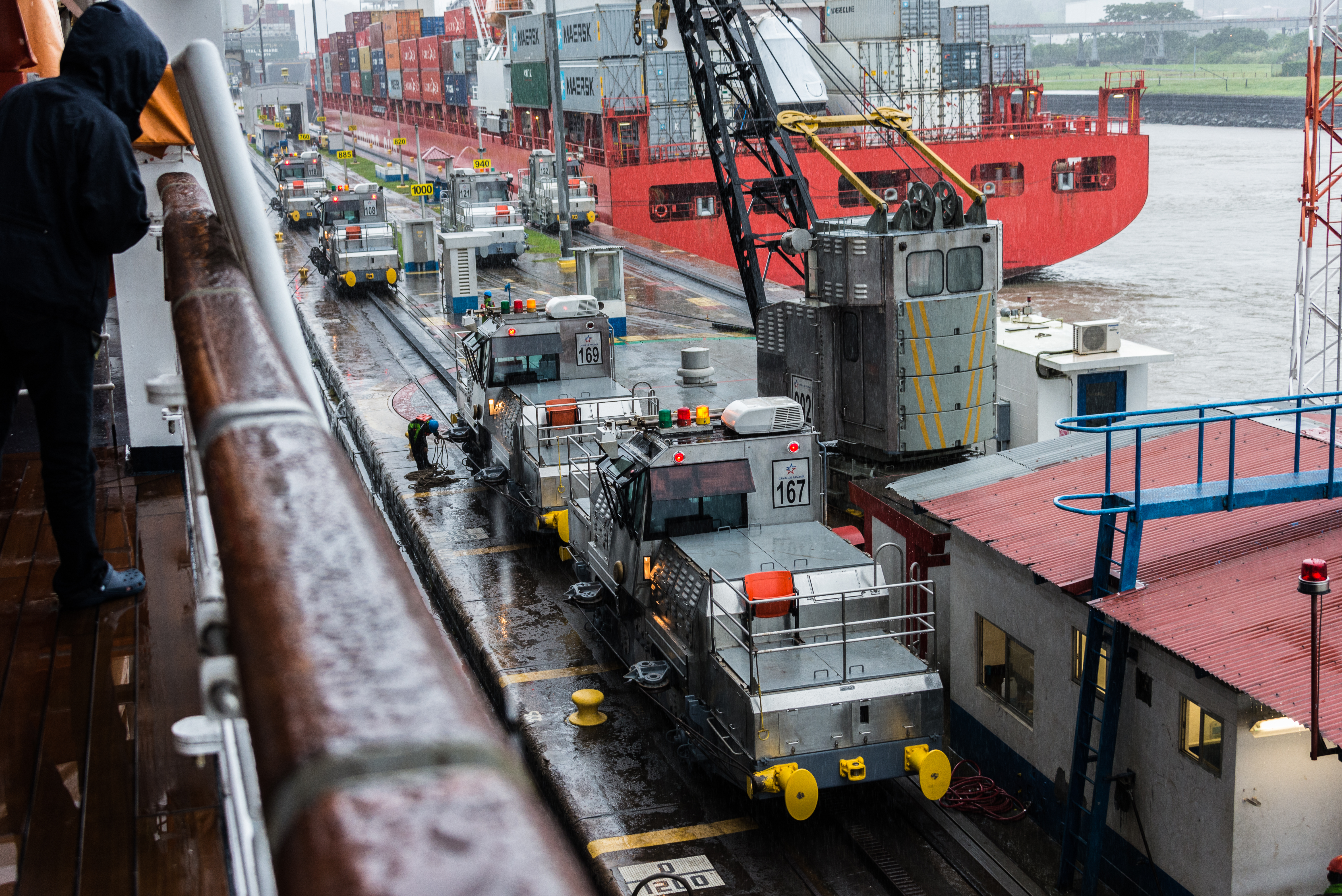
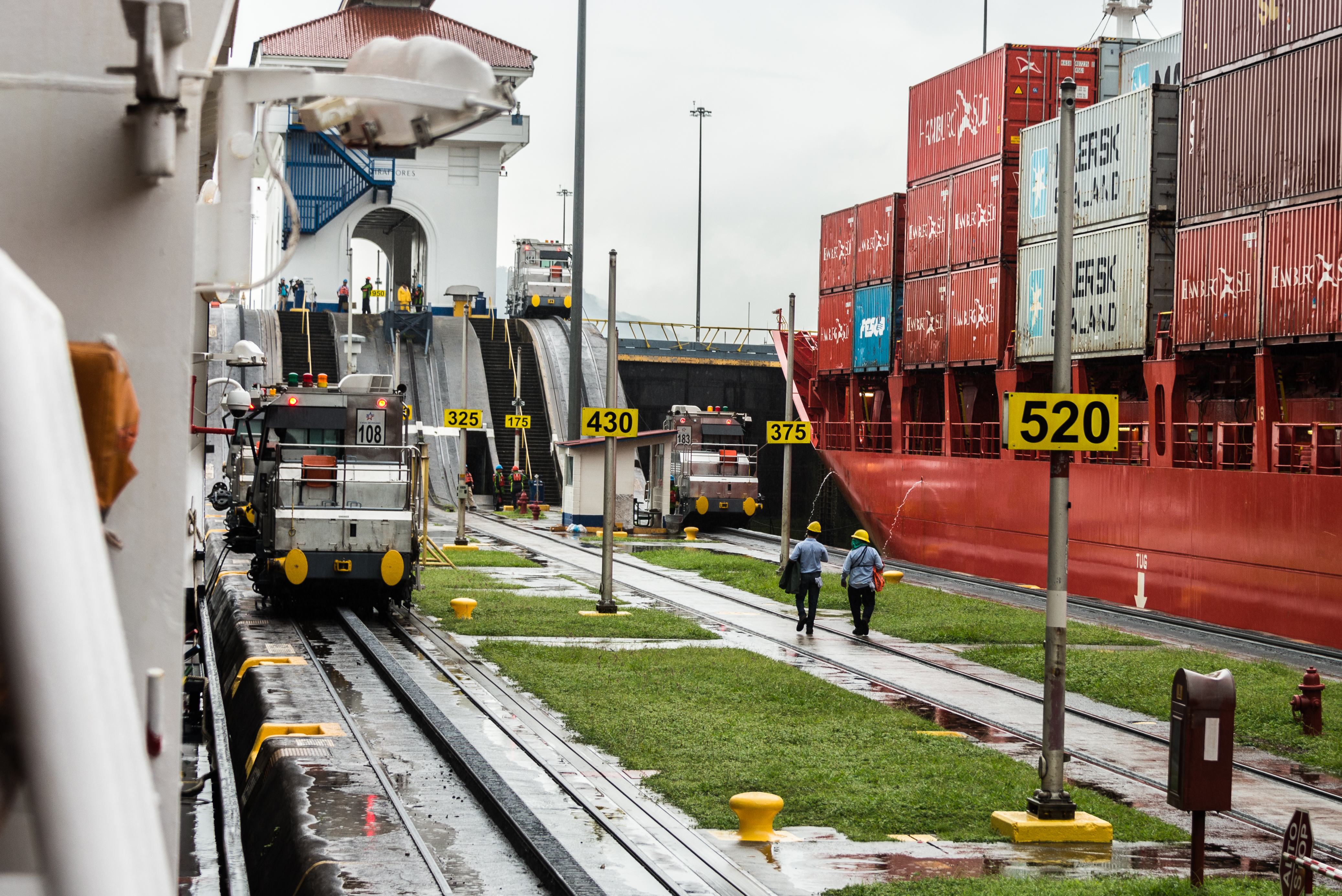
When a ship enters the first lock in the canal, 26 million gallons of fresh water are used to lift the ship to Lake level. This water is then lost to the ocean when the lock is emptied to get the next ship. The same thing happens on the other end when the ship descends back to sea level, another 26 million gallons of fresh water is lost. That means for every ship going through the canal, 52 million gallons of fresh lake water is released to the ocean. That requires a lot of rain to keep that system going year round and Panama has it. Now moving all this water requires a pretty large-scale system. Locks fill and empty their 26 million gallons of water in about ten minutes and everything works by gravity. There are no pumps or power-assisted devices used to move the water. Pretty amazing.

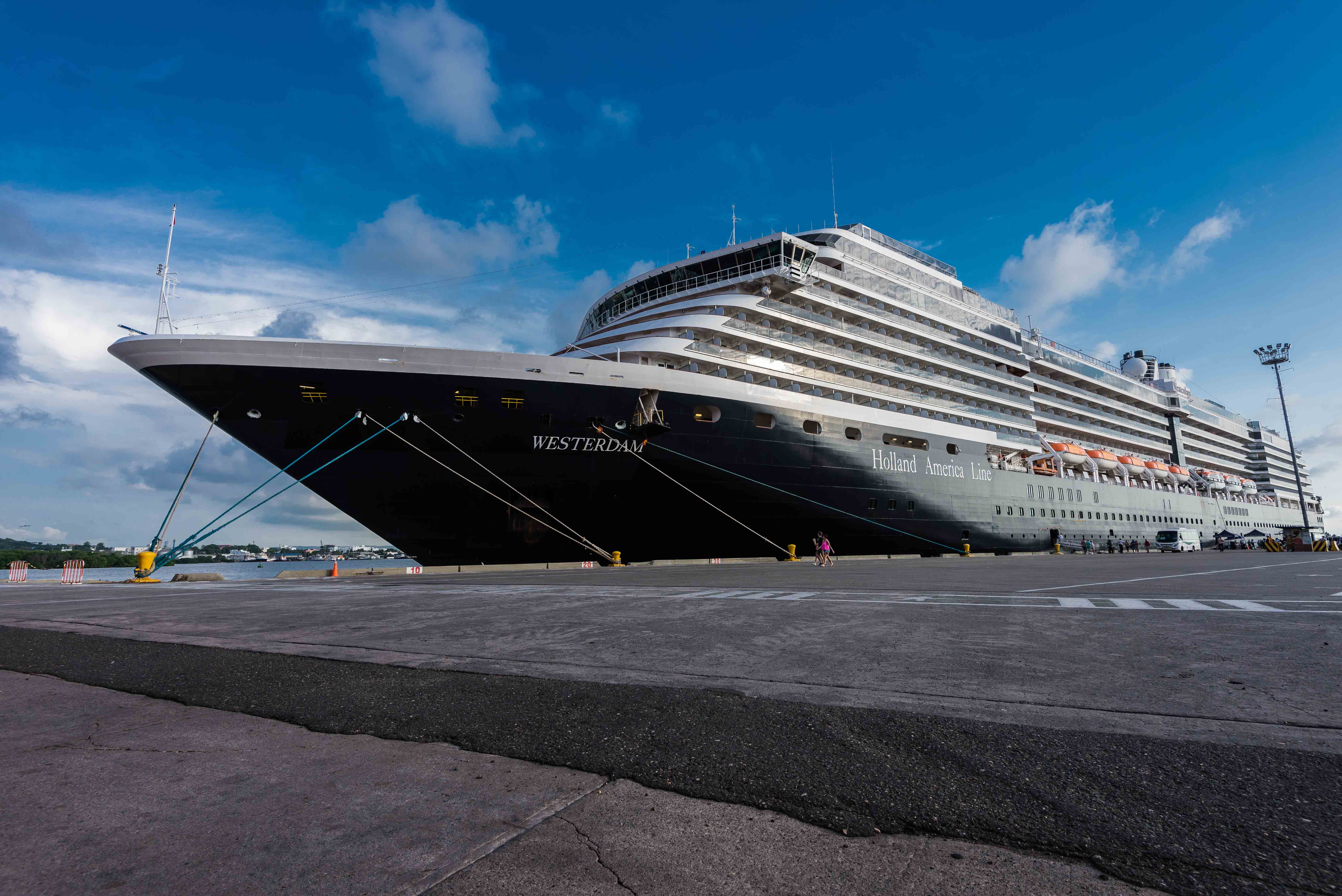
Not all ships in the world fit through the Panama Canal. The current greatest length is 965 feet with 107 feet of width being the most. Ships built this size or smaller are called Panamax ships. Our ship is 936 feet long and 103 feet wide. The captain says they will need to get the grease out to get the Westerdam through the canal.

2014-JKH-Canal

Our Westerdam paid around US$375,000 for the transit. The toll is set based on the vessel type, size, and the type of cargo carried. Passenger vessels in excess of 30,000 tons known popularly as cruise ships pay a rate based on the number of berths, that is , the number of passengers that can be accommodated in permanent beds. There is also a reservation fee of about US$35,000 to ensure your ship gets to the canal prior to the transit start.

2014-JKH-Canal

Our transit of the canal is from the Pacific to the Atlantic Ocean or North West. The schedule for our day is as follows:

05:30 – Pilot on board – A pilot is present throughout the transit. The ship passes through the canal using its own power.

2014-JKH-Canal

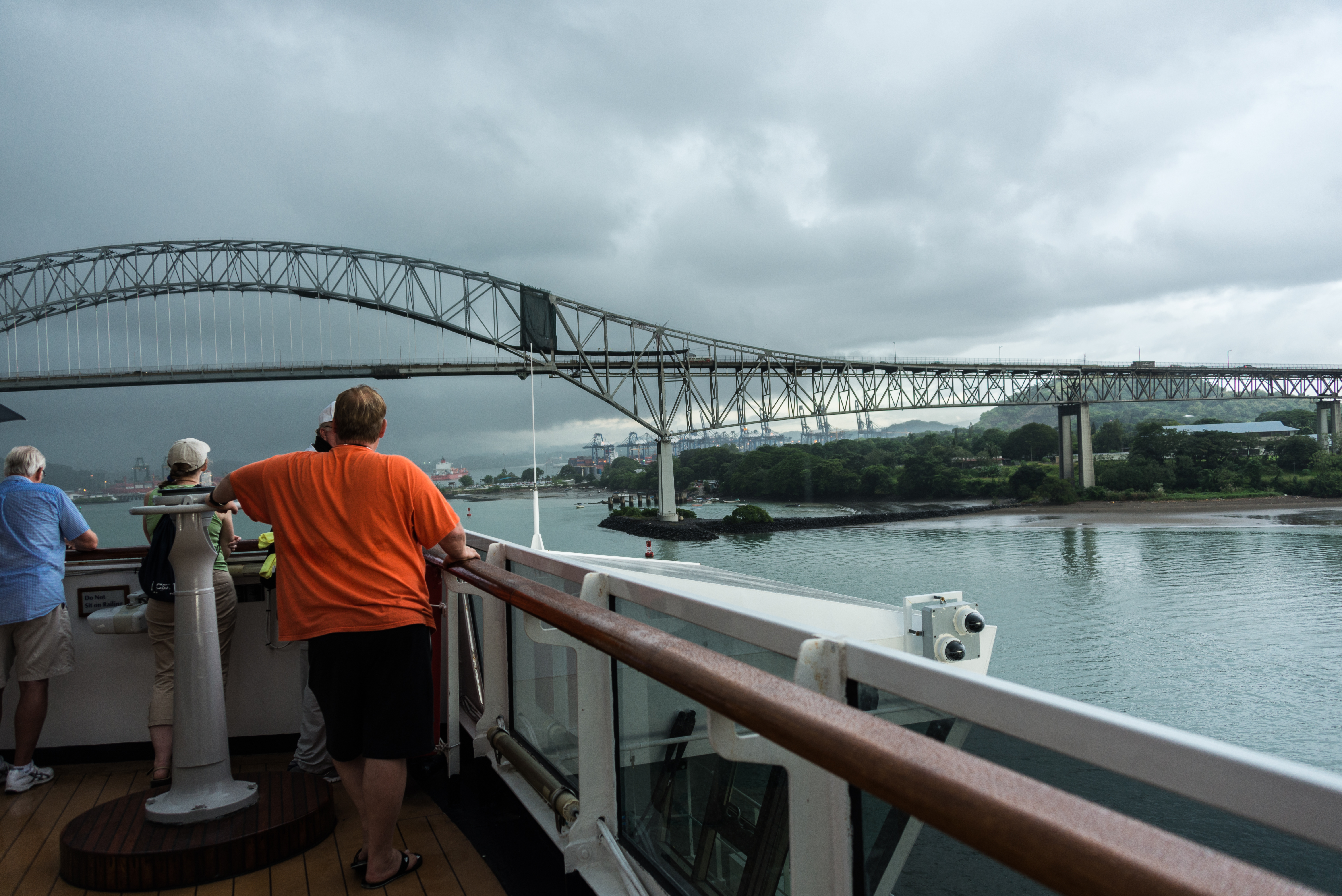
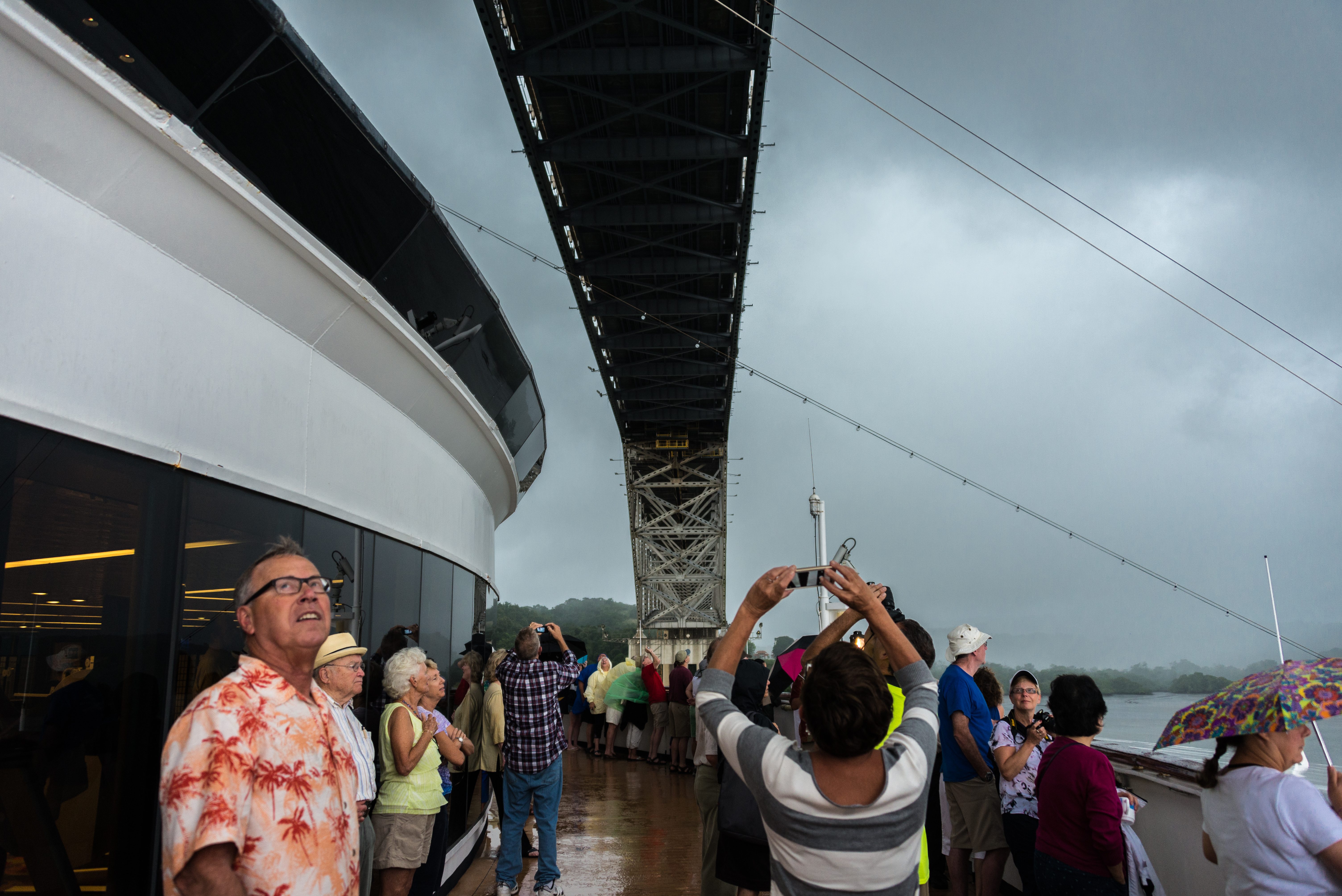
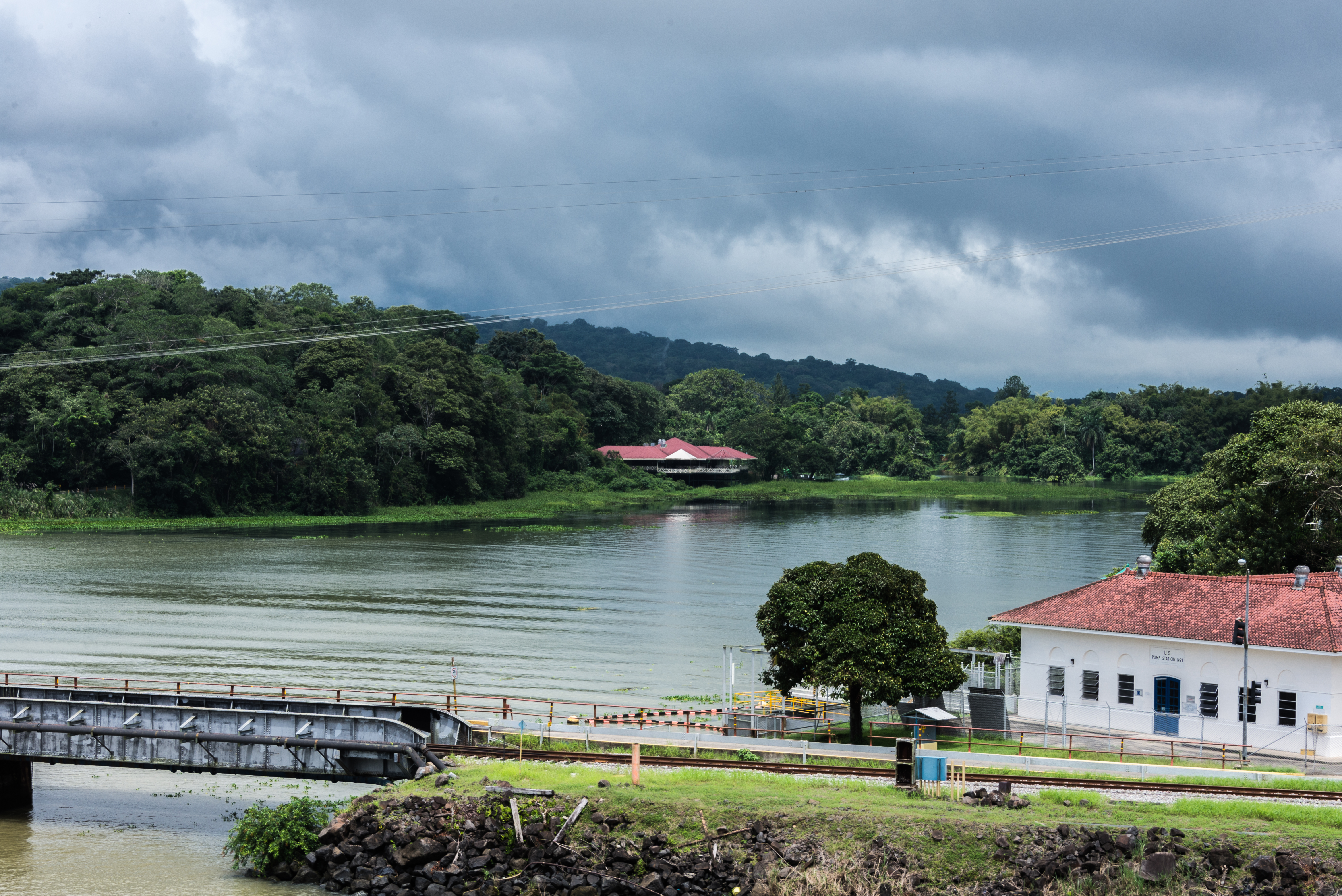
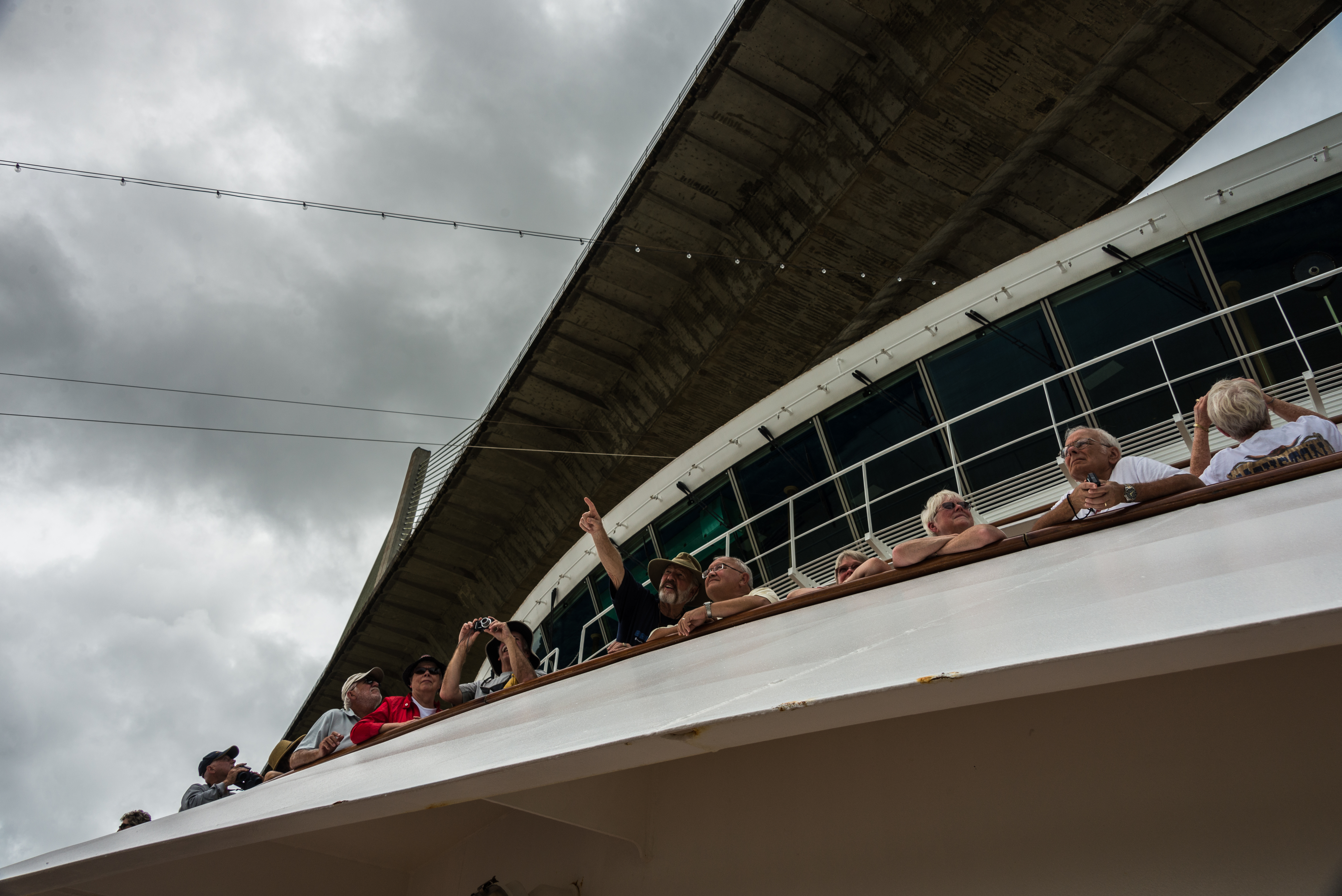
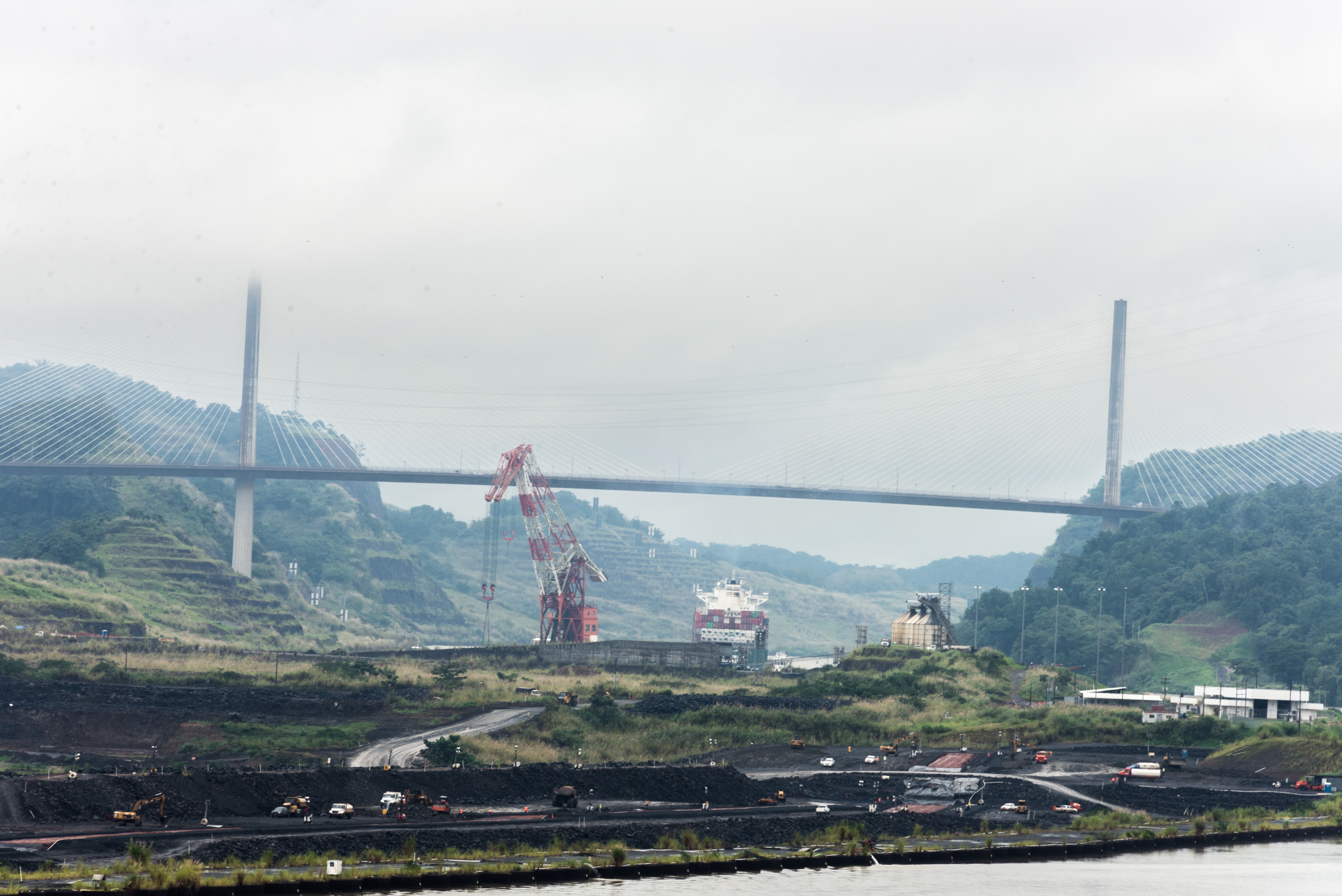
06:30 – Passing the Bridge of Americas – This bridge was the only way to cross the canal when it was built. Today, there is a second bridge called the Centennial Bridge, which is further north on the canal.

2014-JKH-Canal

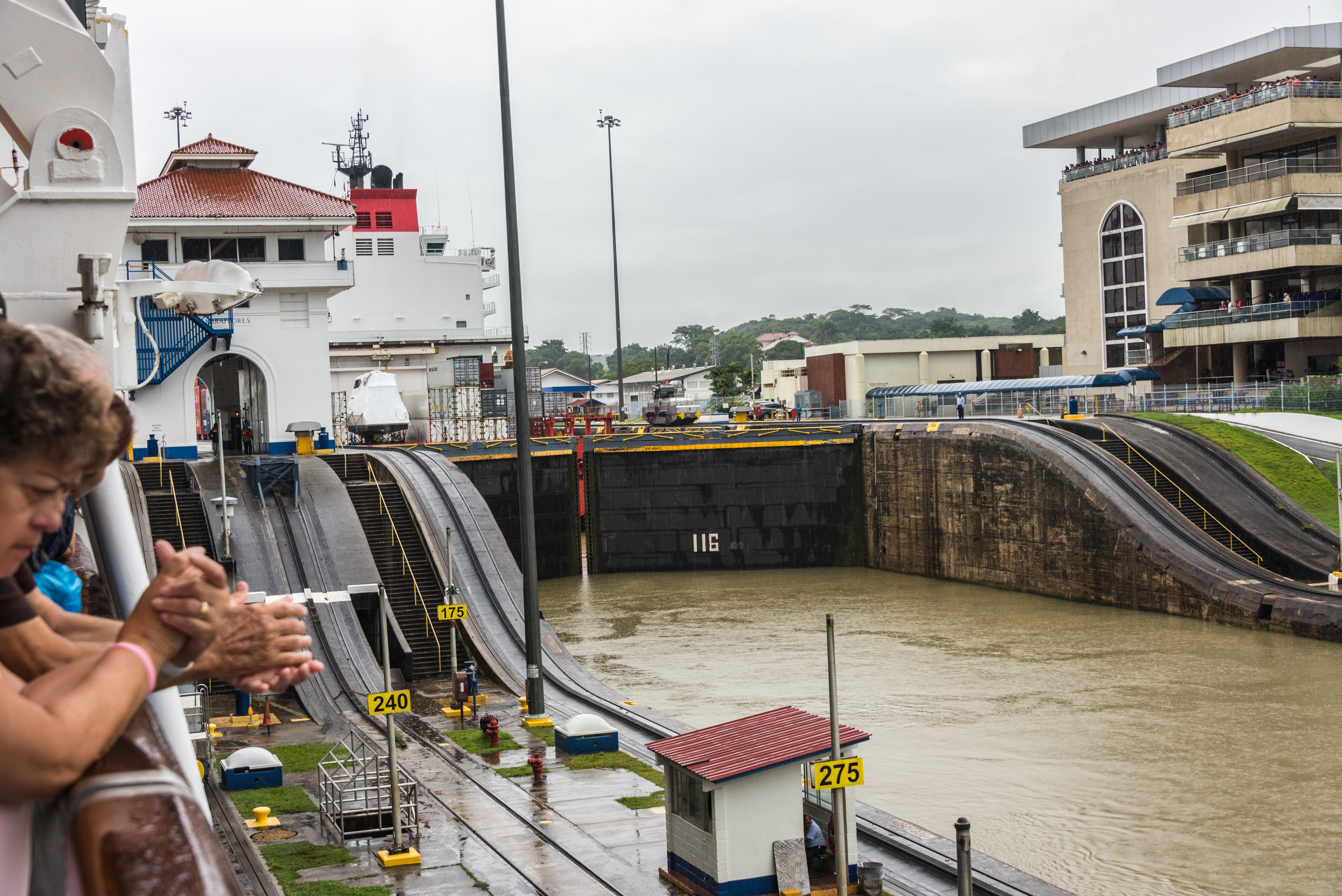
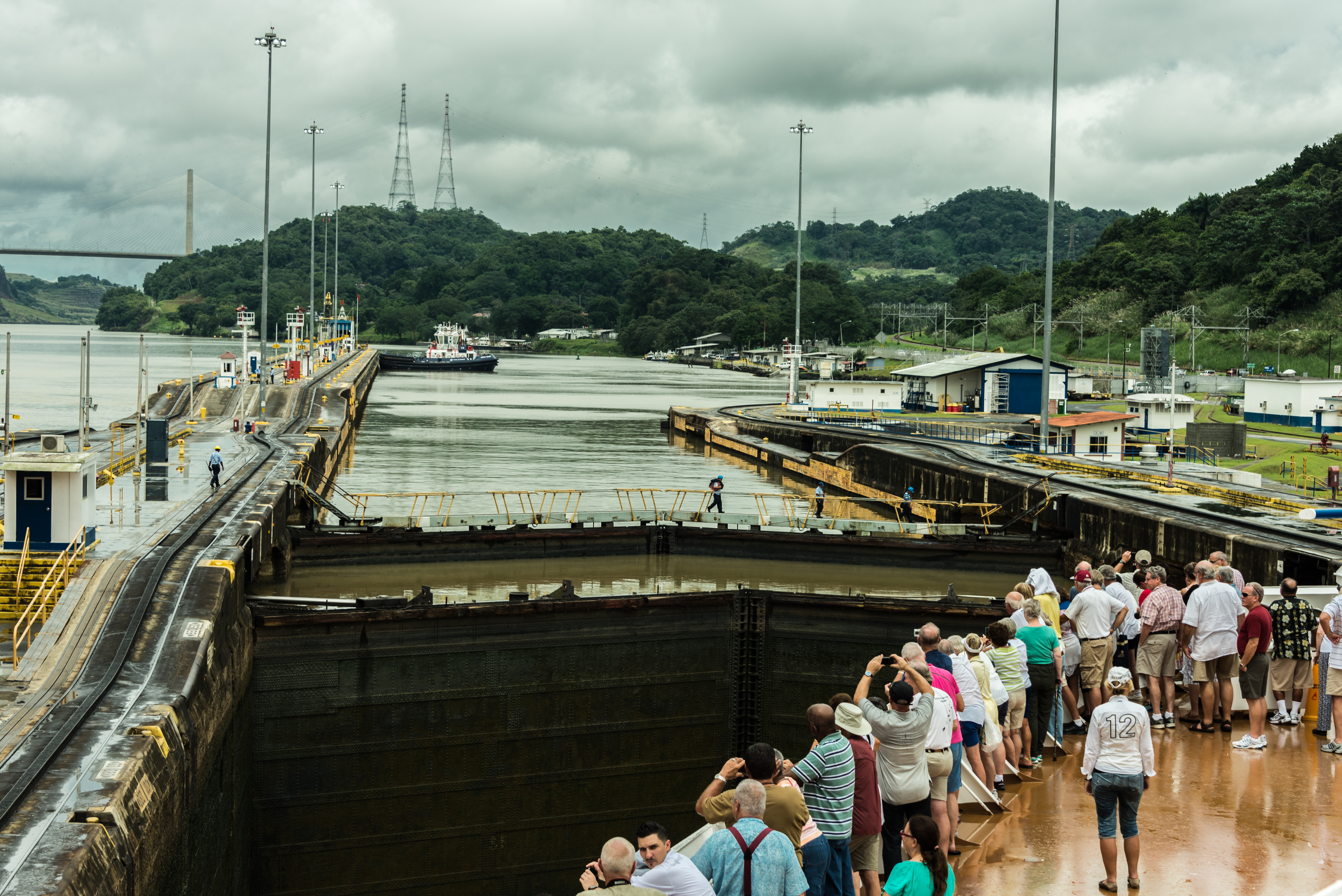
07:30 – Arrive Miraflores Locks – The canal visitor center is located here. It is a large building with viewing areas, restaurants, and the canal museum is located here. There is a bank of bleachers set up for visitors to watch ships going through the Miraflores locks. A narration will give you all kinds of information about the transiting vessel.

08:55 – Depart Miraflores Locks

2014-JKH-Canal2014-JKH-Canal

09:25 – Arrive Pedro Miguel Locks – This set of locks passes you through an elevation change between two lakes that make up the canal.

10:55 – Depart Pedro Miguel Locks

2014-JKH-Canal2014-JKH-Canal2014-JKH-Canal

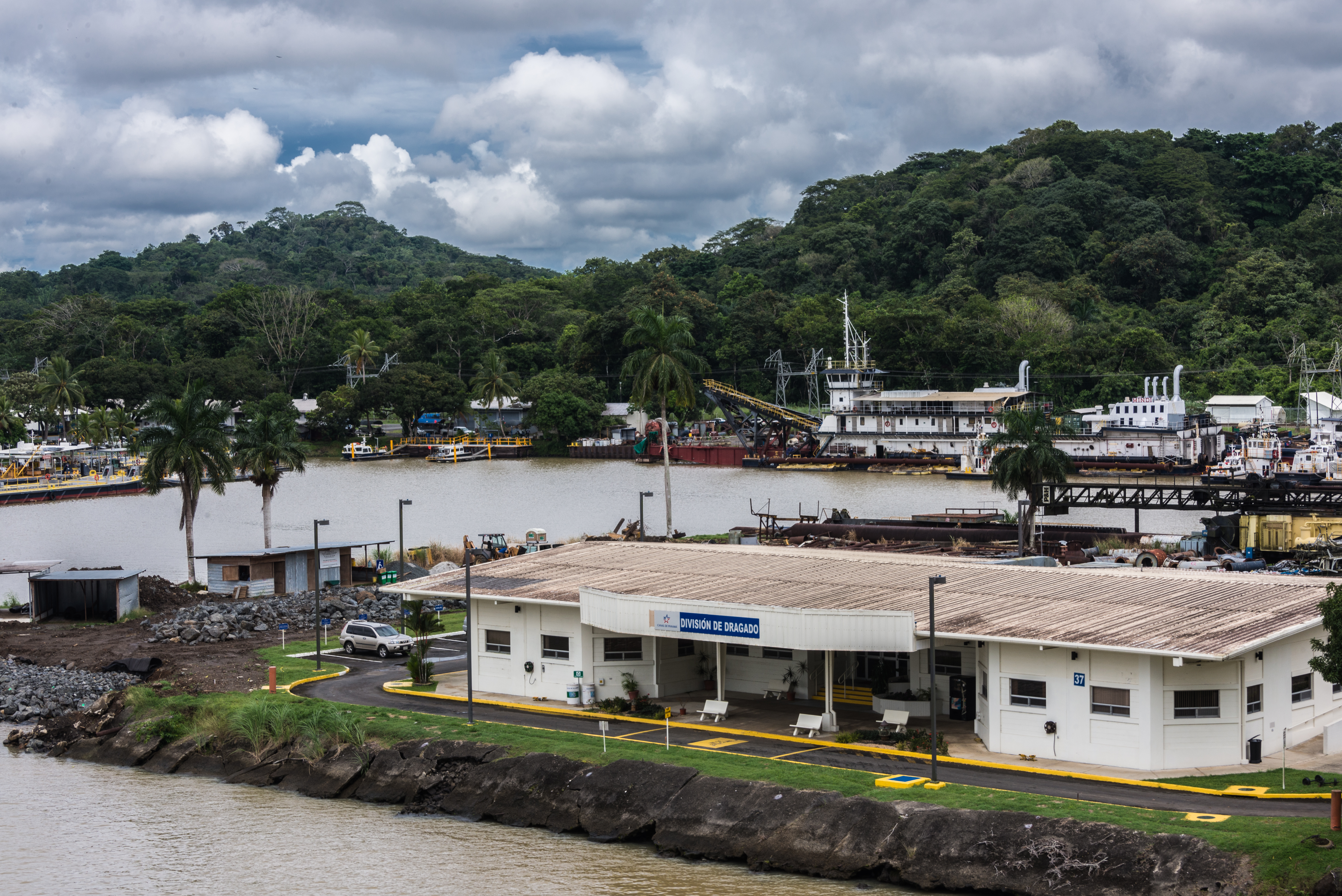
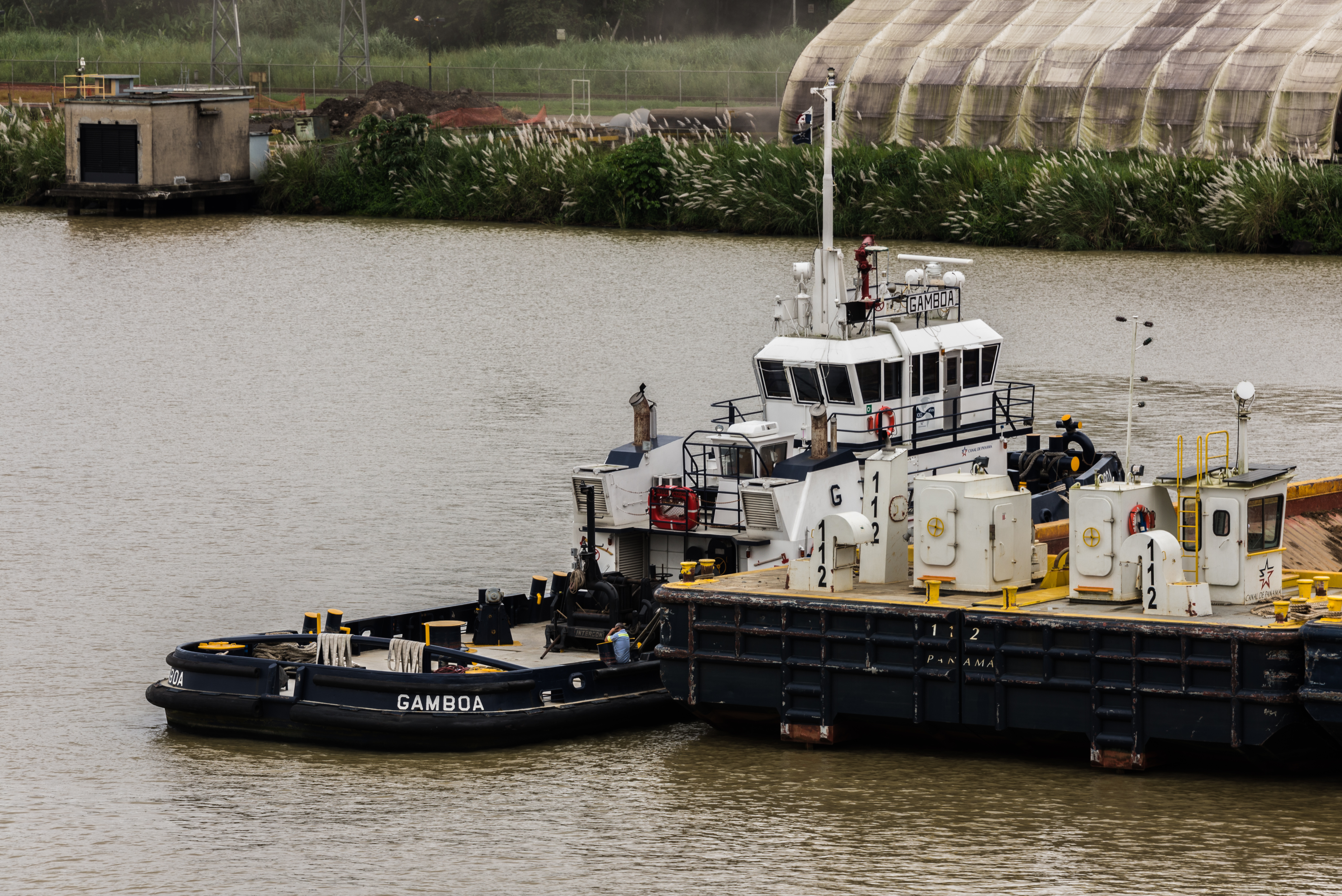
11:25 – Pass GamboaGamboa is where the dredging and maintenance divisions for the canal are based. Four dredges work full time to keep the canal open. There is a prison on the canal just before Gamboa where former Dictator Manuel Antonio Noriega Moreno, remains incarcerated after serving time in the USA and France.

2014-JKH-Canal2014-JKH-Canal2014-JKH-Canal

13:25 – Arrive Gatun Locks – These are the last locks in the canal, on the Colon or north end of the transit.

15:35 – Depart Gatun Locks

You can see that a full transit through the canal is an all-day undertaking for a large ship such as the Westerdam. Our schedule took a one-hour delay right at the start, due to traffic problems at Miraflores locks, but the schedule held pretty well for the balance of the transit.

2014-JKH-Canal

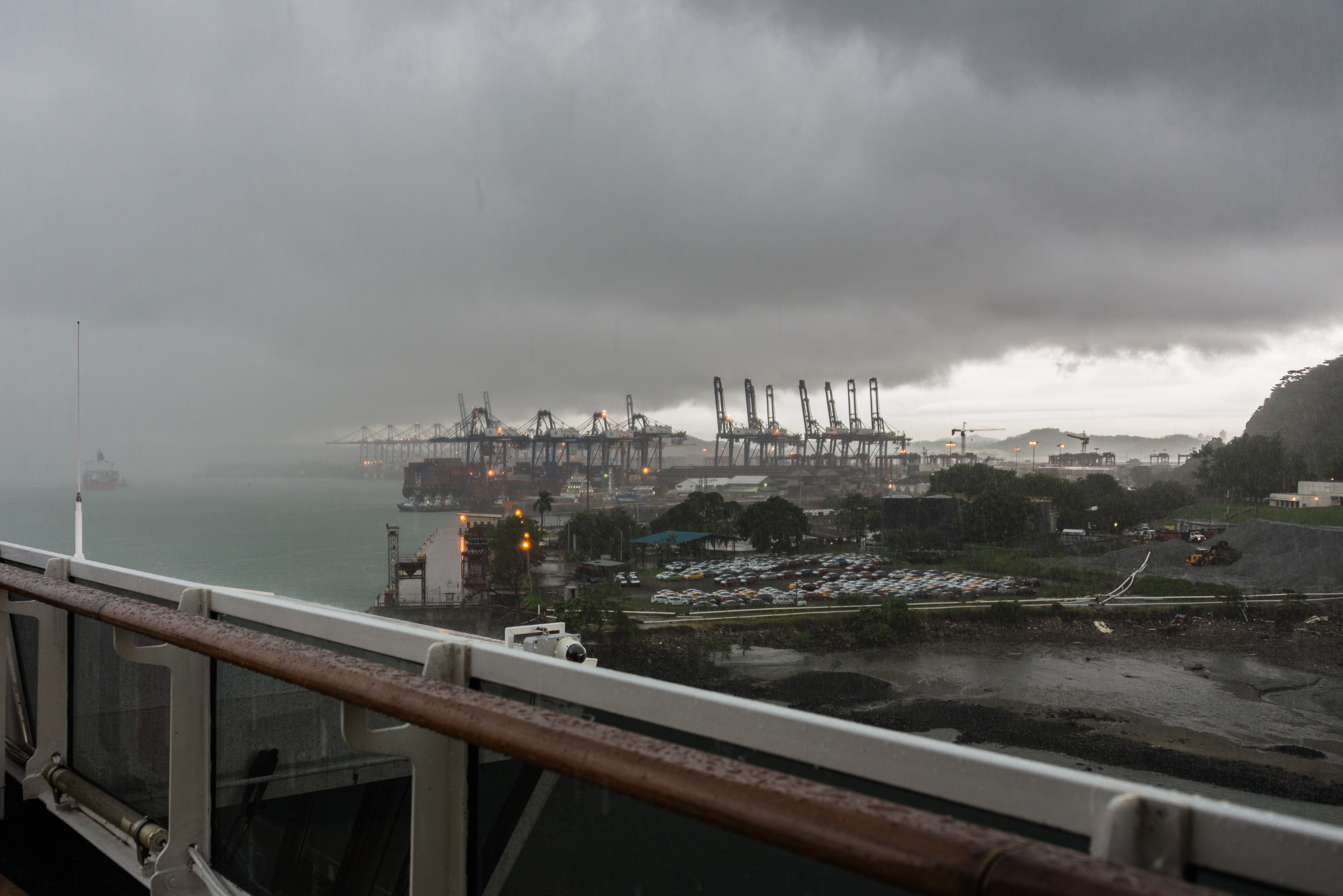
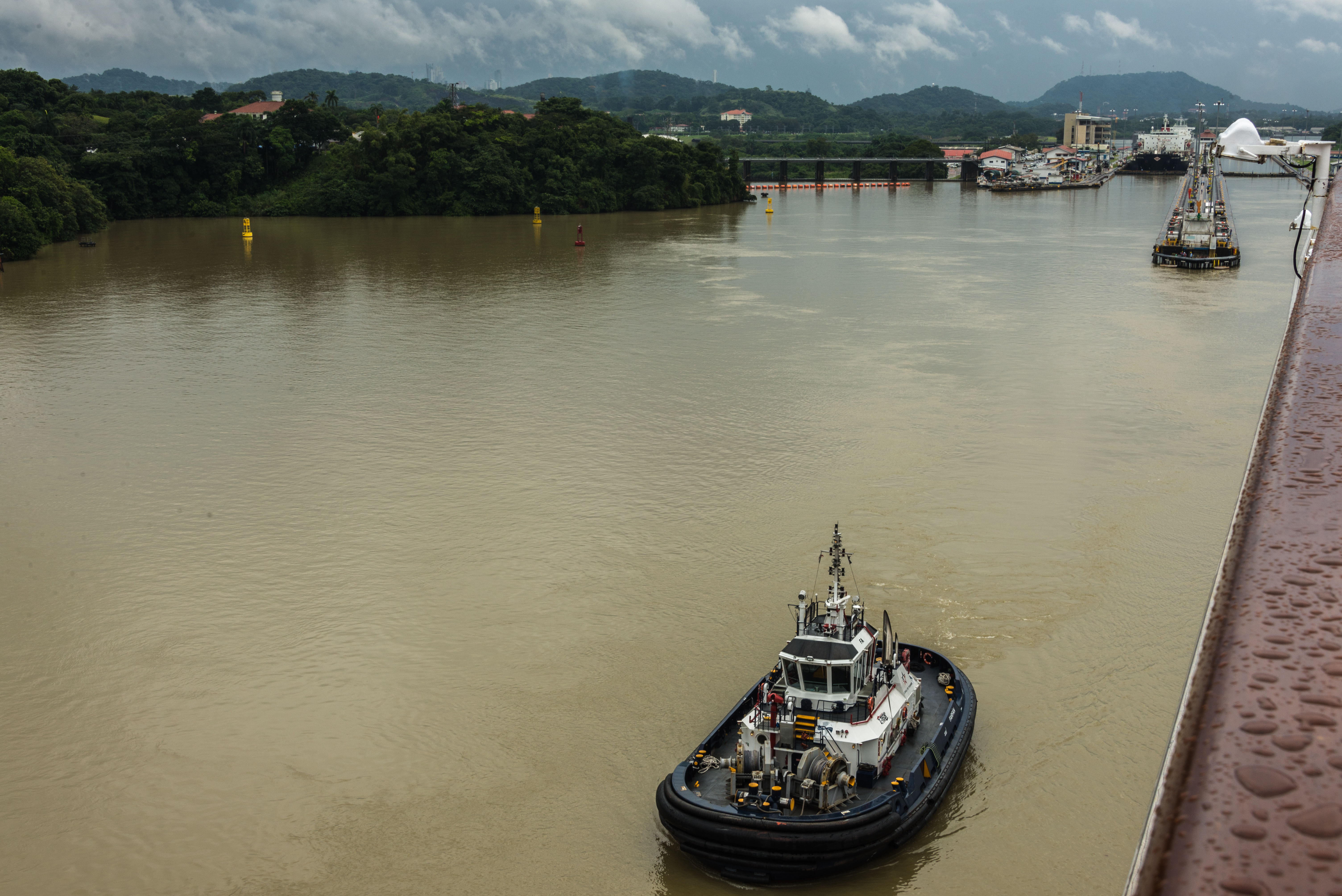
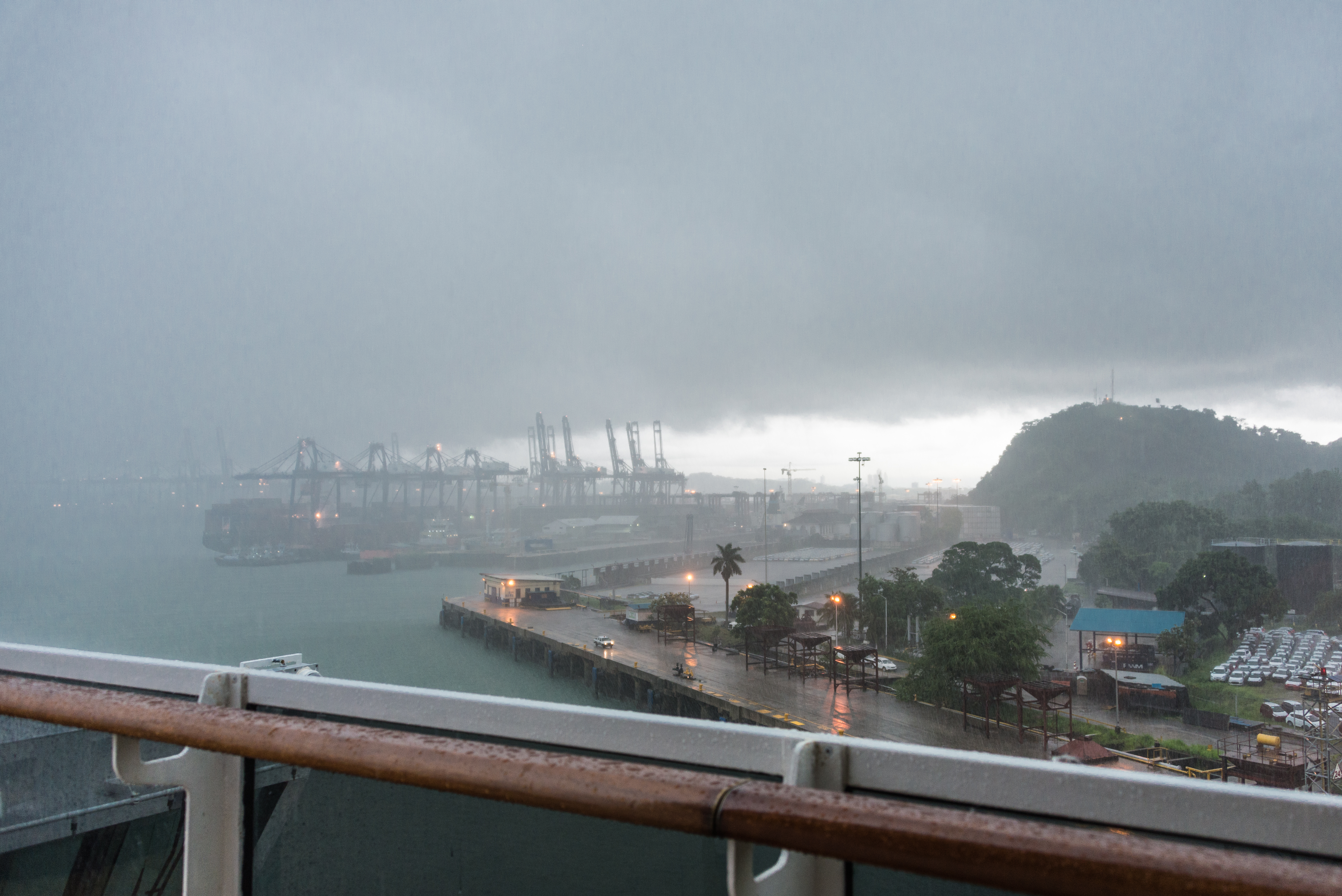
As we started our trip through the canal, the weather was poor with heavy rain from the Miraflores locks through the Centennial Bridge. It brightened up for part of the afternoon but deteriorated as we ended the transit and passed Colon. Oh well, it is the height of the rainy season!

Our captain is Captain Rens Van Erten, a Dutchman (as are all the Holland American captains) with lots of canal experience. He kept us well informed of our progress and there was an interesting narration throughout the day by the ship’s Location Guide, as we progressed through the transit.

2014-JKH-Canal2014-JKH-Canal

The bow of the ship has been closed to passengers throughout the voyage so far but it was open today and they served coffee and Panama rolls in the rain. They also had the front access open on decks five, six and seven, which provided a good access for photography.

Yesterday, they announced that there are webcams at the Miraflores and Gatun locks and that people at home can view the transit at http://www.pancanal.com/eng/photo/camera-java.html?cam=MirafloresHi. Too bad the rain was so heavy and our time was out by an hour.

2014-JKH-Canal

2014-JKH-Canal

The photo department was able to leave the ship at Miraflores, to do some photography of the ship passing through the locks. They managed a bow shot of the ship, with everyone waving, among other things. They were off the ship all the way through to Colon, where they re-joined the ship by the boat that came to collect the pilot.

2014-JKH-Cartagena2014-JKH-Cartagena

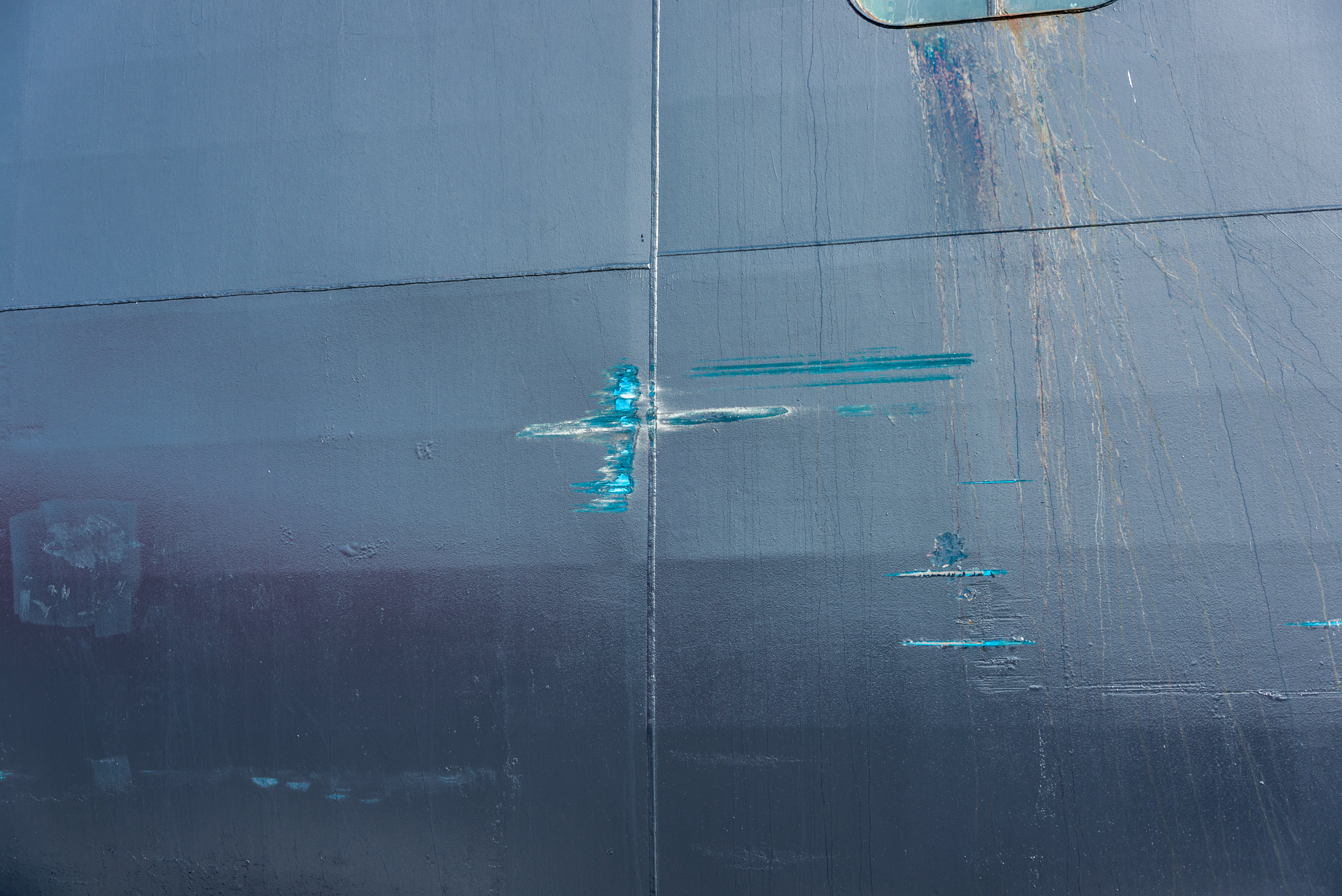
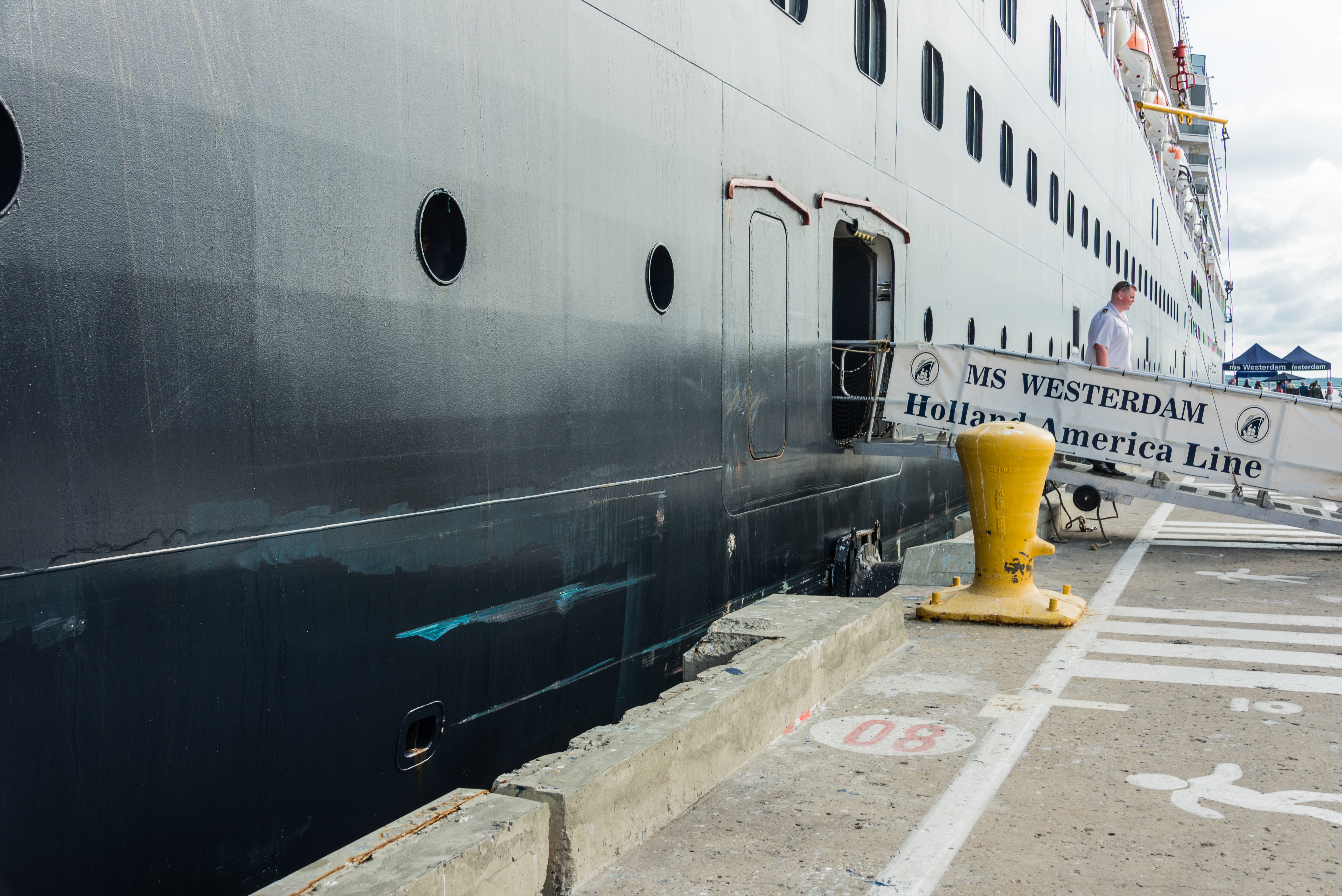
The transit ran smoothly, other than a small bump as we stopped in one of the locks. I have a picture of the scratch on the side of the ship that I took in the next port; to prove we hit the canal. According to the captain, it is a common thing to have happen. He said he had lots of paint and we would not see any evidence of the bump in a few days.

2014-JKH-Canal2014-JKH-Canal2014-JKH-Canal

2014-JKH-Canal

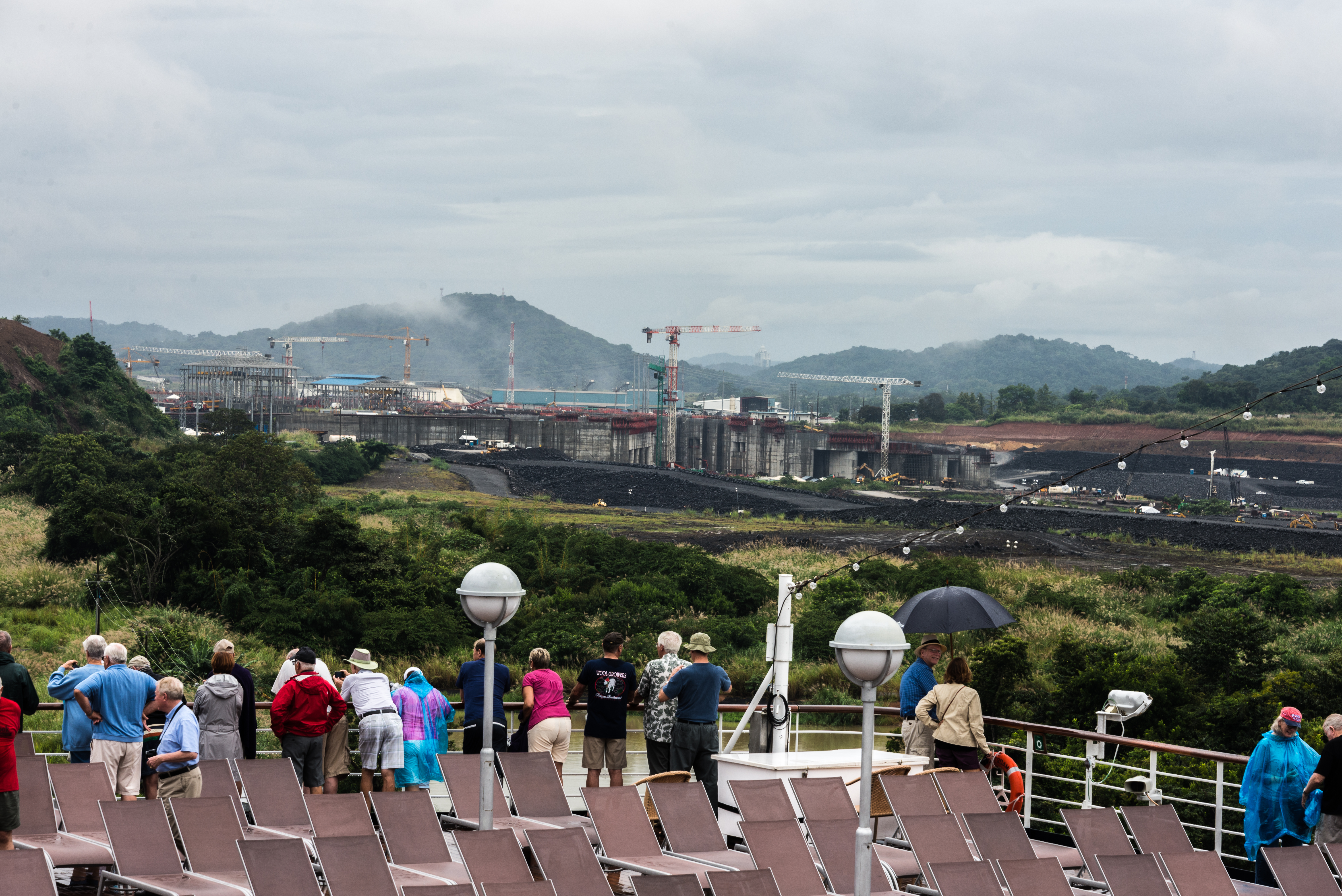
You probably know that there are new locks under construction, which will allow the largest of the large ships to be able to use the Panama Canal. Initially the plan was to open the new locks this year to coincide with the 100th anniversary of the canal but there have been delays and a fight between the Italian general contractor and the Panamanian government. Work stopped for a time over a dispute about financial overages on the fixed price contract. The dispute has been resolved and work is under way again. Currently, progress on the new locks is at 80% complete. The huge lock gates were recently delivered from Europe and are standing by the side of the canal awaiting installation. They are so large that only six at a time would fit on a ship.

2014-JKH-Canal

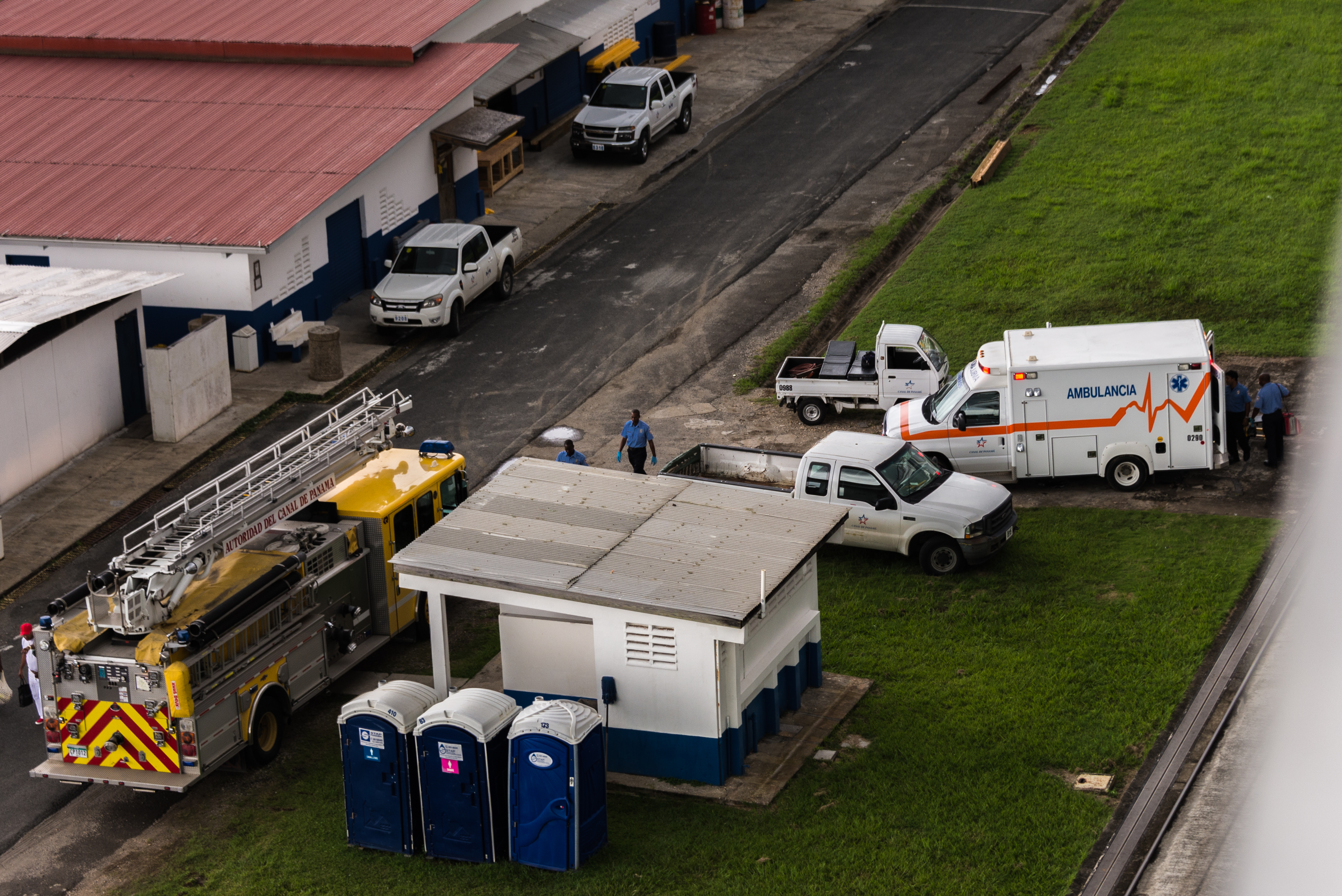
As we ended our day on the canal, we were reminded once again of the difficulties experienced by older passengers. As the ship descended the last lock, the water flow stopped while an ambulance came along side of the ship to remove another ailing passenger. A delay of around ten minutes was all it took to transfer the patient and then the descent of our huge ship continued and we exited the canal.

This concluded a very interesting day and allowed me to check another item off my bucket list! We are in Cartagena, Columbia tomorrow.
 

The Costa Rican Disenchantment


2014-JKH-Panama-D610-0638

2014-JKH-Panama-D610-0671

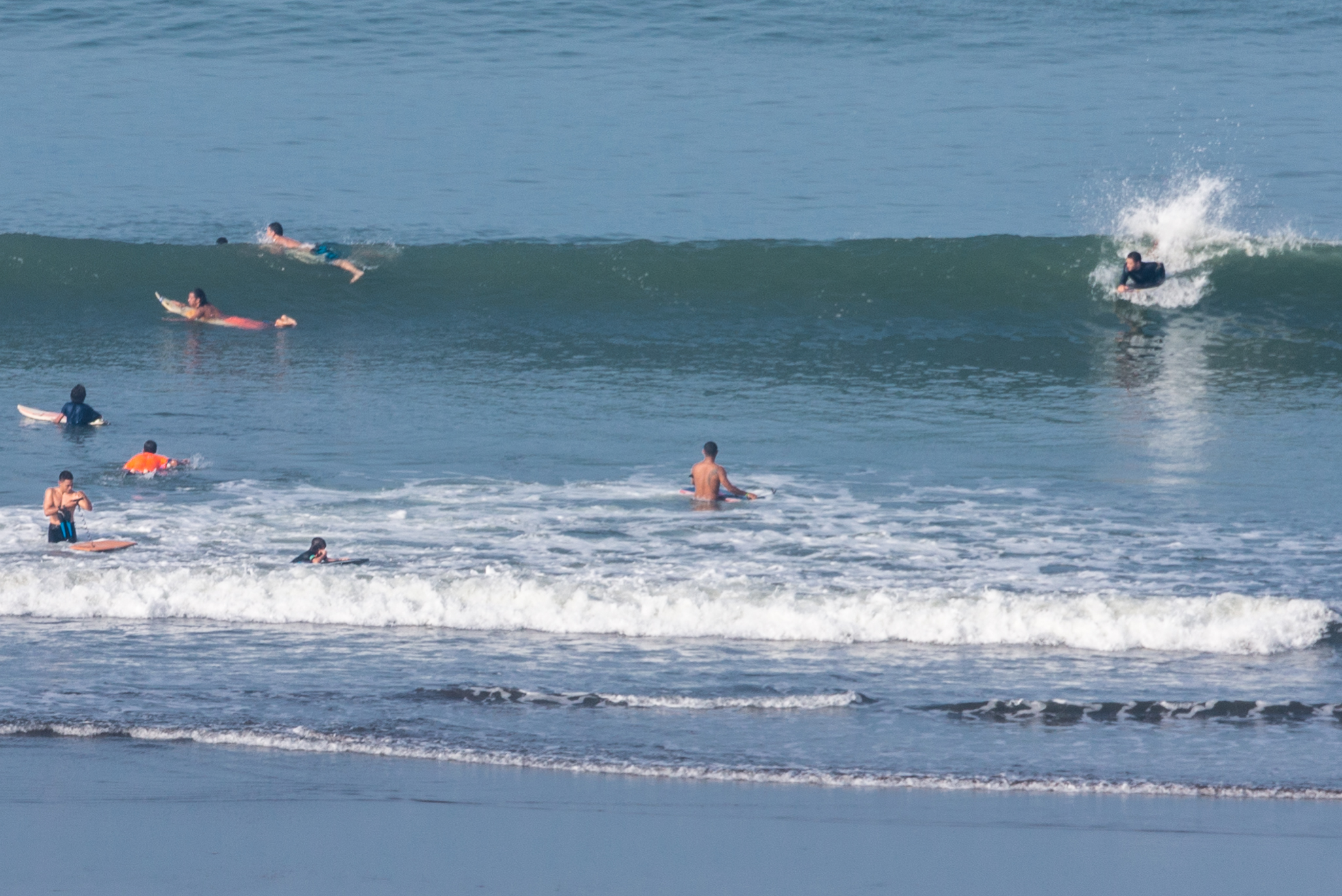
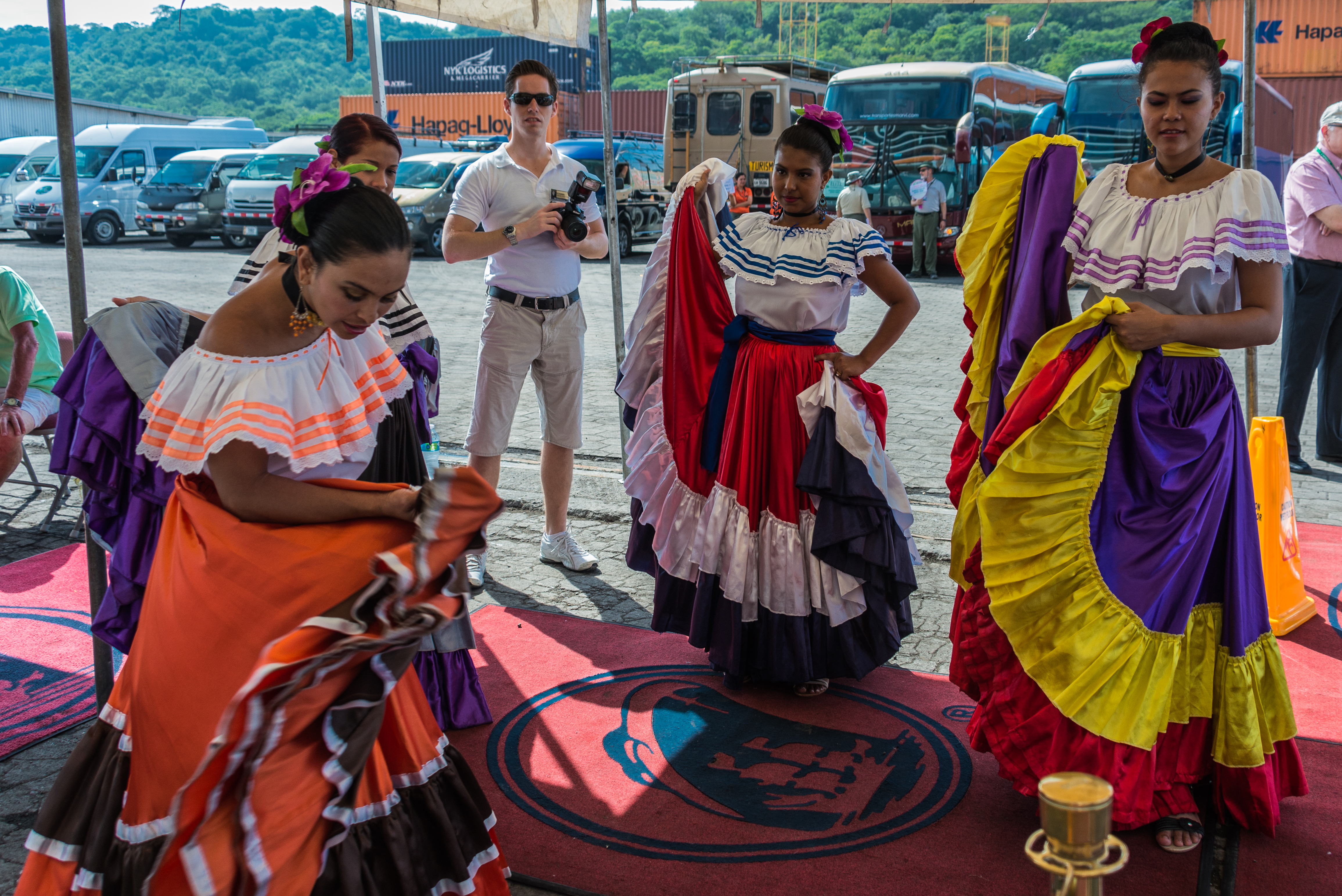
We arrived in Putero Caldera, Costa Rica just before 8 AM on 18 October. It was 35 C and already a group of kids were trying to wear out their surfboards at the beach next to the port. This is a mixed freight and passenger port with very good access for buses allowing them almost right to the gangway. Our welcome entertainment, here in Costa Rica was a group of cultural dancers who were performing for us on the dock as we disembarked the ship.

2014-JKH-Panama-D610-0653

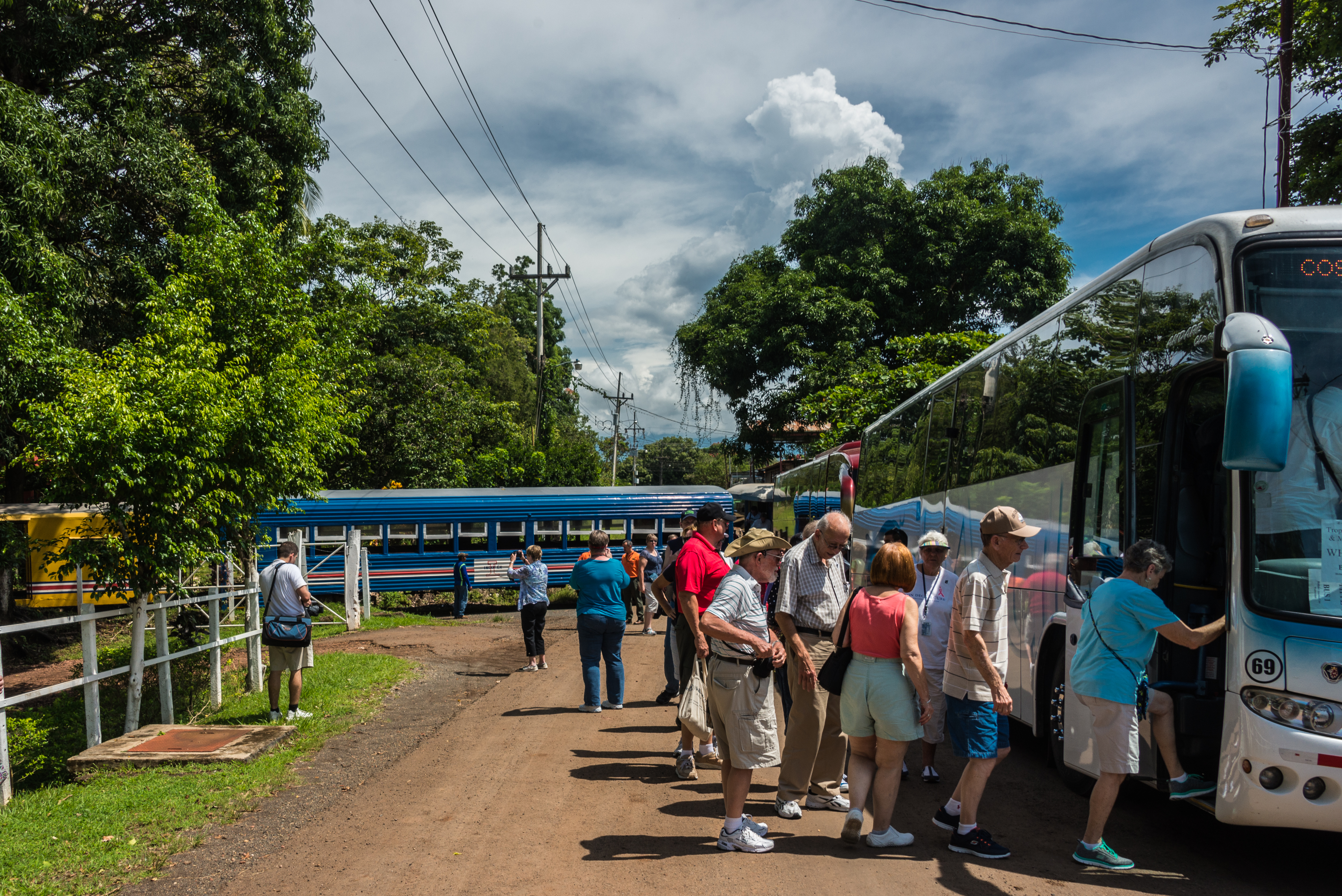
Today we are off for a train ride and a river cruise through a mango swamp. Both activities are a short distance from the ship by bus.

2014-JKH-Panama-D610-06722014-JKH-Panama-D610-0674

2014-JKH-Panama-D610-06822014-JKH-Panama-D610-0681

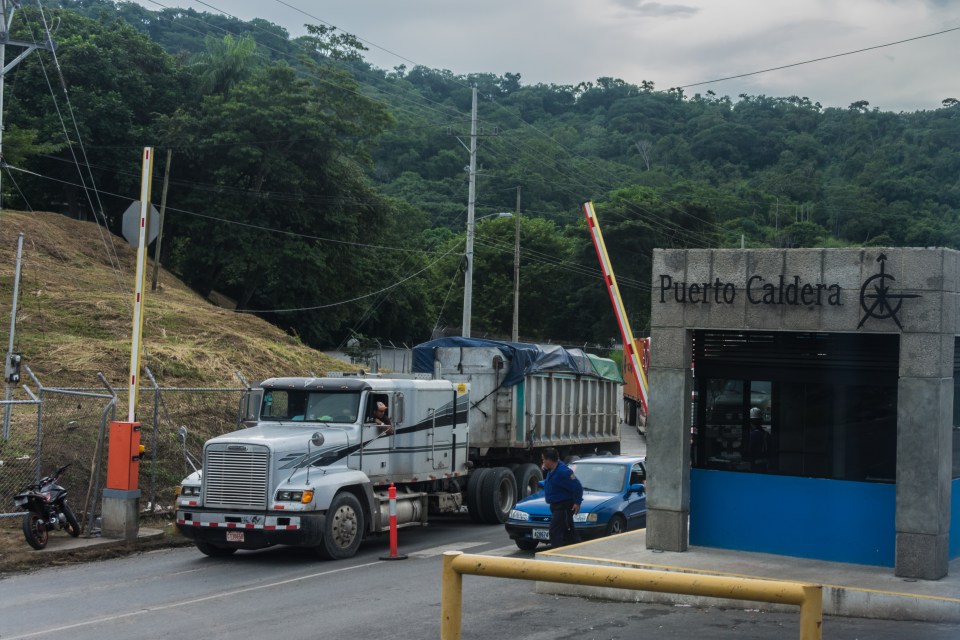
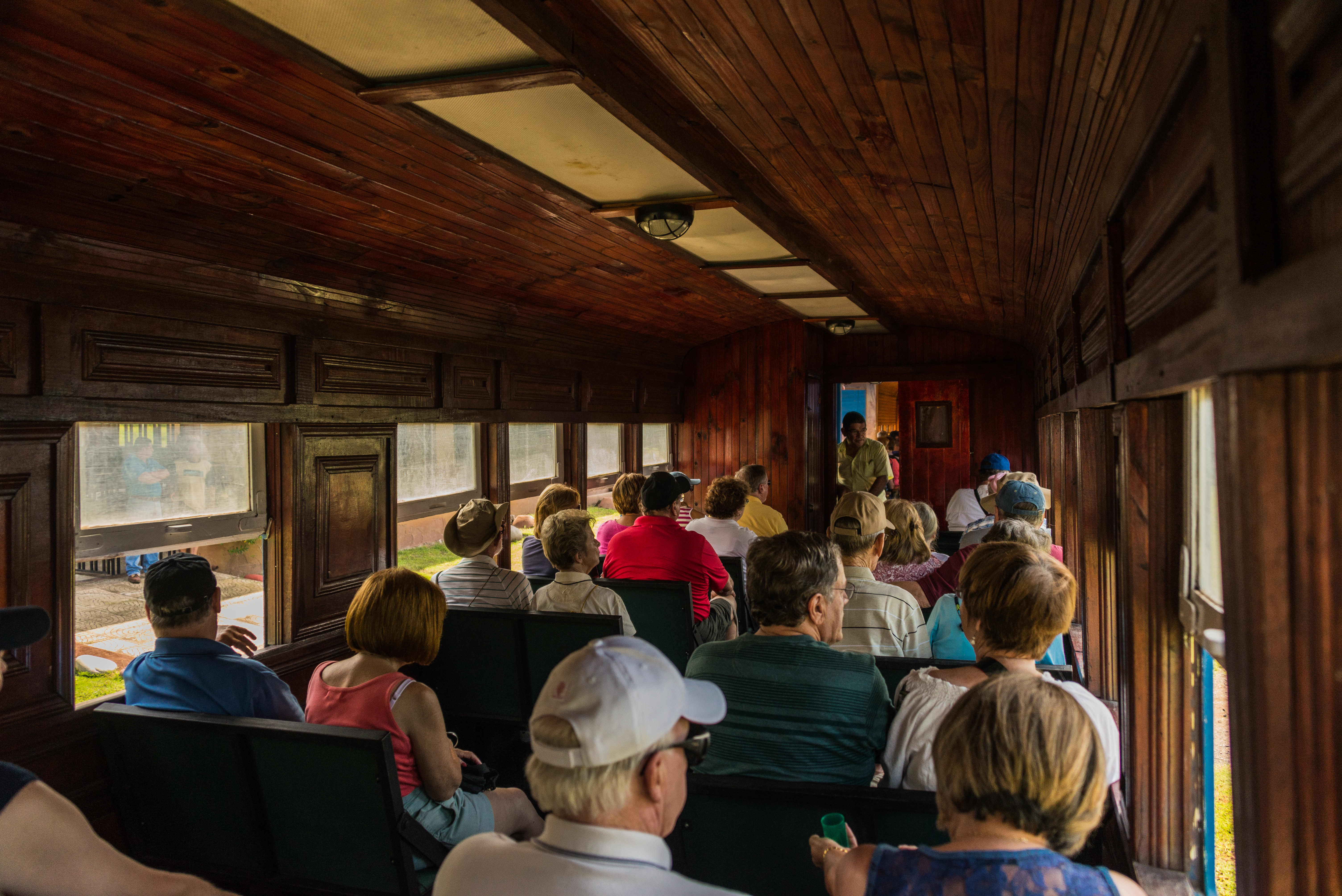
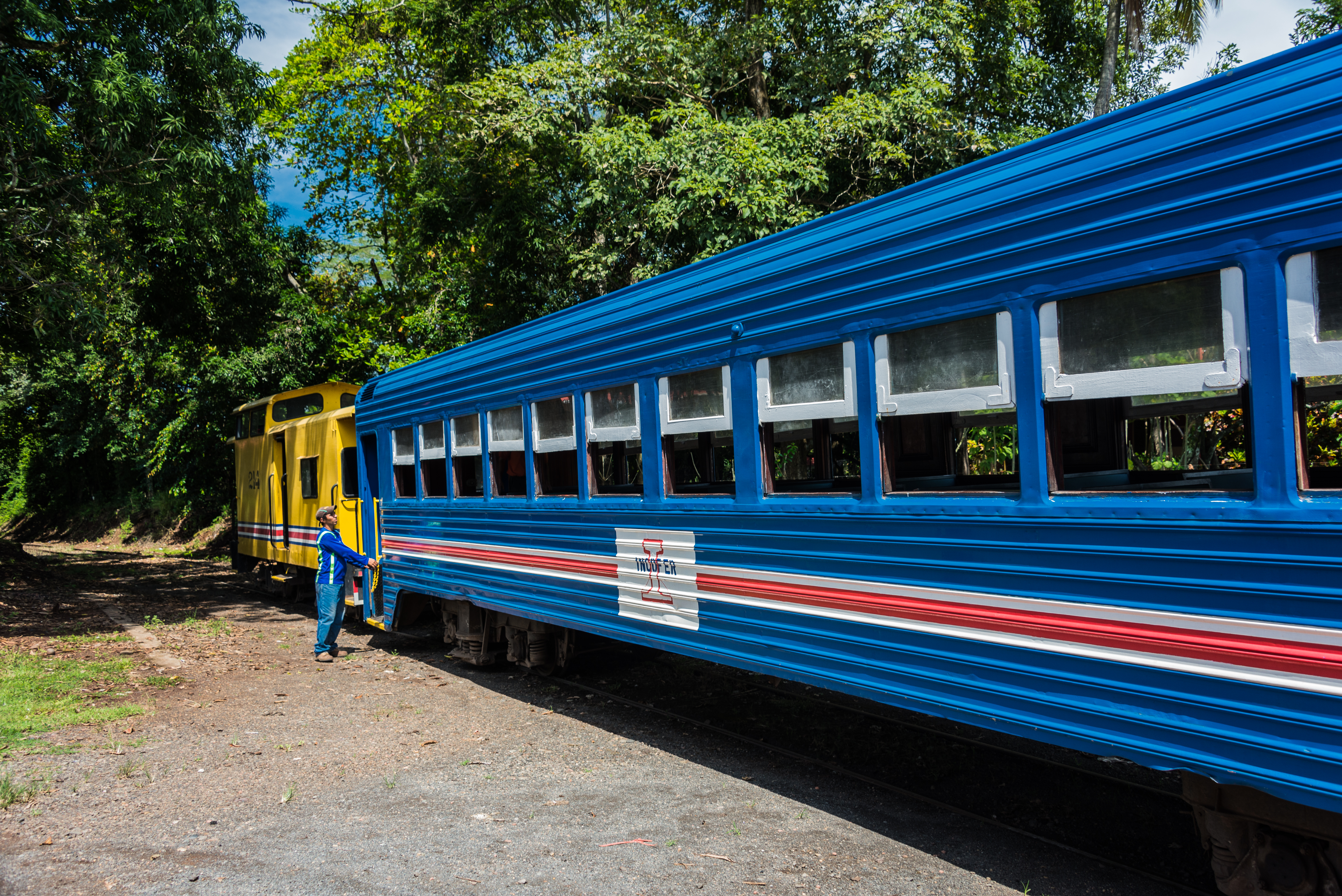
The short train, that looked home made, was towed by an old yard switching engine and pulled a sheet metal caboose that looked like it was made in the shop class at a local high school. The wavy track forced speeds to be held to less than four kph, it seemed. The track was old and rickety and our routing took us through the back yards of poor houses in a quasi-farming community. The friendly locals came out of their houses or stopped on the road as the train passed to wave. If there was any historical significance to the train it was not mentioned other than to explain that before the road to San Jose (the capital) was put in place, you had to travel for four hours on a train like this to get there. It reminded me of an unkempt carnival ride that was in poor repair.

2014-JKH-Panama-D610-06872014-JKH-Panama-D610-0686

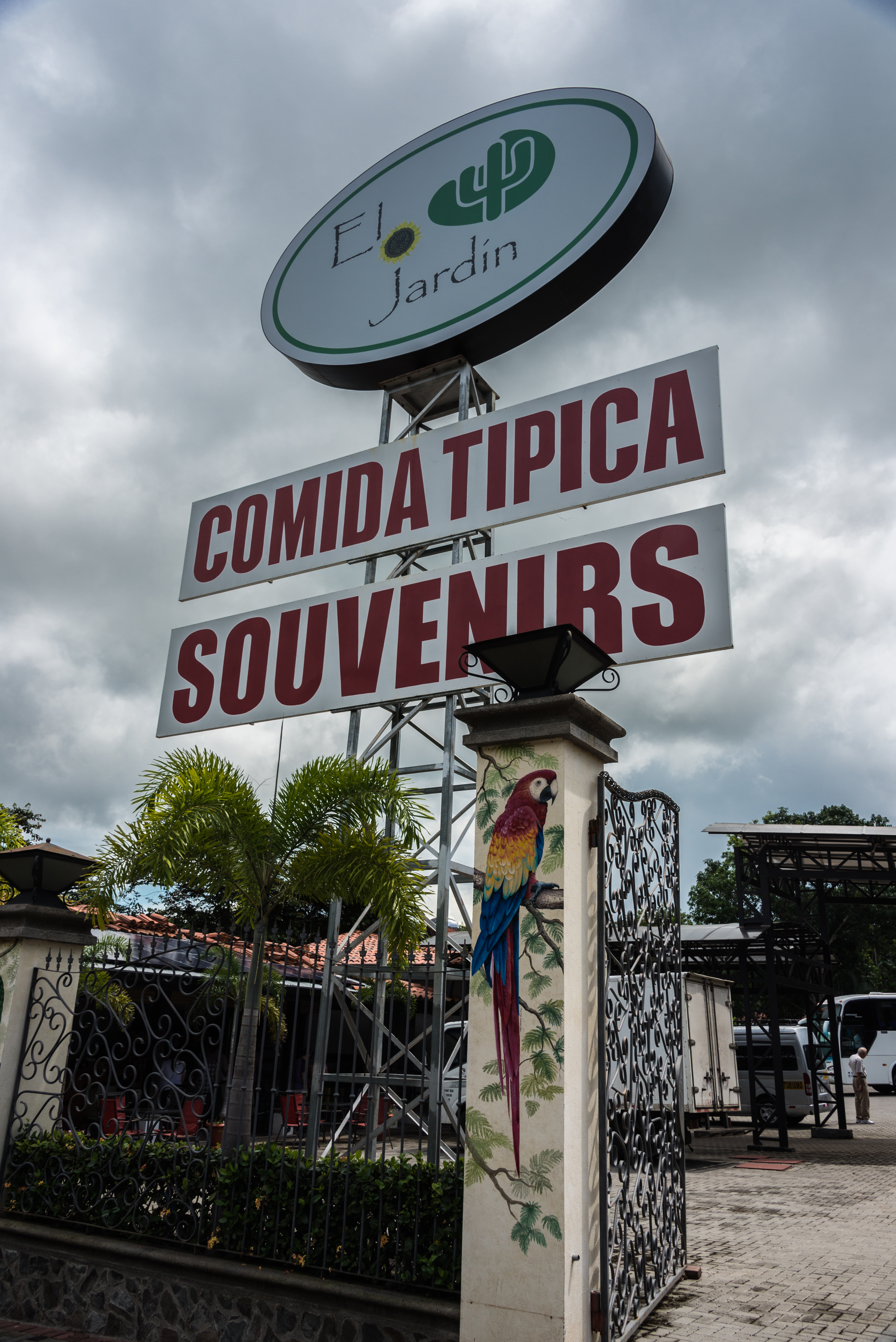
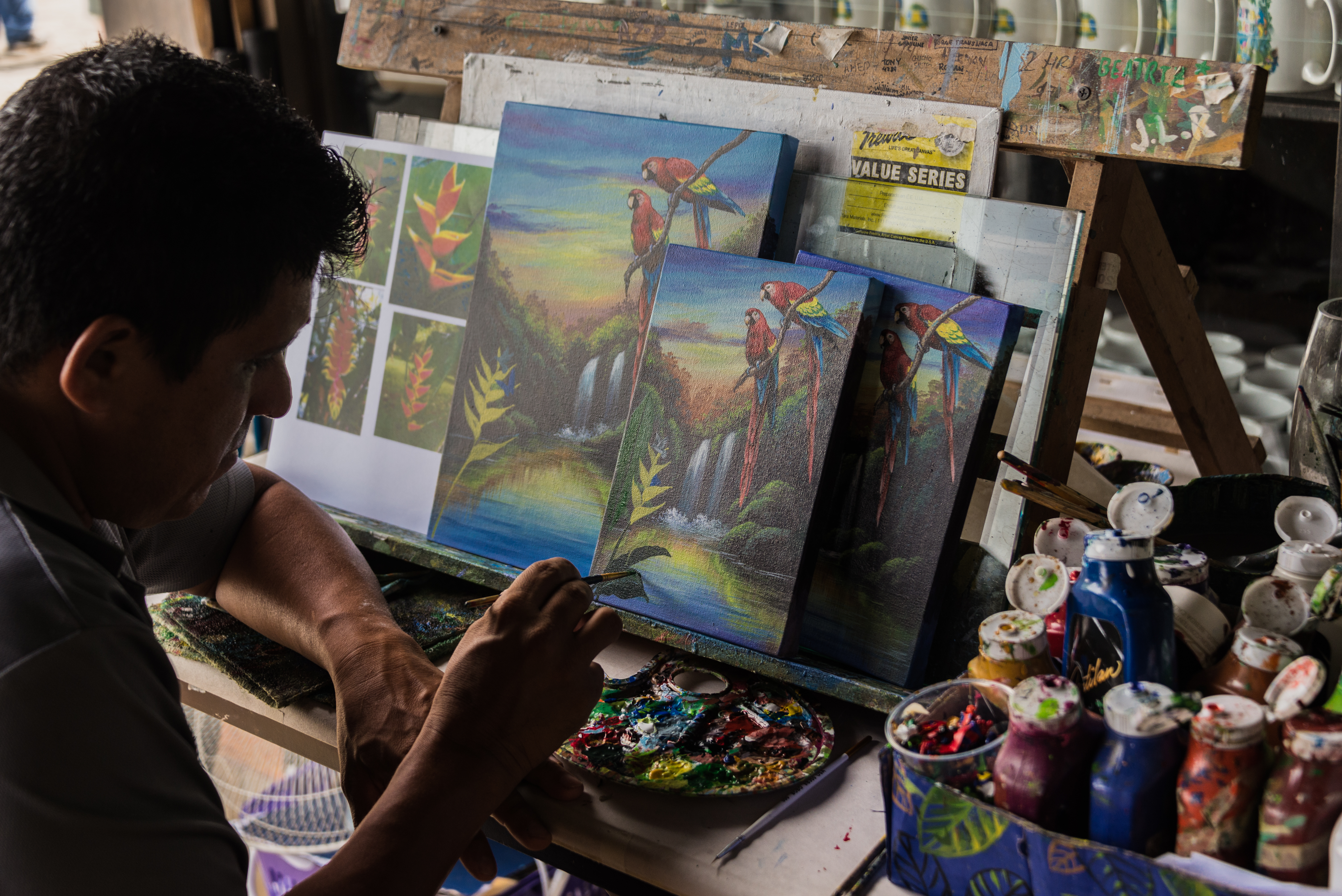
Our next stop was for shopping! We pulled into a slick modern well paved truck stop with a store full of junk trinkets, much of what looked like it was made off shore. Having been to Costa Rica before I know that it is a country with much to offer. Of all our stops so far on this cruise, Costa Rica has the most developed tourism infrastructure. It has drawn Canadians, and others, for more than 20 years and it virtually invented ecological tourism. It is sad that a country with so much to offer and show tourists has to resort to using a facility like this. It would be like taking your friends from out of town to the local truck stop to impress them with the restaurants in your area. I am sure it would be easy to find “real” stores and/or facilities with genuine Costa Rican products and food. This left me with the impression that they were afraid to show the real Costa Rica. Sad! Disappointing!

2014-JKH-Panama-D610-06892014-JKH-Panama-D610-0690


2014-JKH-Panama-D610-0696

2014-JKH-Panama-D610-07002014-JKH-Panama-D610-0705

2014-JKH-Panama-D610-0708

2014-JKH-Panama-D610-0717

2014-JKH-Panama-D610-0723

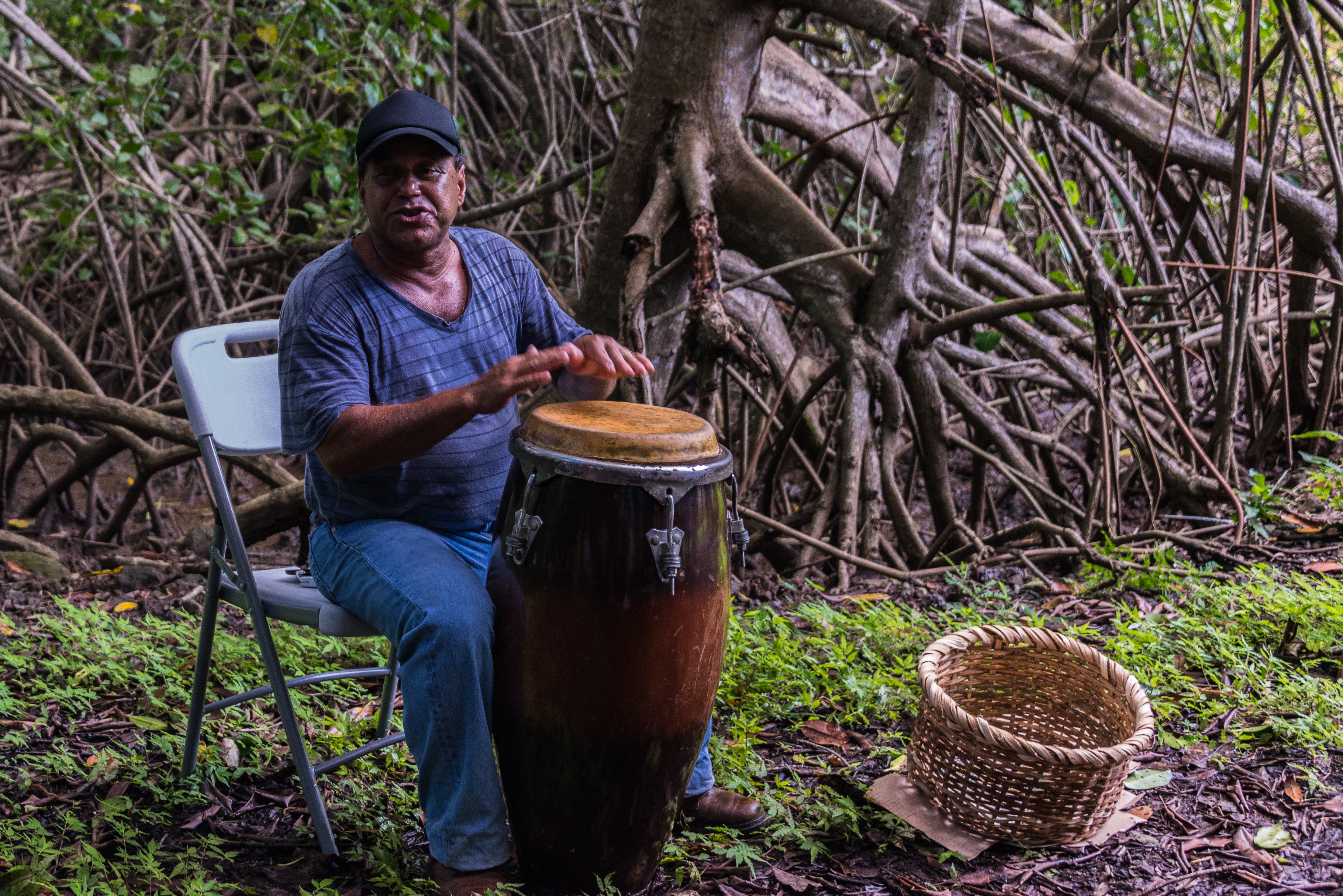
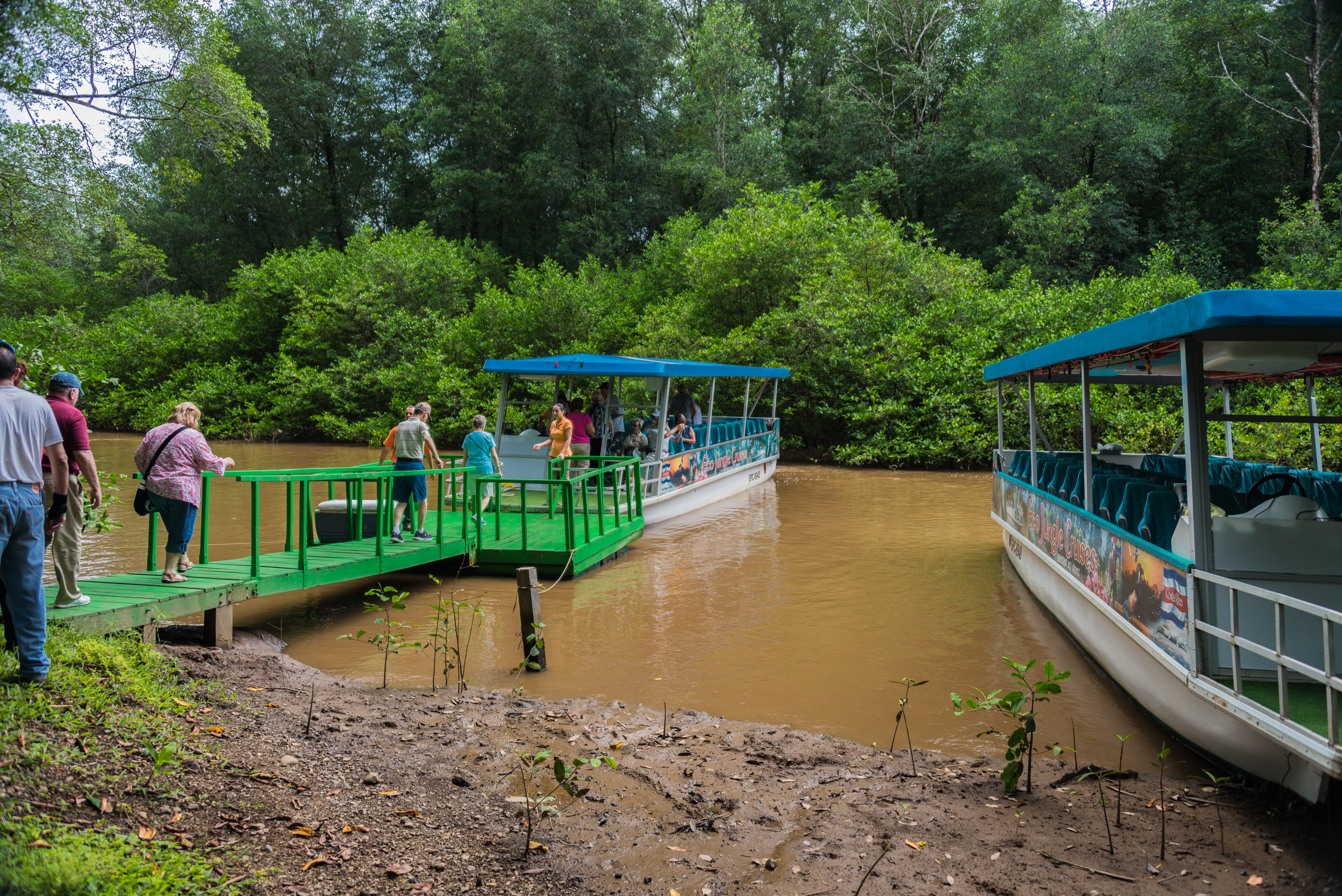
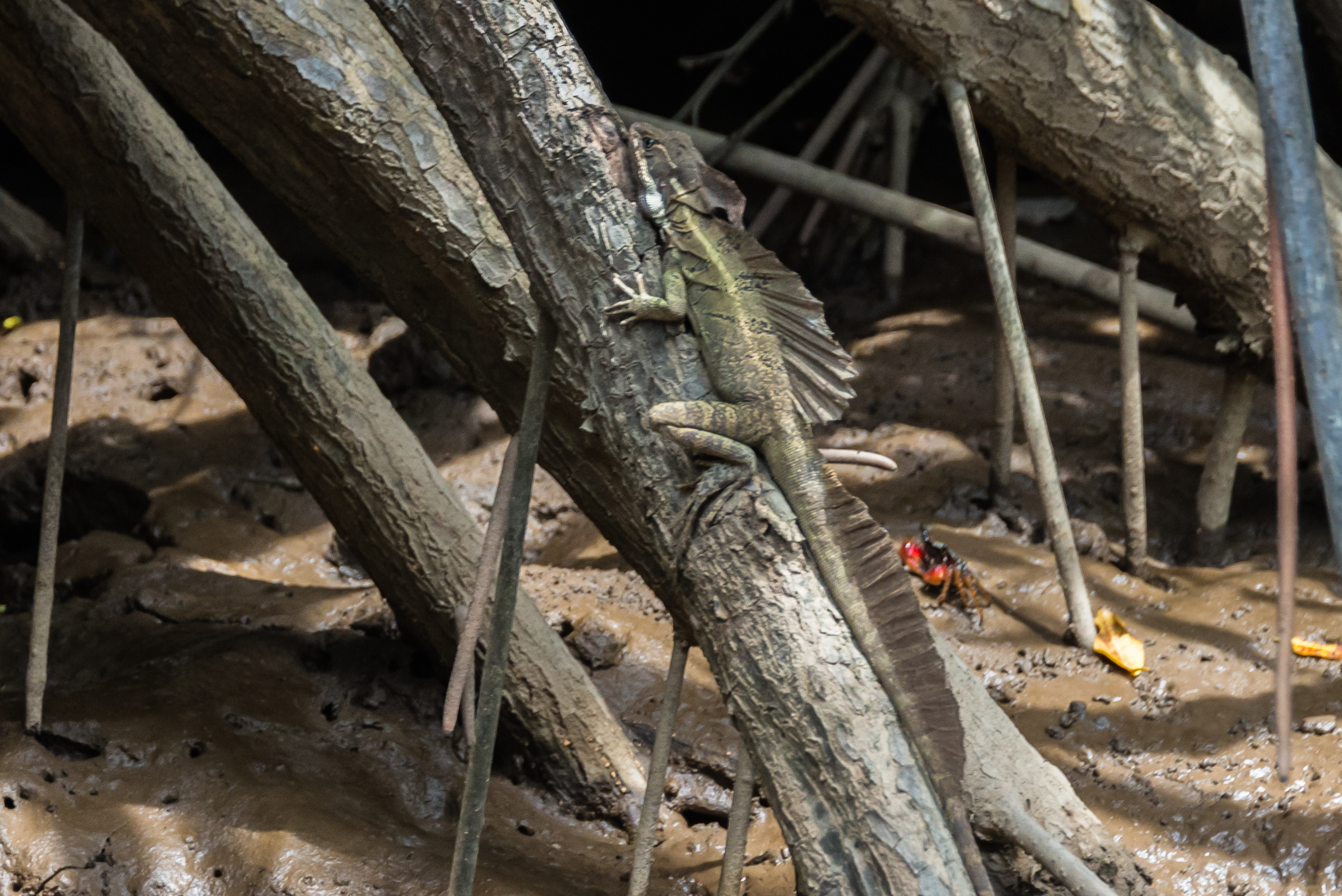
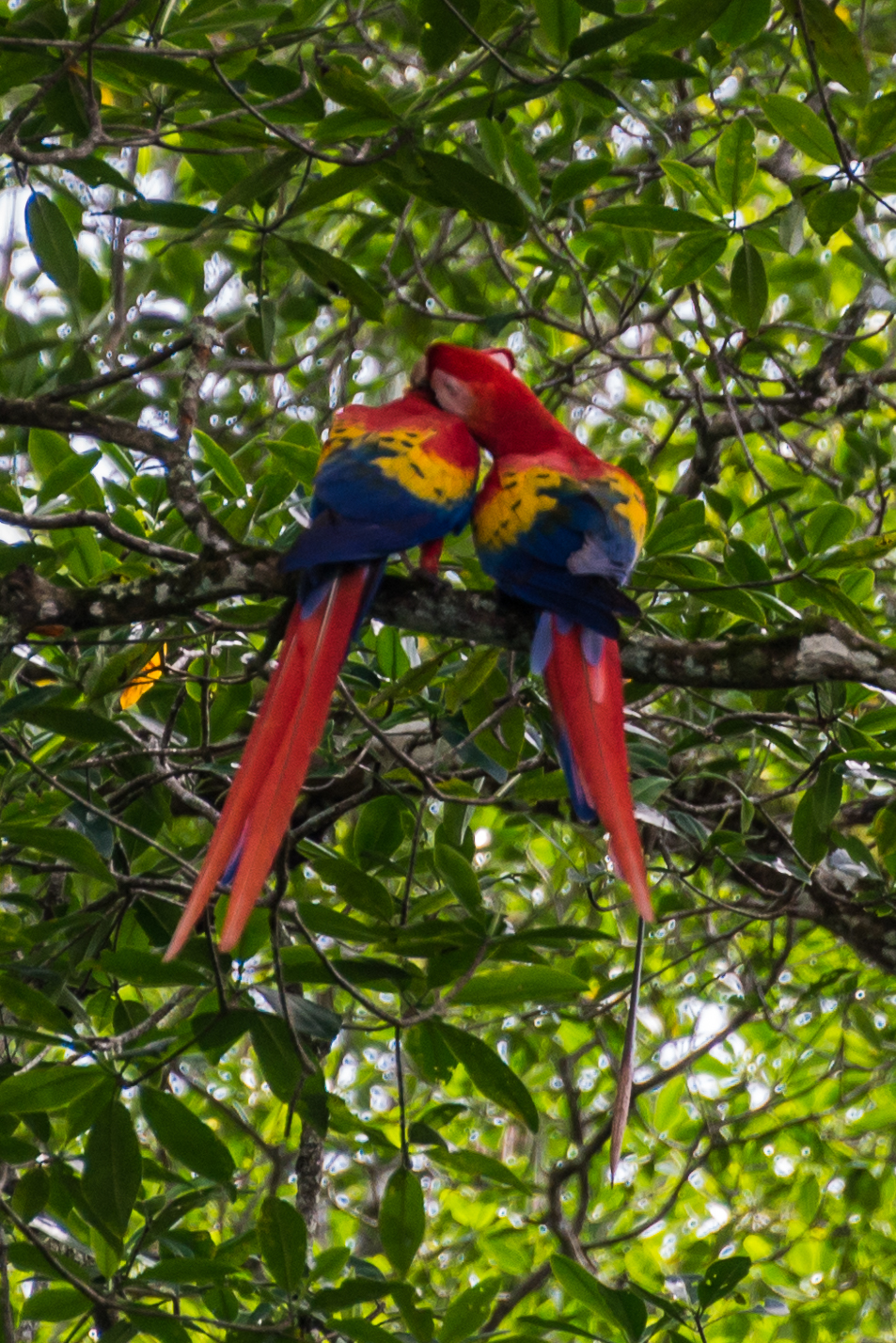
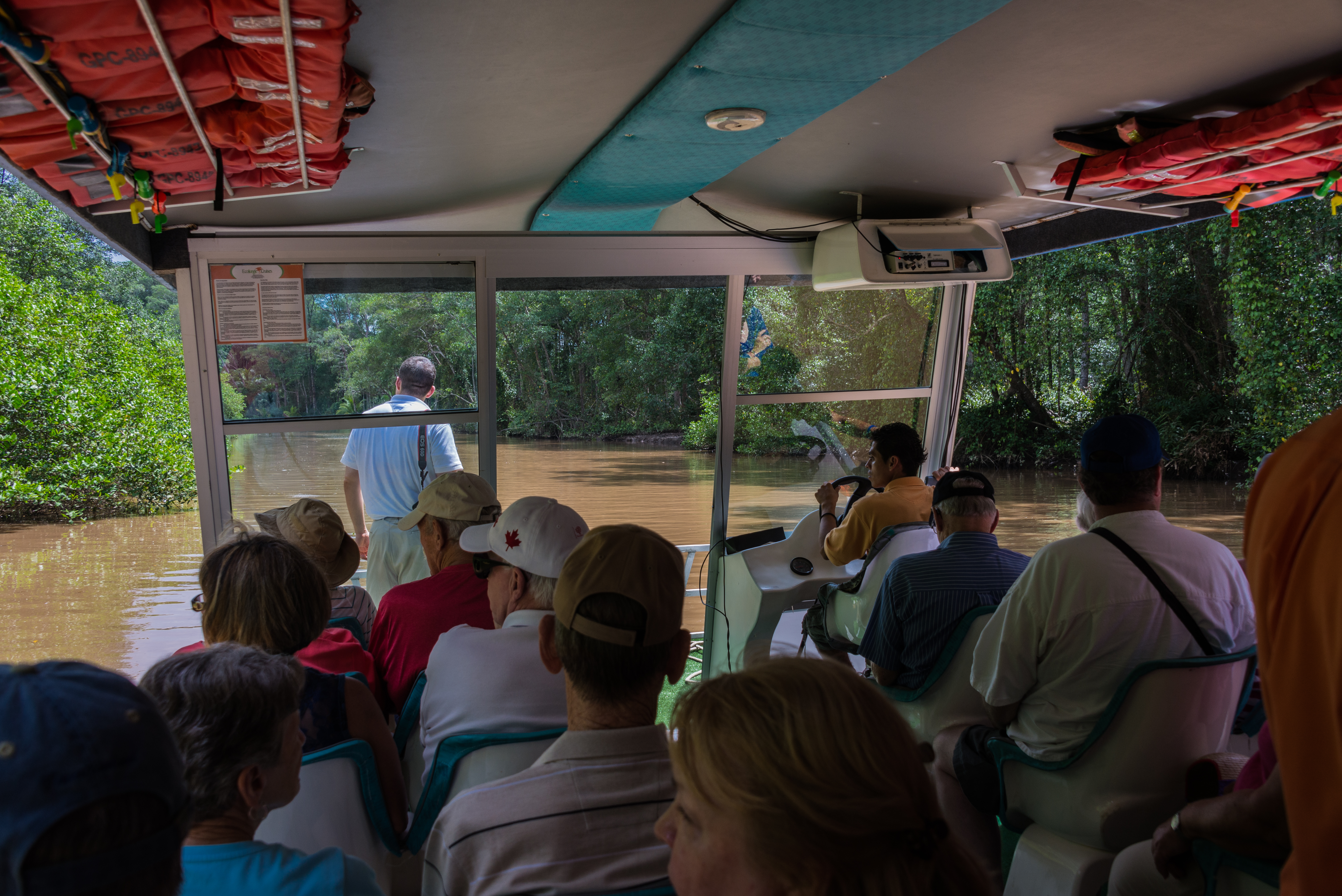
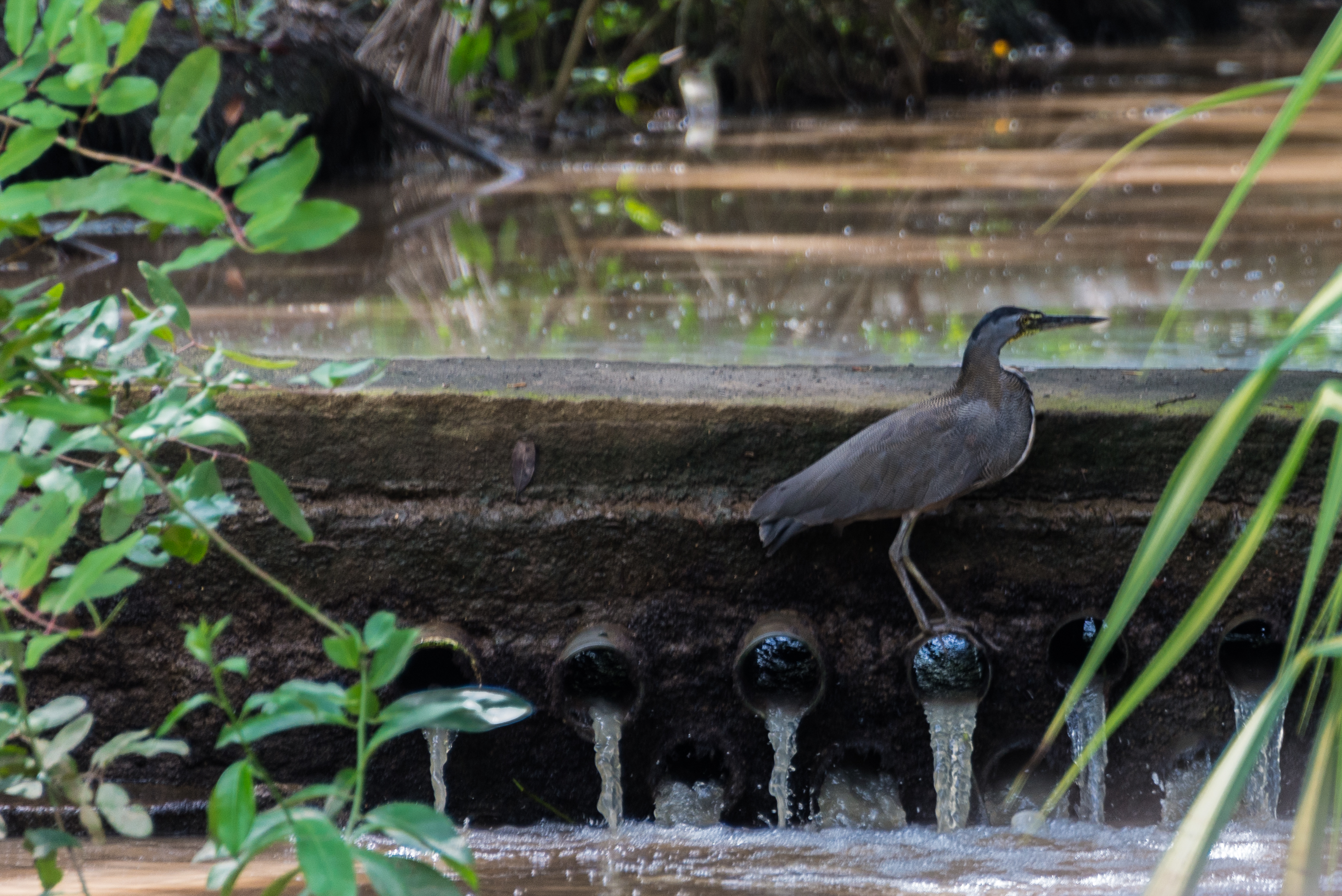
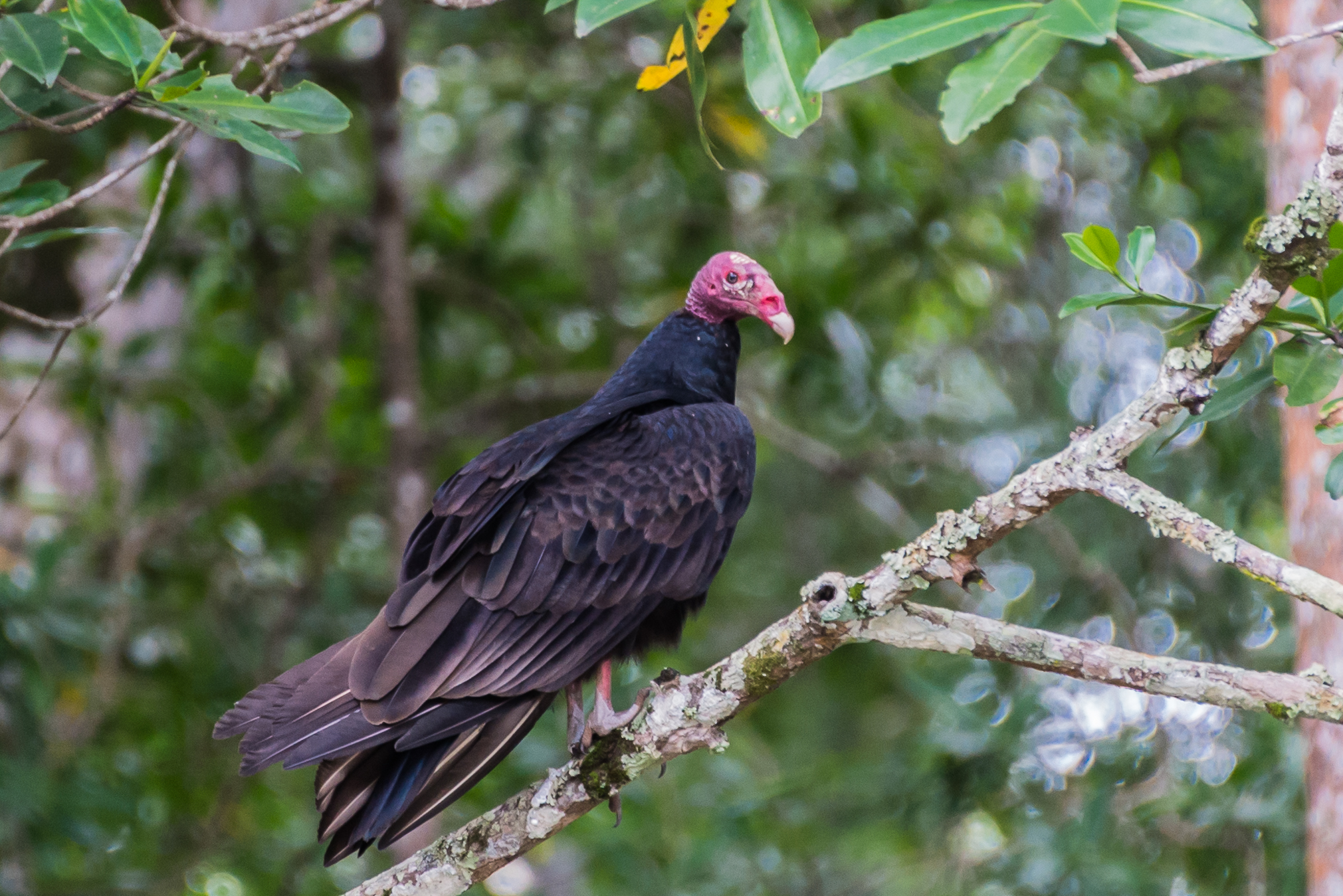
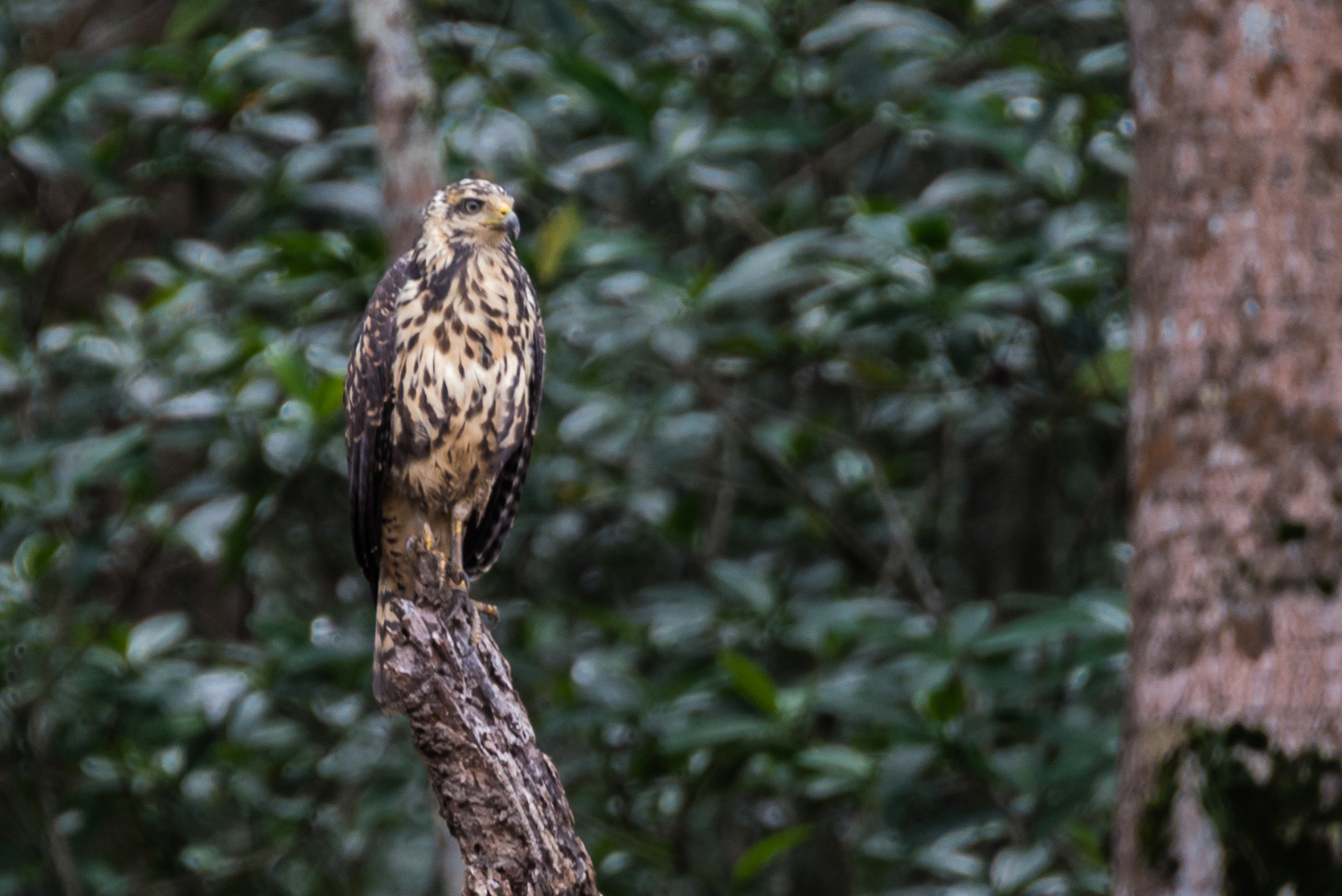
The last part of the tour was on a river through mangroves. This activity was very well done! The boats were large clean and covered, which I appreciated because we are in the rainy season. The boat driver was skilled at spotting wildlife and maneuvering the boat so everyone got a look. We viewed numerous birds, including a pair of scarlet macaws, lizards, and other birds. There were no crocodiles. Apparently, they like to show themselves at low tide and this was at high tide. From my perspective, this was great. If anyone wanted a recommendation, I would suggest dropping the train ride, changing the shopping and food stop to something more Costa Rican, and spend the most of the day on the river finding wildlife.

Overall, I was disappointed in the Costa Rican visit. There is potential there that just was not realized.

The weather deteriorated throughout the day, with light rain starting just as the river cruise completed. By the time, we got back to the ship the rain had stopped, but the sky was black and threatening. We took our computers over to the duty free shop where a free high speed Wi-Fi connection was advertised. It was packed with passengers and cruise ship staff, all trying to use a heavily overtaxed wireless connection. This connection was even worse than the ship’s satellite Internet connection that generates many complaints. While there trying to get at email, the sky opened and it rained so hard you should have worn hearing protection in the building with a sheet metal roof.

2014-JKH-Panama-D610-0749

Tomorrow is a sea day followed by our transit of the canal.

A Chinese Canal for Nicaragua?


2014-JKH-Nicaragua2014-JKH-Nicaragua

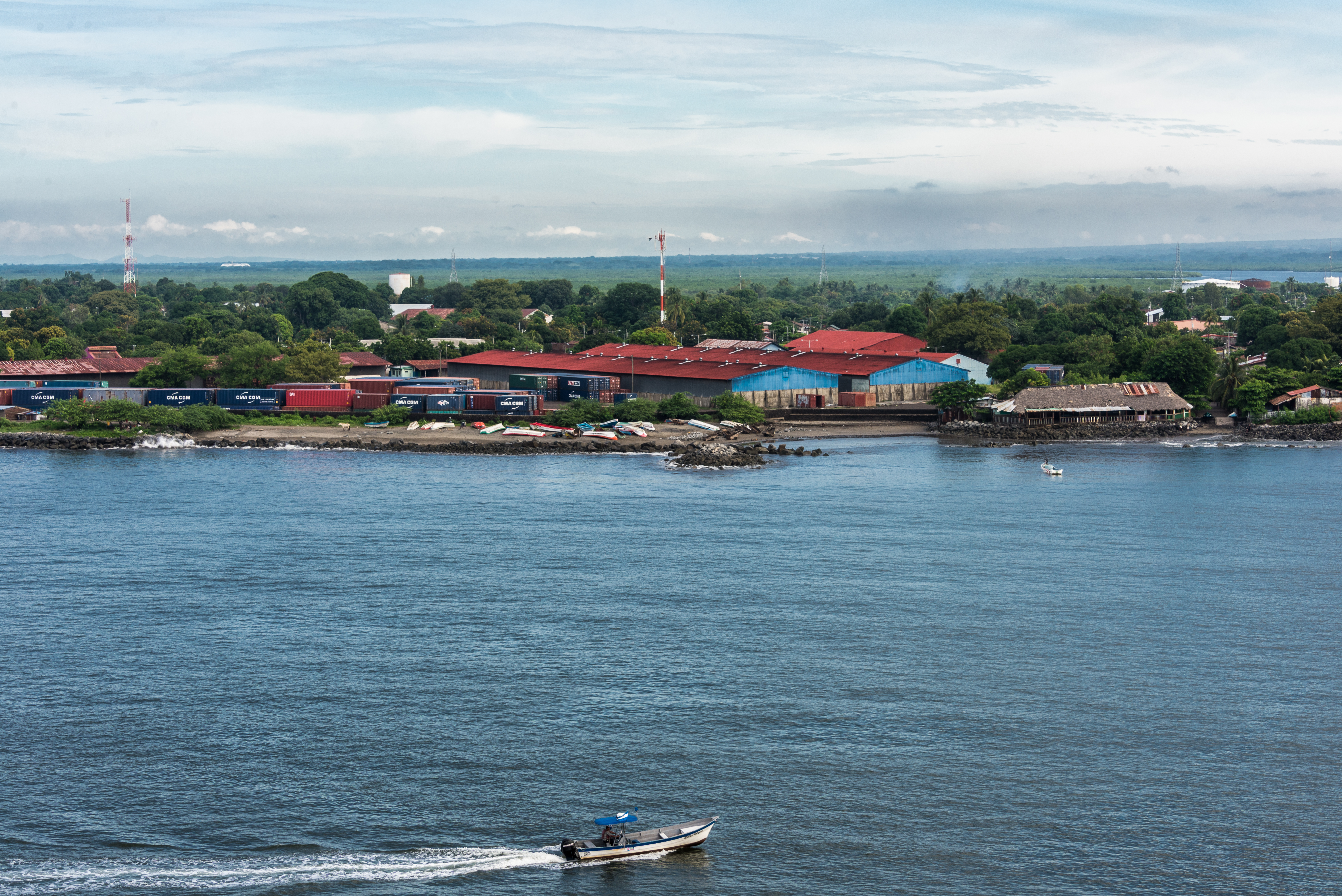
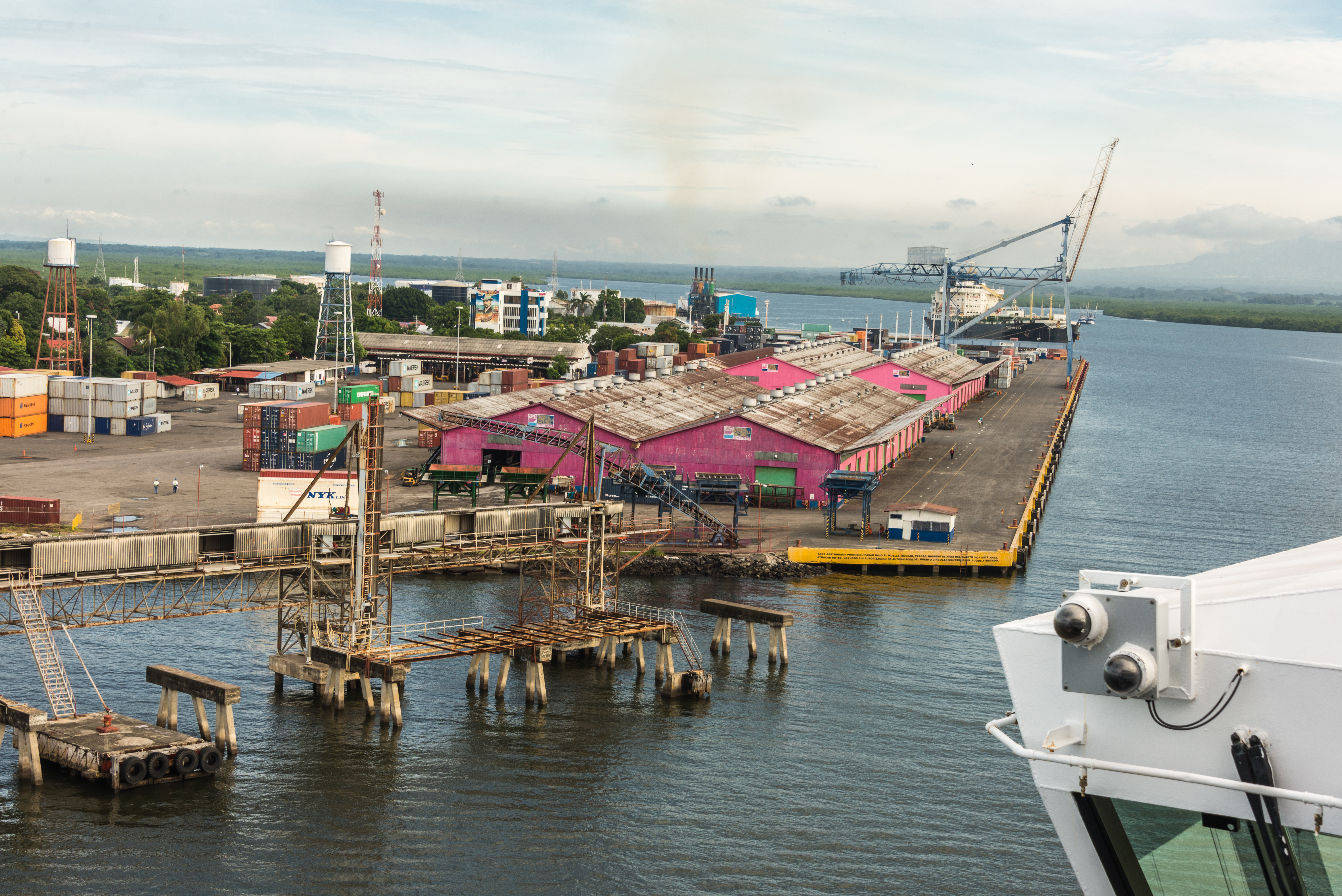
Today, we arrived at Puerto Corinto, Nicaragua at 8 AM. The day was warm, humid, and overcast at 28 C. Puerto Corinto is a small mixed freight and passenger port. Brightly painted long corrugated metal storage buildings, with rusty and corroded roofs covered much of the dock and a foul smell emanating from somewhere close, was a constant reminder that something to do with cattle was not quite right.

2014-JKH-Nicaragua

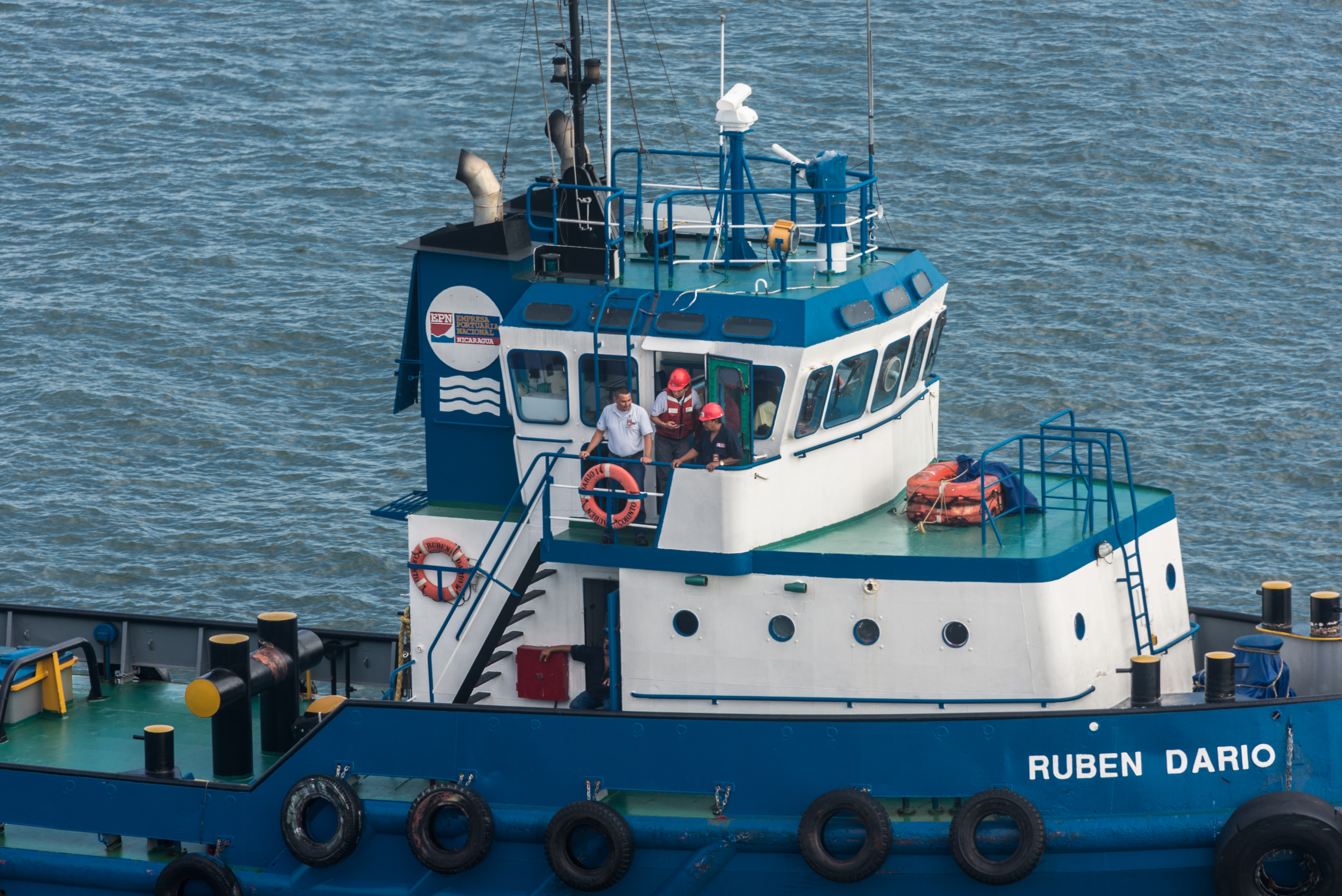
Our docking help was the responsibility of a single tug today. We did not see any other tugs in the harbor so it may be that they only had one.

2014-JKH-Nicaragua2014-JKH-Nicaragua

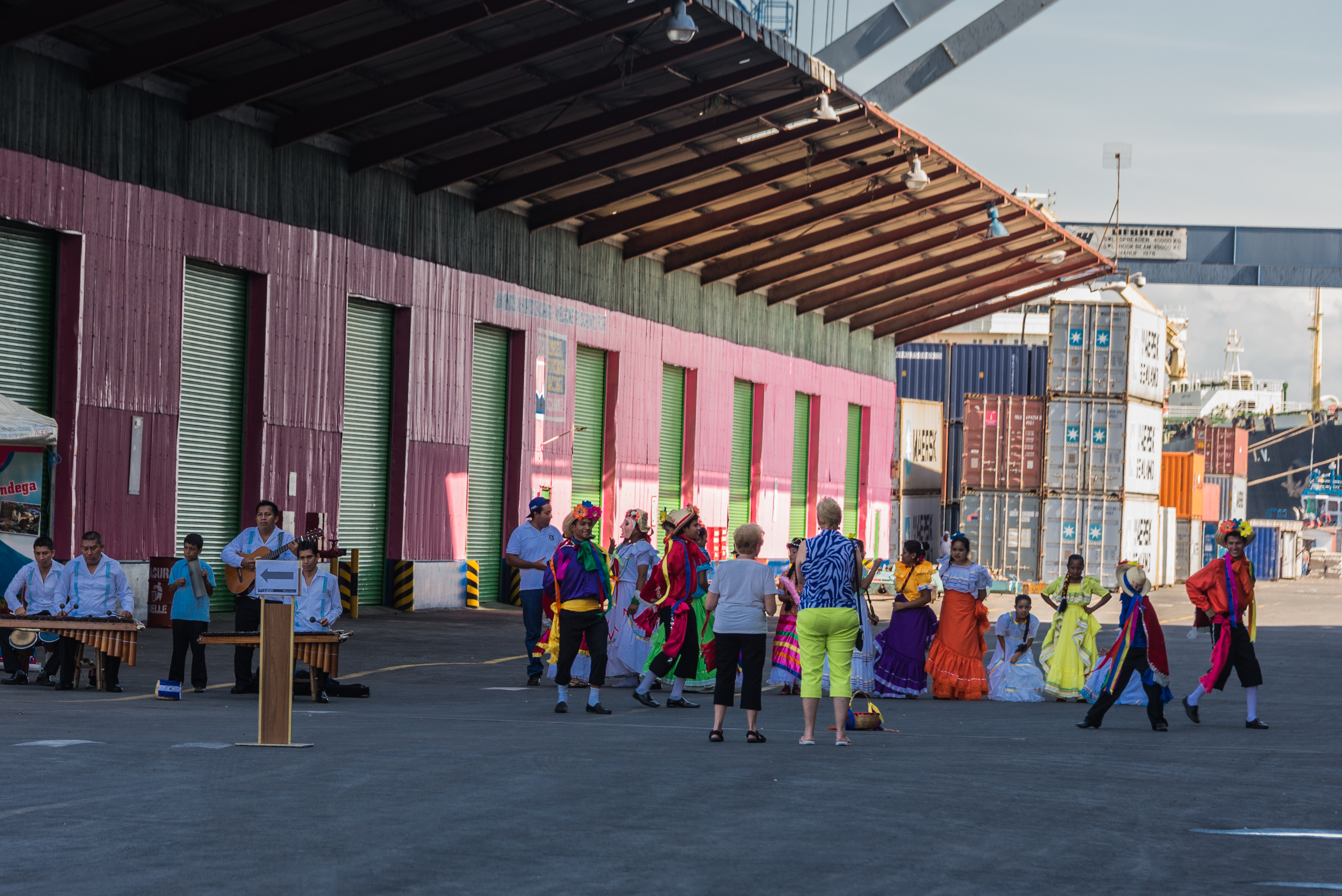
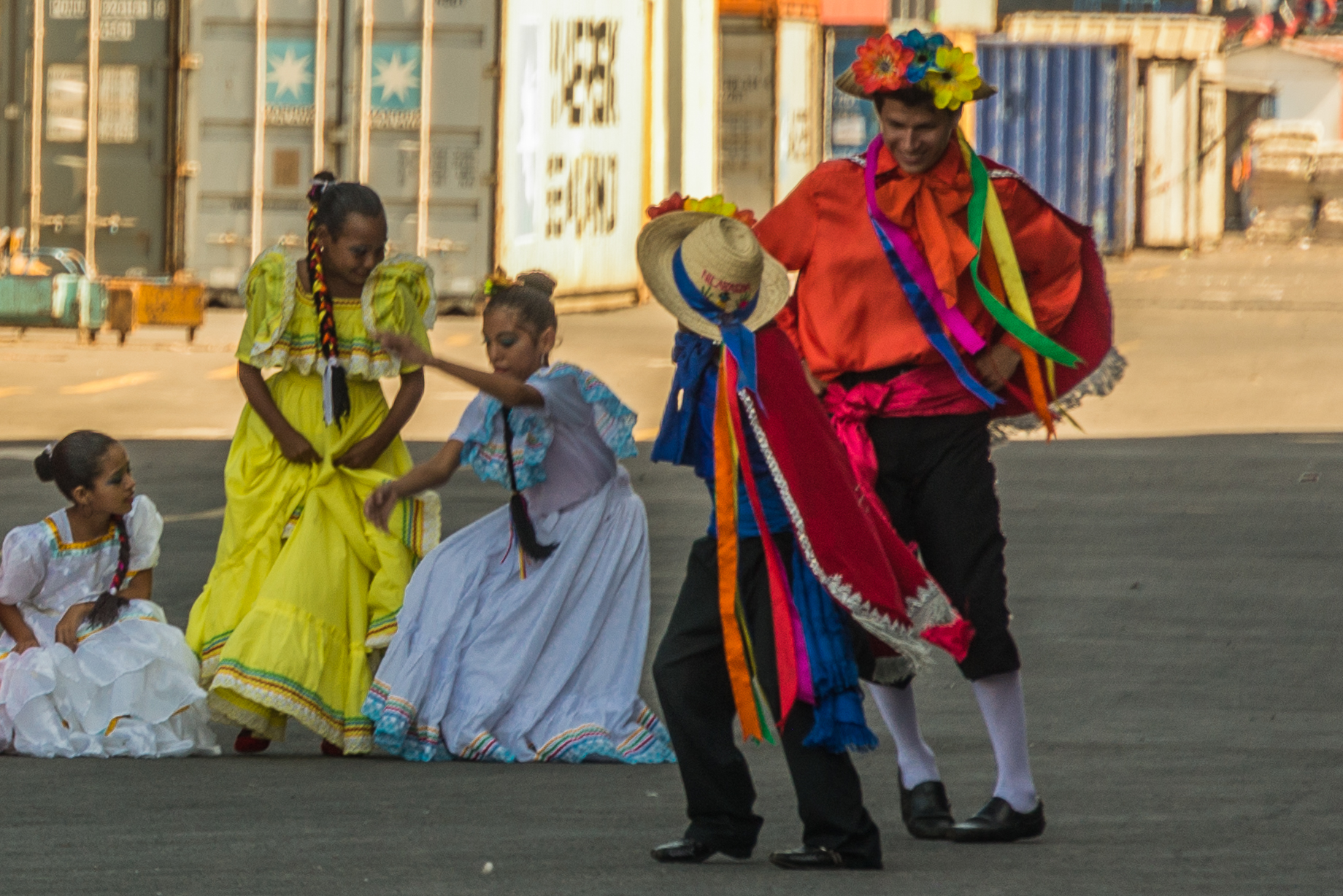
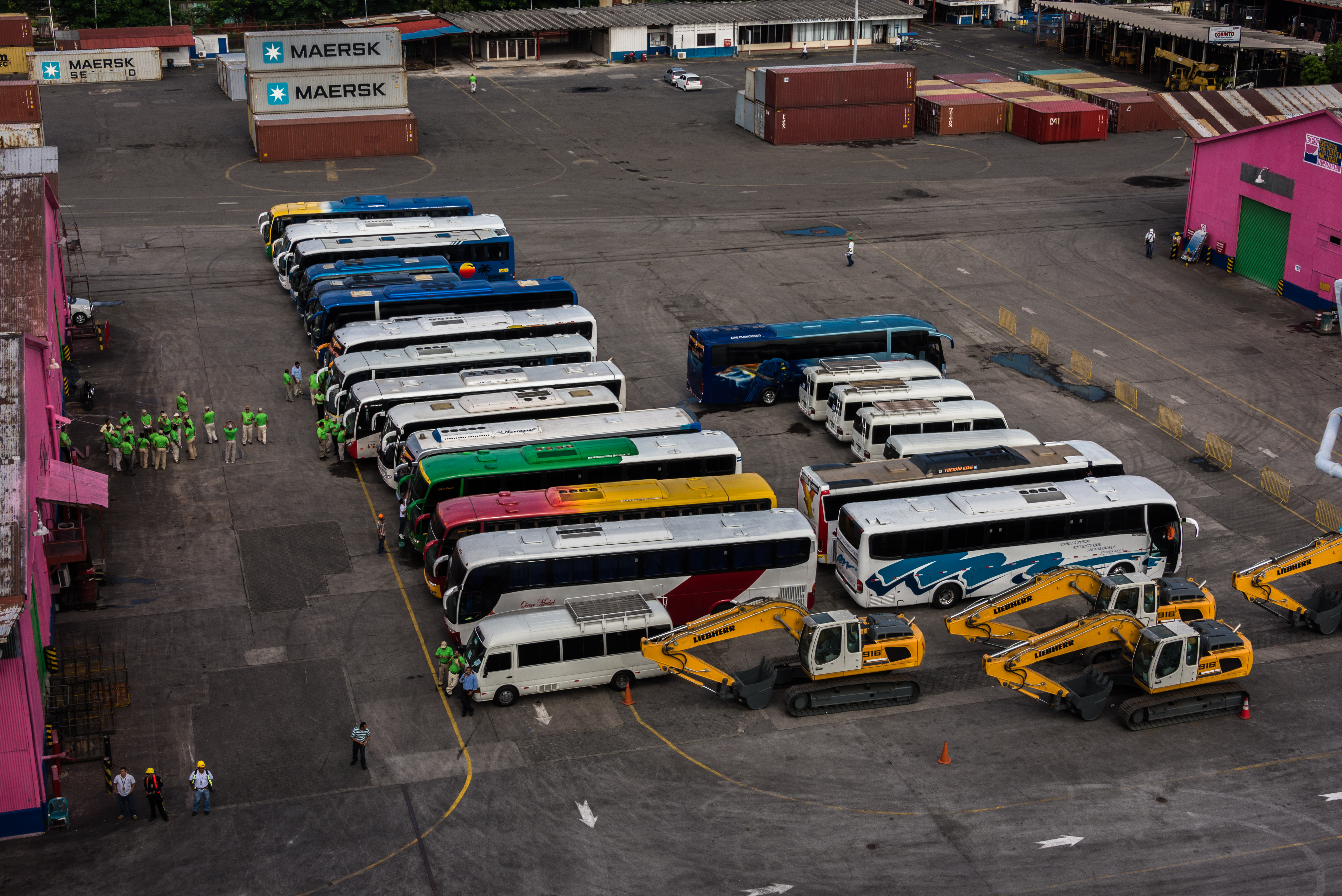
Nicaragua is the second poorest country, next to Haiti, in the western hemisphere so tourism is extremely important to their economy. Major Nicaraguan exports are sugar and coffee. Again, we were the first cruise ship of the season to visit them. Eleven hundred passengers had booked shore excursions to explore Nicaragua. Vividly colored tour busses gathered on the dock between two of the metal sheds. They were close enough to the ship so you could almost walk off the gangplank right onto the bus. A band and a group of colorful local cultural dancers were performing on the dock as we left the ship.

2014-JKH-Nicaragua

Our busses are large modern MarcoPolo highway coaches in nice condition. The air conditioning worked well and the windows were clean so you could take pictures. Our tour had three busses so it would have been around 140 or so people. It was extremely well organized and the guide spoke good clear English. When we arrived at our destination, each guide took their people around the site in a different order so the crowds were not obvious and there was no waiting. We headed to another Spanish colonial city, this time it was Leon.

2014-JKH-Nicaragua

2014-JKH-Nicaragua

2014-JKH-Nicaragua

2014-JKH-Nicaragua

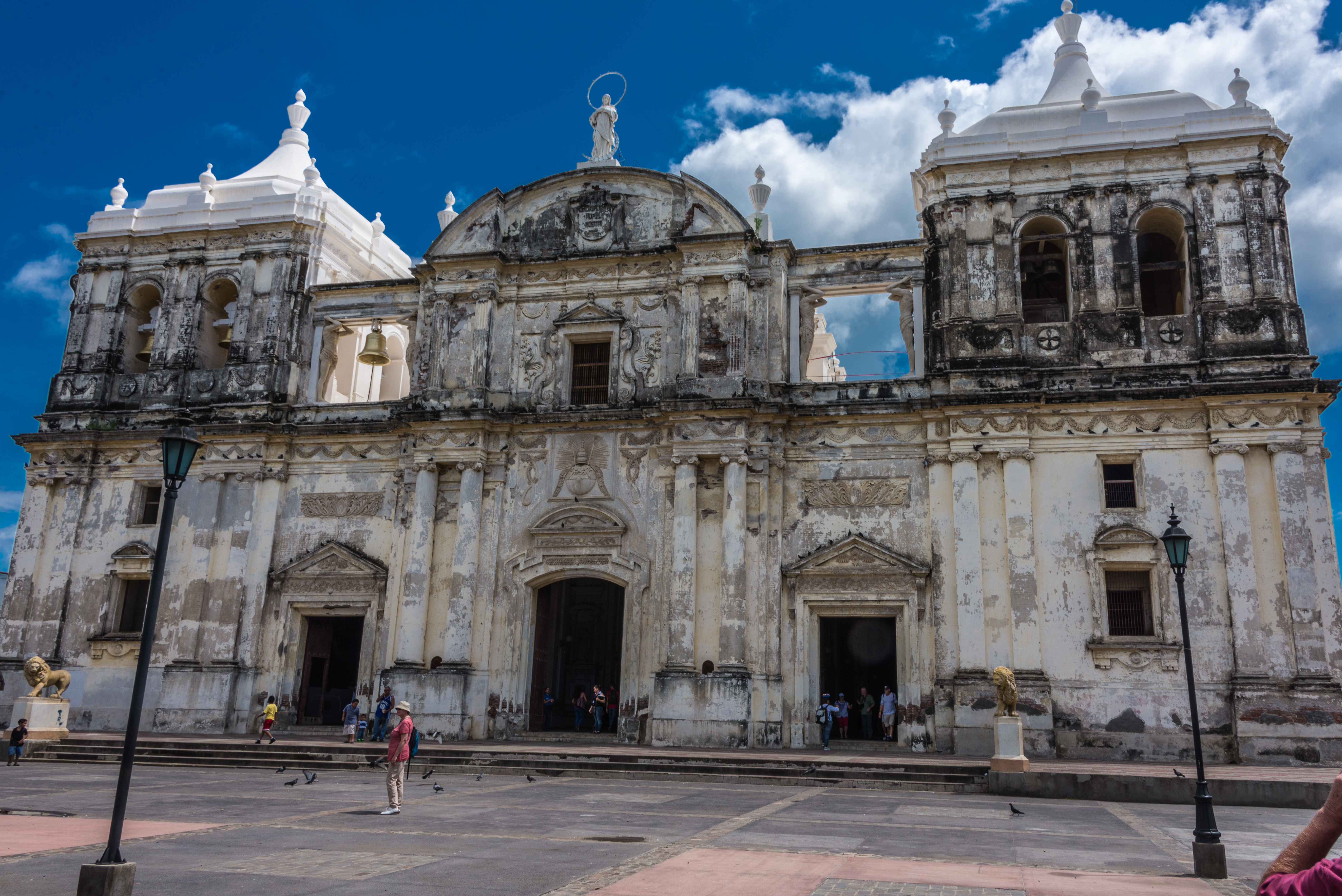
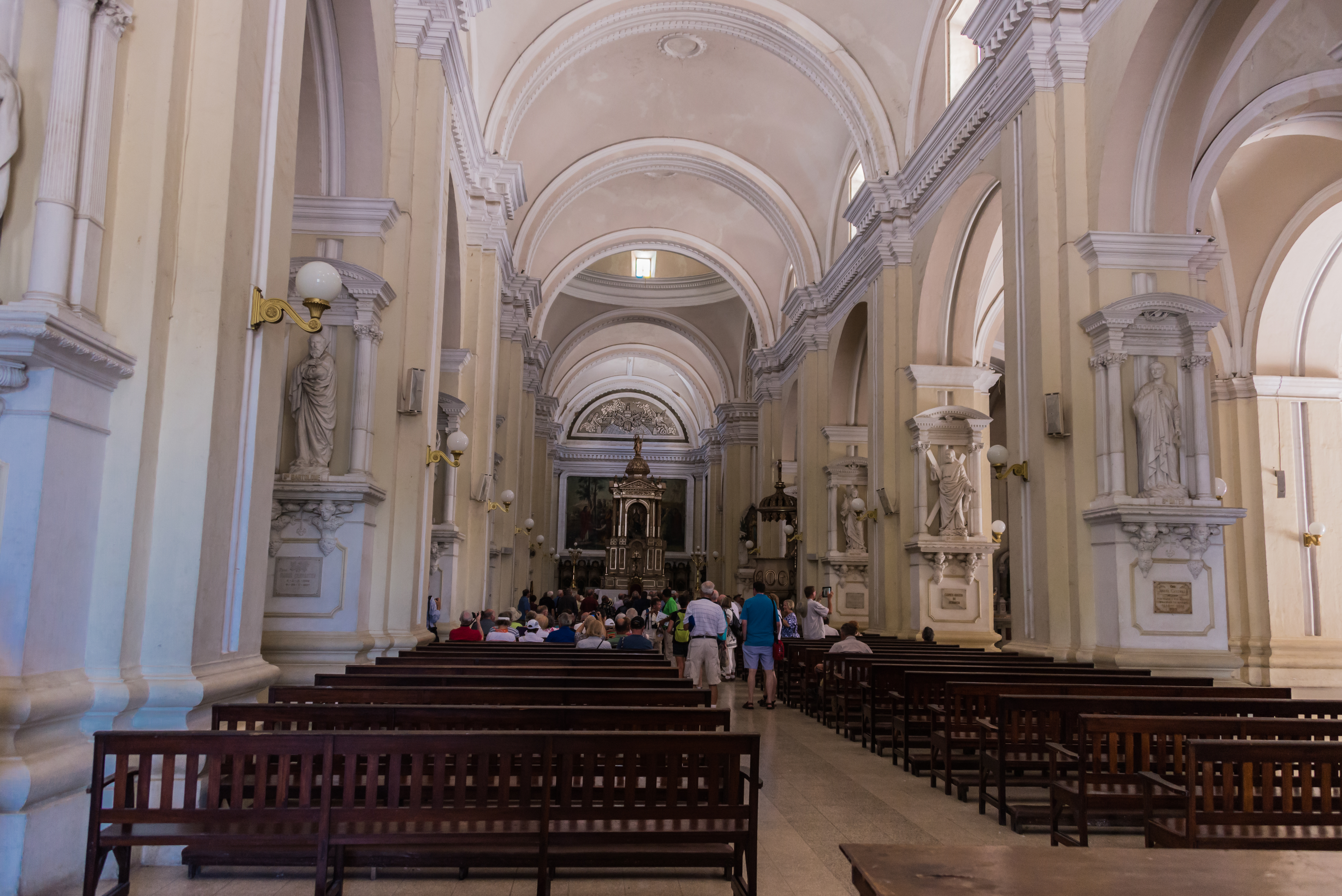
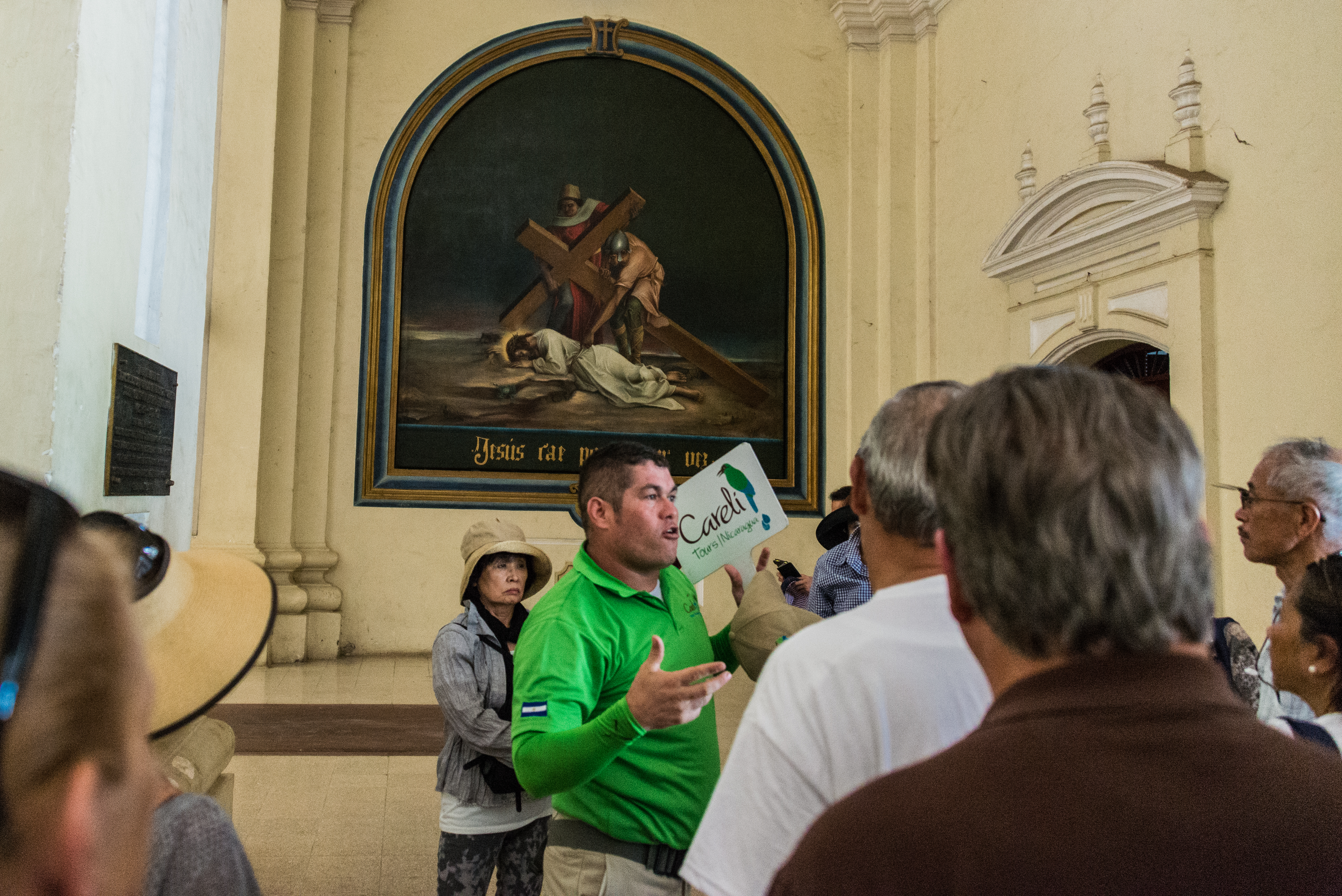
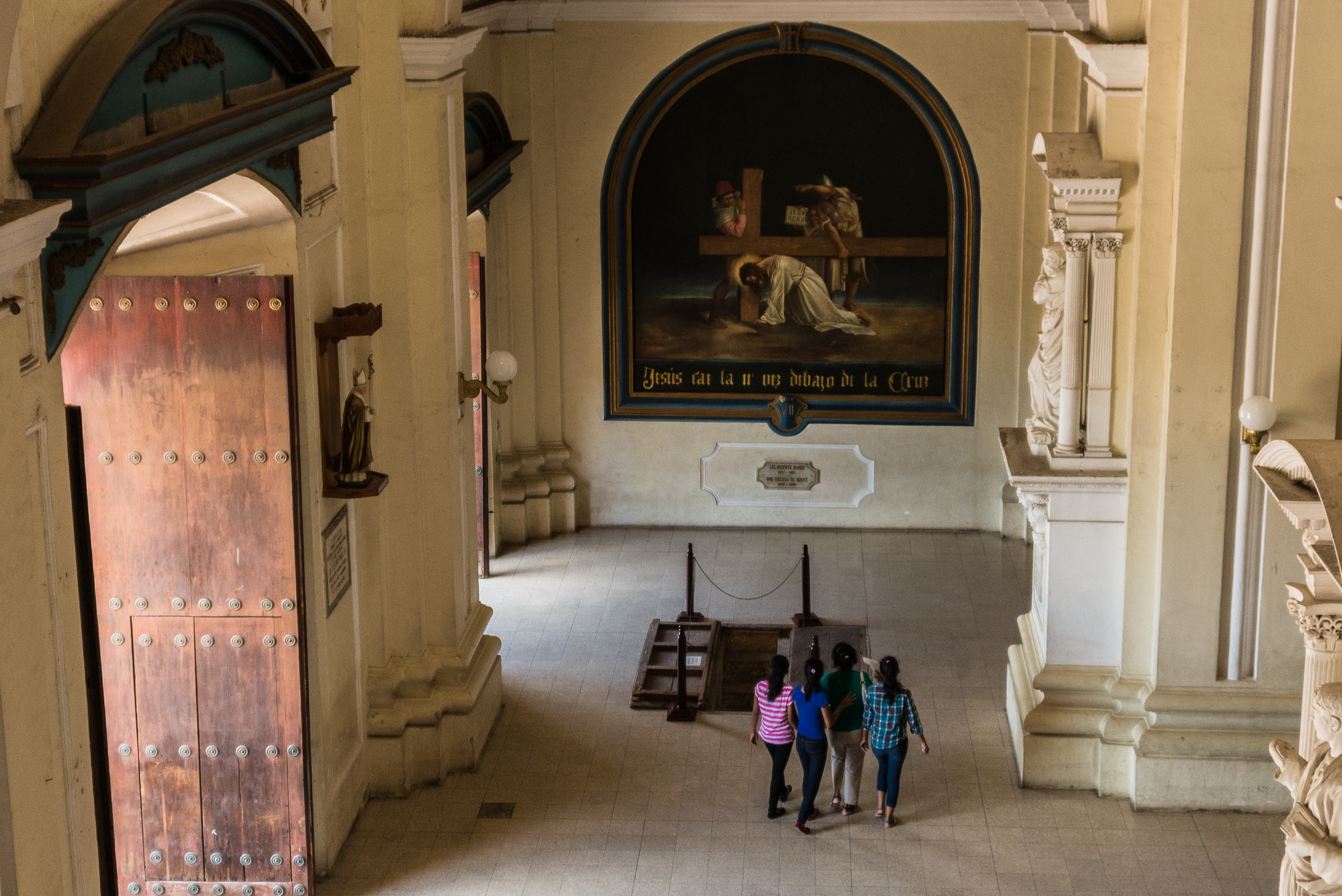
León is a land of eight volcanoes, hot weather and interesting cities. It was designated a UNESCO World Heritage Site in 2000. The ruins of one of the first Spanish colonial cities that were built in the continent, is preserved thanks to the volcanic sand that buried the place after an eruption. Leon was one of the most impressive colonial cities in the country. Here, you find hotels, restaurants, bars, tour operators, museums, cultural centers, several colonial churches and the largest cathedral in Central America, which was started in 1746 and took 100 years to build. Today León is known for having some of the best colonial architecture in the country.

During the revolution in 1978, León was a scene of heavy fighting between Sandinista guerrillas and government troops, leaving much of the center of the city in ruins. The spectacular Catholic Church was used as a fort, which seems a good choice as the walls are over a meter thick.

2014-JKH-Nicaragua

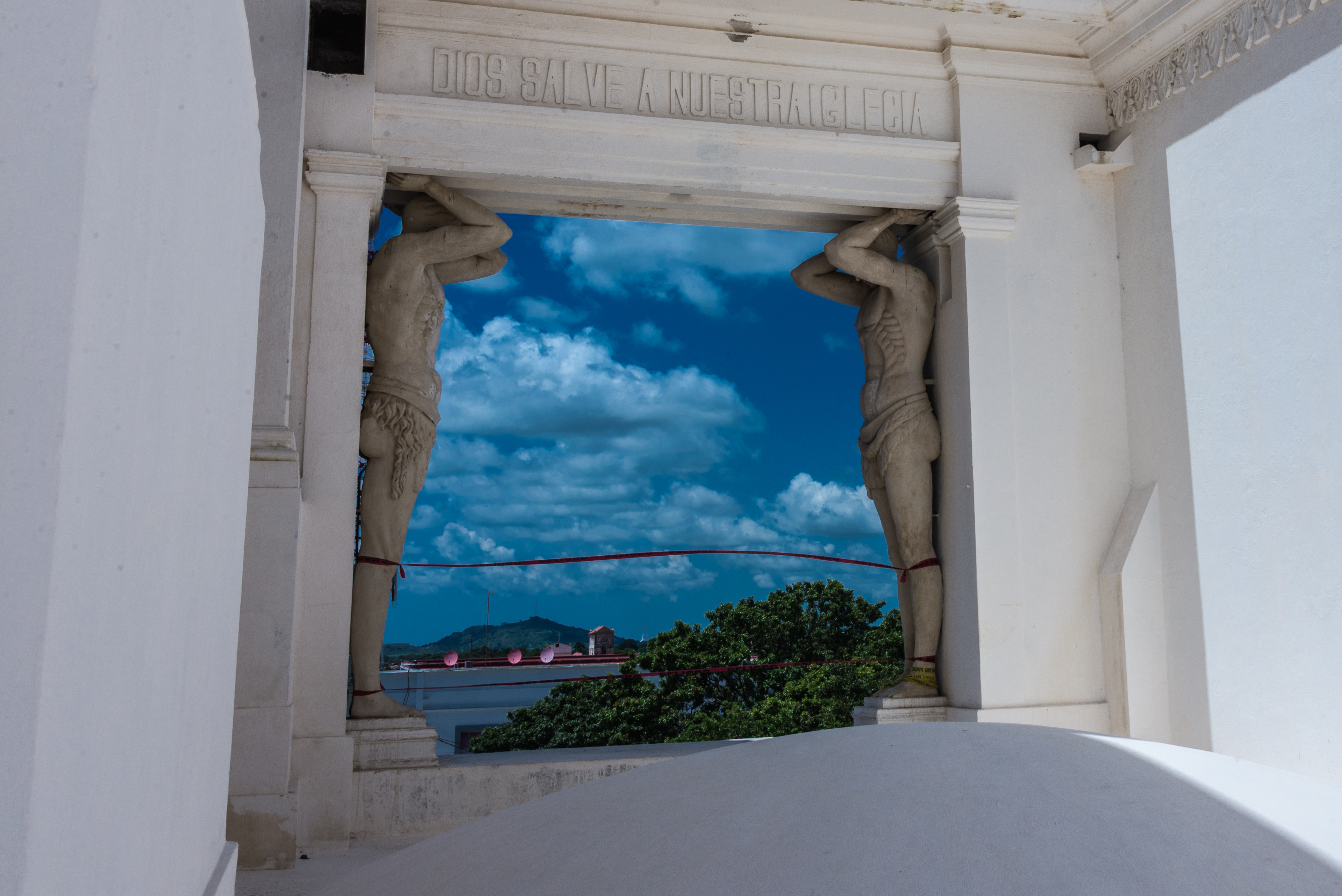
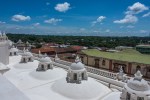
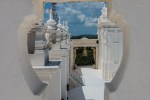
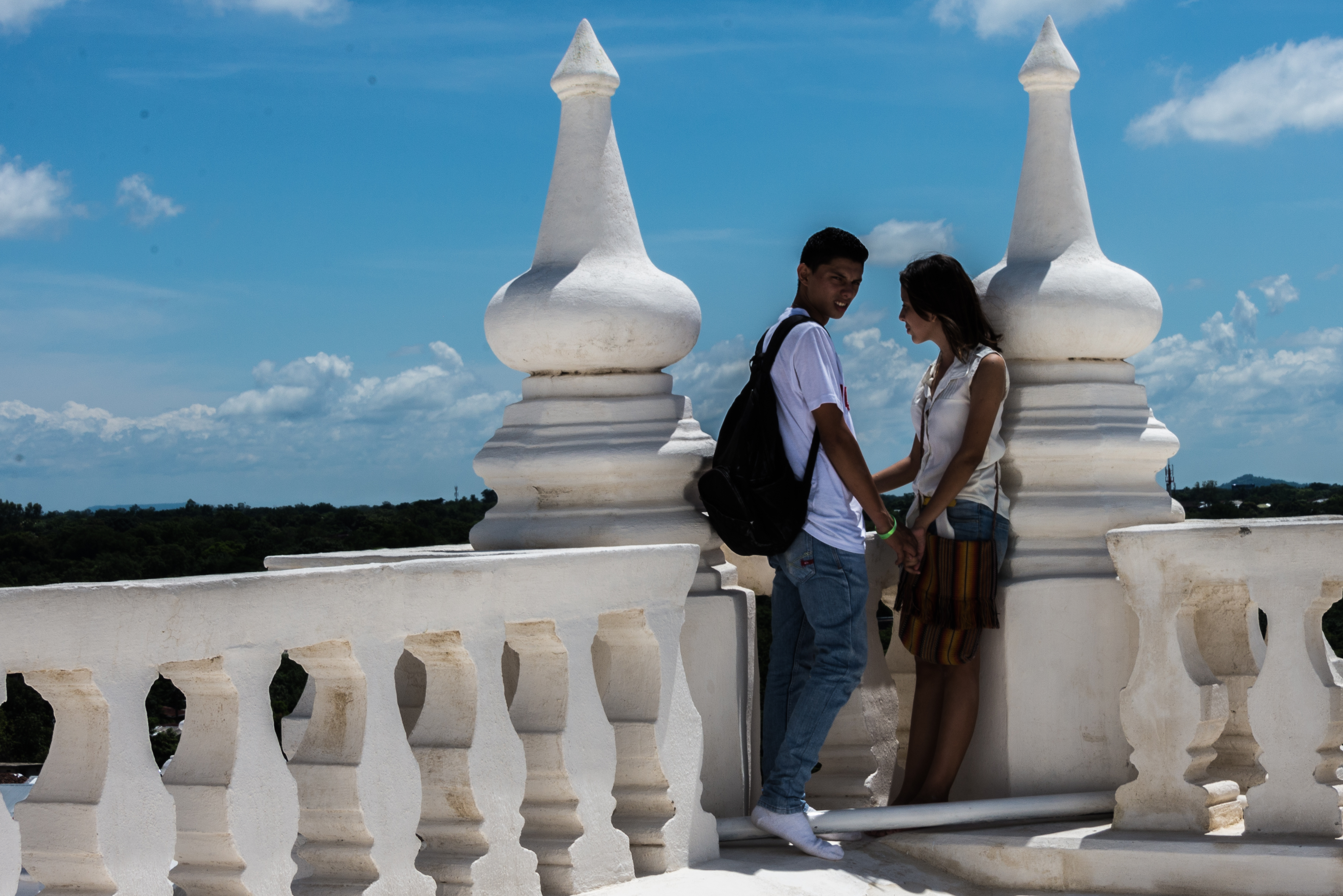
Over the years, the church has been remodeled/rebuilt six times due to revolution and volcano activity. It is currently undergoing another renovation. They started on the roof, which we were allowed to use to get a better view of the city. The stairway up to the roof is very narrow, steep and dark. I imagined one of the super-sized passengers being stuck in the stairway and us not being able to get up or down and missing the ship, but everyone eventually emerged at the top. Before we were allowed out on the roof, we had to remove our shoes. That was due to the brand new fresh white paint job on the roof. It was so intensely white, as we emerged from the shadows of the dark stairway, that a kind of snow blindness hit you until your eyes adjusted to the lack of definition in the monochromatic paint. It was eerie as stairs, and everything else went completely white. Eventually, normalcy returned and we found ourselves on a very interesting roof covered with domes bulging up from the church below.
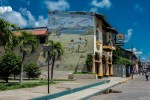
The view of Leon from the top of the old church was spectacular. Wide streets and walkways bordered the beautifully landscaped square in front of the church. The Area around the church contained several restaurants that looked good with English on their signs. There was even a modern looking Best Western down one of the streets. Leon is not quite as colonial as Antigua as there are new buildings among the old colonials that do not match the colonial in style, so the city is not intact. In addition, it is not at a high elevation so it is a much warmer city than Antigua.
2014-JKH-Nicaragua

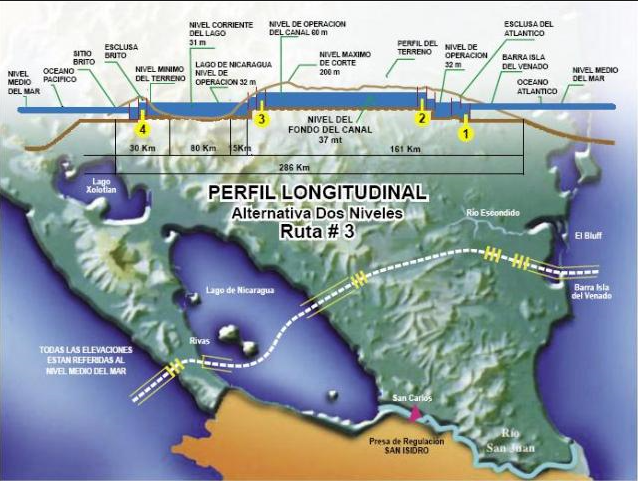
A hundred years ago, the US selected Panama for a location to build a canal from the Pacific to the Atlantic. It was a bitter pill for Nicaragua because they hoped the new canal would be routed through their country, but the prevalence of active volcanos was enough to sway the decision in Panama’s favor. Today, Nicaragua has plans to build a new canal from the Pacific to the Atlantic and some sources say that digging will begin as early as December this year. To date, the project has been shrouded by secrecy and doubt.

Nicaragua Canal Map

The latest to put Nicaragua’s canal dream on the map is 41-year-old Chinese billionaire Wang Jing, who is said to have amassed his fortune through his telecommunications business. He claims he can raise the $50 billion needed for construction costs. Just between you and me, he also has a not too stellar history of failed projects. Question: I wonder how the US will react to a Chinese canal through Nicaragua.

We returned to the ship for a 3PM departure, heading further south to Cost Rica where we should arrive at 8 AM tomorrow.

Oh, by the way, it seems that the roof of the Catholic Church is a popular location to go on a date.  Interesting!

2014-JKH-Nicaragua